Catalonia's 2025: From blackout to housing crisis, wildfires, and new music
Meteorological adversities, returning to Camp Nou, and Banc Sabadell takeover bid

Another year is now over, and 2025 ends with the housing crisis as the primary concern for Catalans. Thousands took to the streets to protest the current situation, and local, regional, and national governments are trying to regulate the market and expand public housing options.
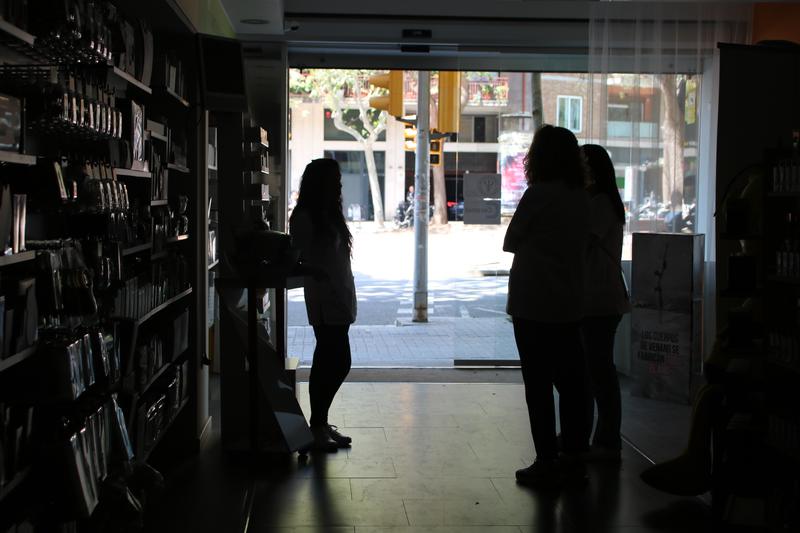
However, 2025 will be mainly remembered for April 28's blackout across Spain. Over 50 million people were left without electricity for many hours, with many looking for torches and candles.
April 5
The lack of housing options is the biggest concern for Catalans. In Barcelona, thousands took to the streets to protest against the "speculative trend" seen across the city. Despite the rent cap law enforced in many municipalities across the territory, the number of short-term rentals has increased because they are not yet regulated.
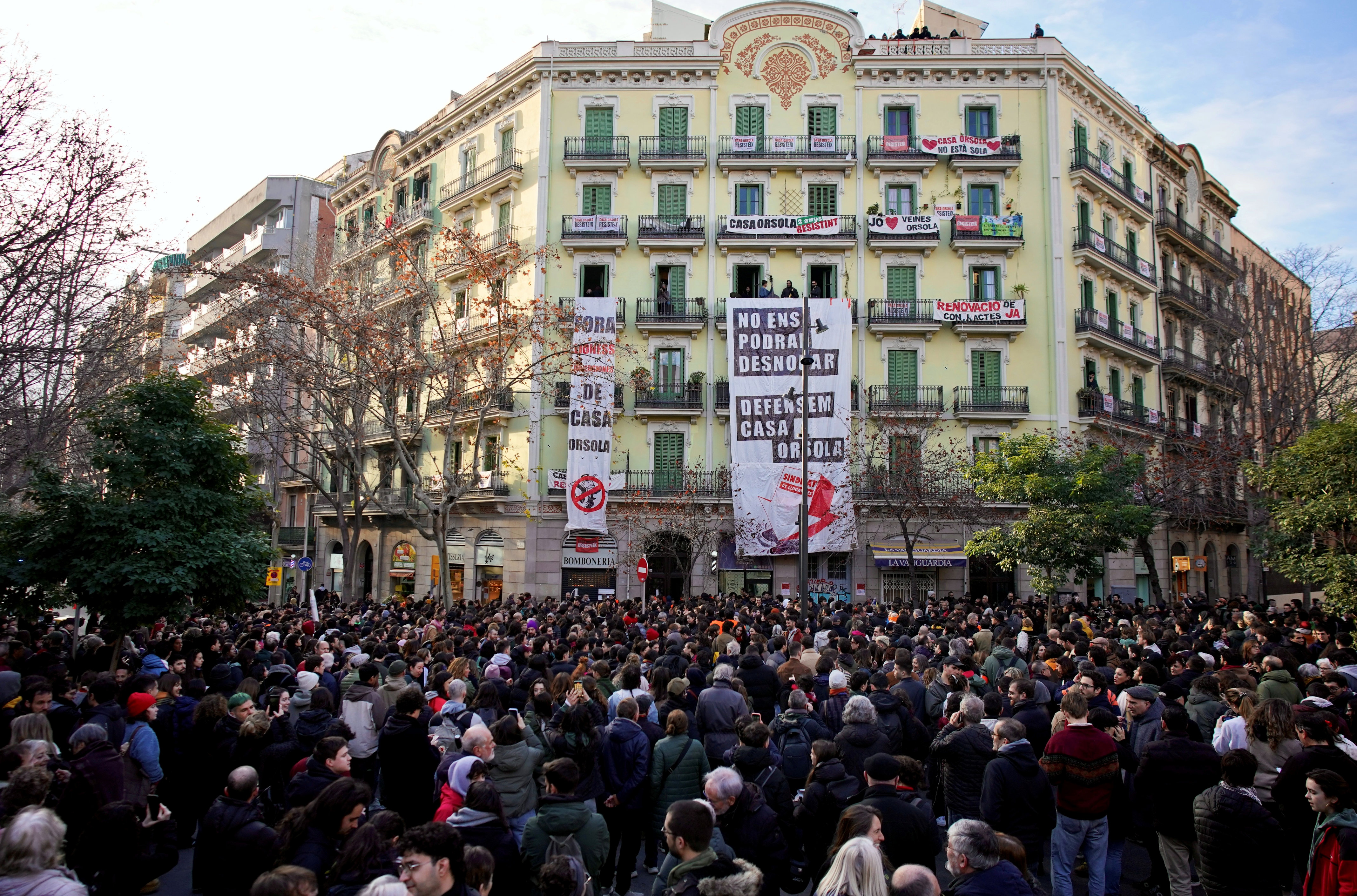
This year, the city council bought Casa Orsola, which had become a lighthouse of the housing crisis, after the new owner, an investment fund, was planning to evict many tenants. Residents opposed the measure and fought to continue living on site. Meanwhile, the Catalan president, Salvador Illa, is proposing a plan to "build, build, and build" new public housing opportunities.
Press play below to listen to the Filling the Sink podcast on the groundbreaking housing initiative or dangerous precedent. Or subscribe on Apple Podcasts, YouTube or Spotify.
April 28
At 12:33 pm, the power grid in the Iberian Peninsula failed, leaving 50 million people without electricity across Spain and Portugal. Many people were stranded on trains and in lifts, forced to sleep in sports halls, and others started panic-buying food, torches, and candles.
During the afternoon, the power slowly started to recover. Still, many companies had to shut down for the day, hospitals activated their emergency protocols, and while the airport was operating as normal, many passengers and cabin crew could not reach the infrastructure. Metro and Rodalies commuter train services were down. The hypothesis of a cyberterrorist attack is less plausible, as Spain's grid operator Red Eléctrica places the origin at a solar power plant in Badajoz. The year ends without a clear cause of the power outage.
Press play below to listen to the podcast: A Day in the Dark.
May 28
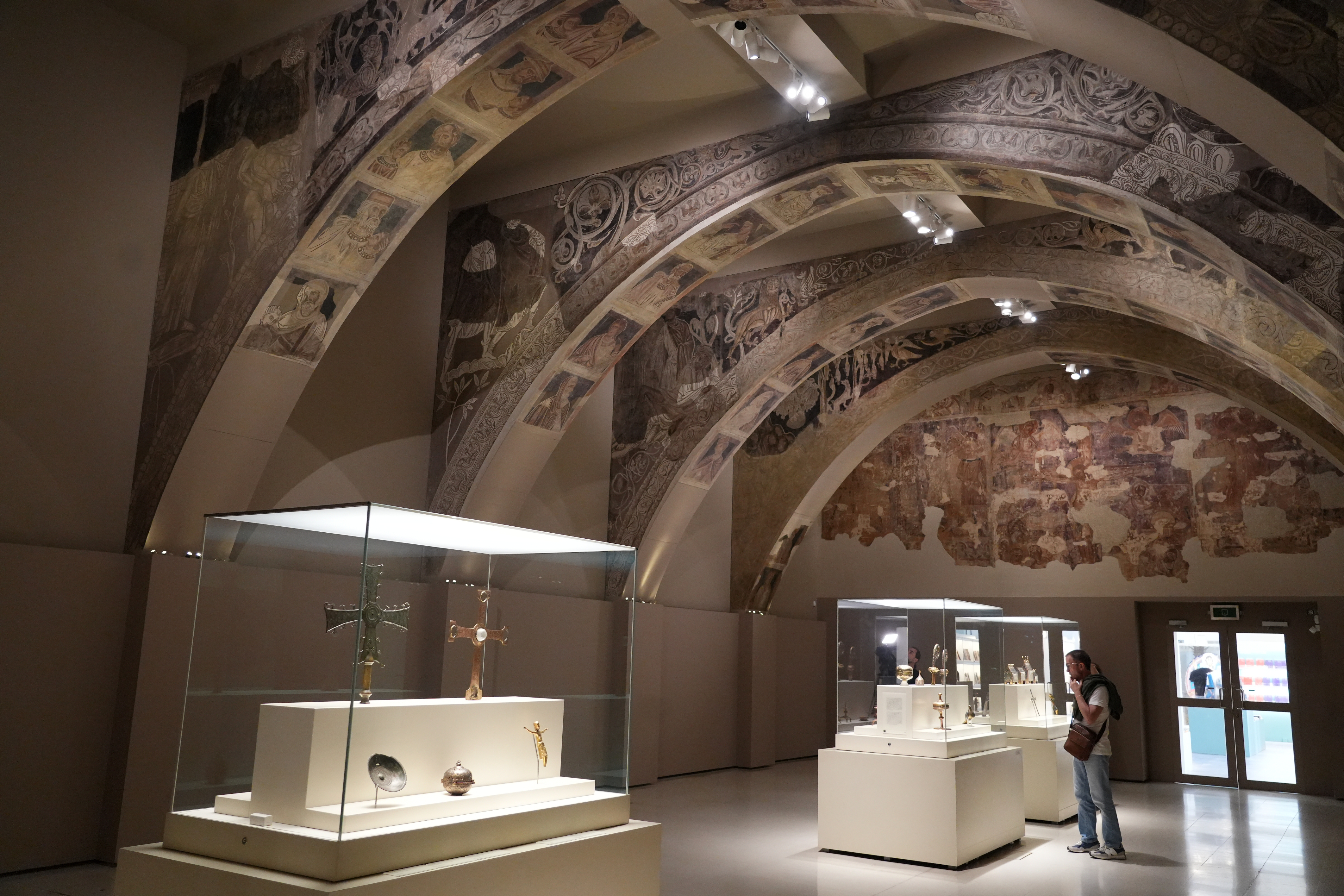
Spain's Supreme Court upheld a lower court's ruling ordering the Catalan National Art Museum (MNAC) to return the Sixena mural paintings to Vilanova de Sixena in Aragon. Judges say MNAC has never been the owner of the paintings, only their custodian.
The museum warns that moving the murals would risk the pieces, and many art restorers urge a "technically and scientifically" decision, not one "based on political motives."
A month after the ruling, Aragonese experts traveled to Barcelona to study the murals, while the MNAC released new reports warning of the dangers of moving the pieces.
June 10
The Catalan government, the Spanish transport ministry, and AENA airport managers reached a controversial agreement to expand the Josep Tarradellas Barcelona El Prat airport. The plan is to finish construction works in 2033, after a €3.2 billion investment to extend the third runway, the one closest to the sea, build a satellite terminal, and refurbish the T1 and T2 terminals.
The cabinet argues that the expansion is compatible with preserving the natural habitats along the Llobregat River and in the Ricarda Natural Park. Many environmental organizations and nearby city councils oppose the measure, while in Parliament, the plan continues its procedure despite the opposition of left-wing Esquerra Republicana, Comuns, and CUP.
June 26
Spain's Constitutional Court upheld most of the amnesty law for all those related to the Catalan independence push. The ruling takes place a year after being approved in Congress, and with major leaders, such as former Catalan president Carles Puigdemont, still waiting to be granted an amnesty.
Puigdemont urges the Constitutional Court to lift the arrest warrants in Spain, which would allow him to return to Catalonia without facing time in prison. In November, the Advocate General of the European Court of Justice released a non-binding report in favor of the amnesty law.
June 30
Several corruption cases affect trusted collaborators of Spanish PM Pedro Sánchez and the Socialist Party. Guàrdia Civil police expose several payments in exchange for granting public construction works. Santos Cerdán, former Socialist secretary general, former transport minister José Luis Ábalos, and collaborator Koldo García enter prison.
Aside from the corruption cases, the Socialists are in the spotlight because of numerous sexual assault allegations within the left-wing party. Pedro Sánchez's family is also under judicial investigation, as his brother, David Sánchez, was hired by the Arts Department of the provincial government of Badajoz. The judicial process against his wife, Begoña Gómez, for her academic activity and her relationship with the financial loan to Air Europa.
July 1
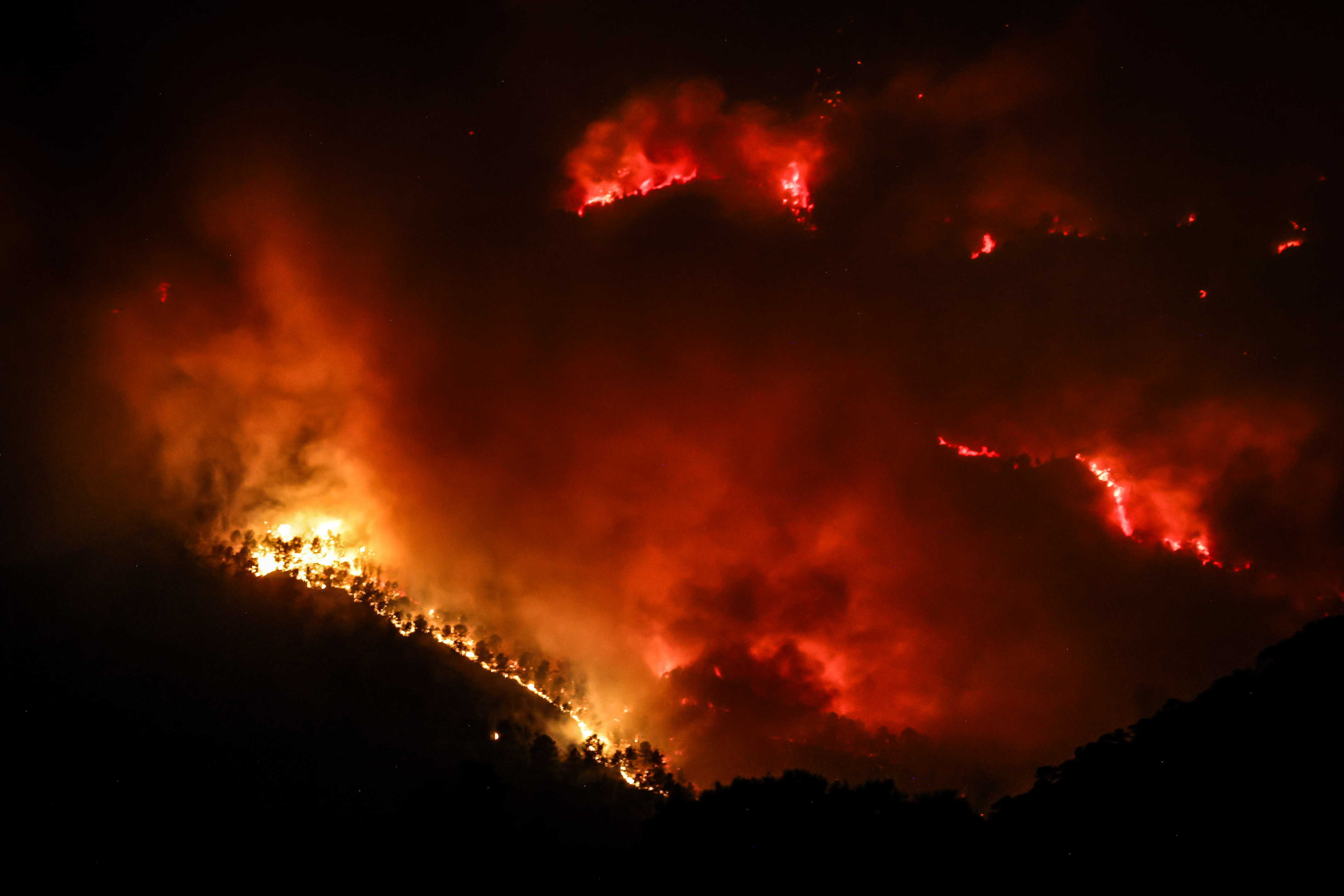
Catalonia registered 2,168 wildfires in 2025, a 62.6% increase from 2024. On July 1, a blaze in Torrefeta i Florejacs, in central Catalonia, burned over 5,000 hectares, most of it in rural areas. Two farmers died during the fire. Due to the flames' strength, speed, and the large fire cloud, firefighters consider it a sixth-generation fire, linked to climate change.
A week later, on July 7, a new wildfire starts in Paüls, in southern Catalonia, affecting 2,400 hectares in nine days. Around 18,000 people are confined due to flames, while a firefighter dies after a 20-meter fall.
October 1
The Israeli army intercepted the Global Sumud Flotilla, which left from Barcelona in early September, with former city mayor Ada Colau and international activist Greta Thunberg, as part of the passengers.
Throughout the whole year, Catalonia sees dozens of demonstrations against the "genocide" in Gaza and calling for a ceasefire.
Barcelona city council broke ties with the Israeli government led by Benjamin Netanyahu. On October 10, the first phase of the ceasefire between Gaza and Israel starts.

October 13
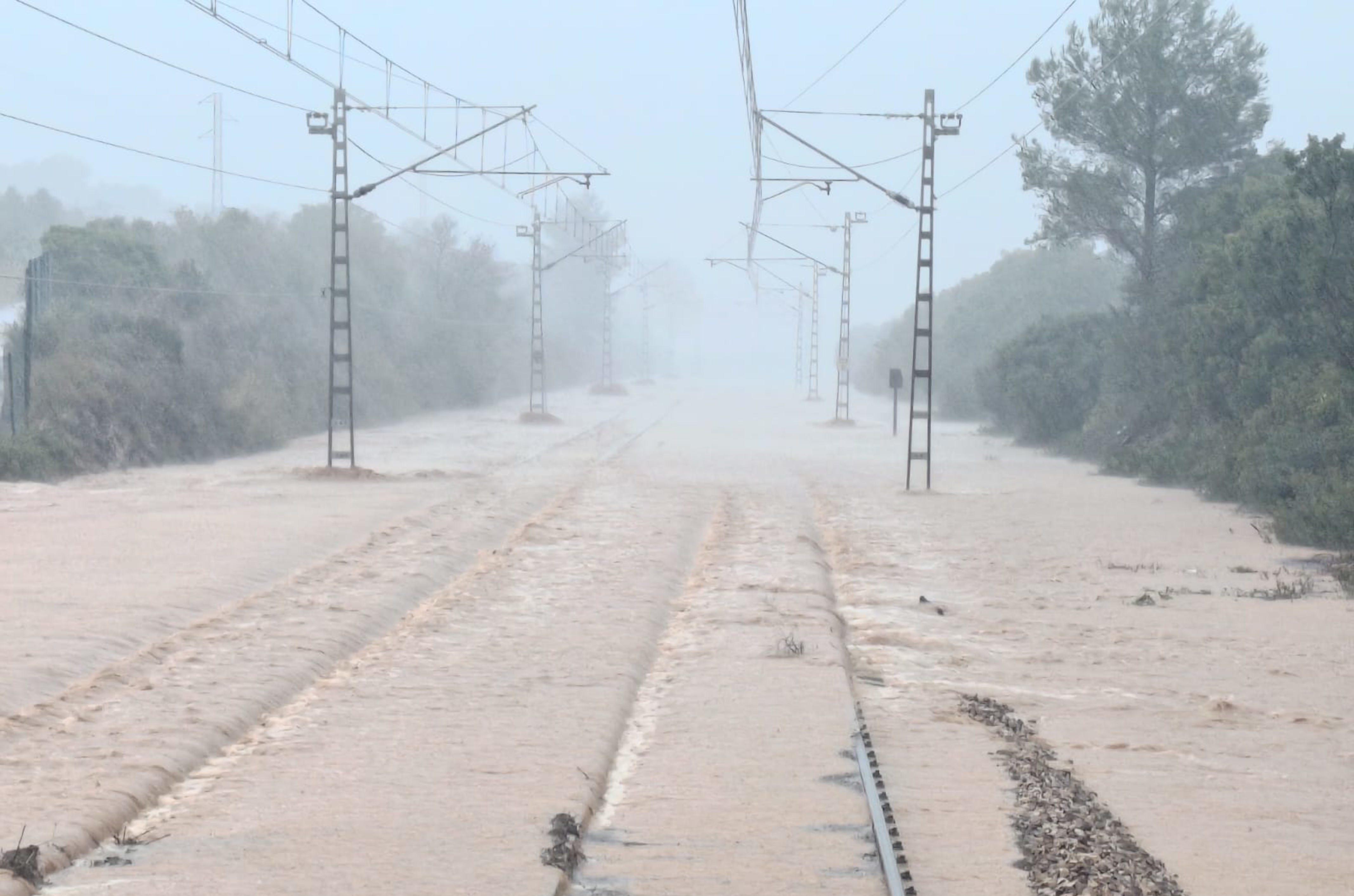
Torrential rain due to a DANA flood towns and fields in Montsià, in southern Catalonia, with accumulated water of around 300 mm in Santa Bàrbara. Around 1,000 people are evicted from their homes and are forced to sleep in sports halls.
Earlier in the year, on July 13, two people drowned after the Foix reservoir flooded. Because of the constant emergencies, the Catalan government set up the ES-Alert emergency phone system, sparking several debates. Some people said these warnings were sent too late, others said there was no need, while others said the volume was very high.
October 16
The BBVA takeover bid on Catalan bank Banc Sabadell fails after only receiving the support of 25% of the Sabadell shareholders. The Basque bank had asked for at least 30% of backing. The results put an end to a long process that started in May 2024.
At the beginning of 2025, the Banc Sabadell returns its headquarters to Catalonia, after moving them to Alicante during the peak of the independence push in 2017. While the takeover bid has the support of the market and European regulators, the Spanish government imposes several conditions, such as keeping the two entities independent for three years.
Meanwhile, Sabadell sells its British subsidiary, TSB, to Santander, and in September, BBVA improves the offer. The Catalan bank president, Josep Oliu, responded by saying that the "offer was dead from the start," and that the "only thing missing was for shareholders to bury it."
November 7
Catalan pop star Rosalía releases her fourth album, 'Lux.' The new proposal leaves the urban pop music behind and transforms her career into different genres.
The singer recorded with the Cor de Cambra choir from the Palau de la Música concert hall and with the Escolania de Montserrat choir. In just one week, the album becomes the most listened to on Spotify. Rosalía announces a tour starting in Lyon, France, with four concerts scheduled at Barcelona's Palau Sant Jordi, which quickly sold out.
A few days later, on November 12, Catalan pop band Oques Grasses announces its last concerts after a 14-year career. The group will perform four concerts at the Olympic Stadium Lluís Companys, selling 220,000 tickets in minutes, setting a record for the most tickets sold by a Catalan artist.
November 22
After many delays, FC Barcelona returned to Spotify Camp Nou to play its first official game against Athletic Bilbao with a limited capacity of 45,401. The construction works had forced the team to play at the Olympic Stadium for over 900 days.
The return, however, is partial as the stadium is not yet ready, the third stand is still under construction, and the roof will require the team to move away for a few months.
Barça held its first open training session in early November in front of thousands of fans who felt like they were "returning home." A few days later, former team player Leo Messi published a few photos in the middle of the field at night with the caption reading: "Hopefully, I can be back someday."
Last season, the FC Barcelona men's team fell short of a treble after losing to Inter Milan in the semi-finals of the UEFA Champions League on aggregate. The women's team, despite playing the final, lost against Arsenal in Lisbon, breaking all hopes of a 3-in-a-row Champions League titles.
Press play below to listen to the Filling the Sink podcast episode on the return to Spotify Camp Nou, or subscribe on Apple Podcasts, YouTube or Spotify.
November 24
11 years after former Catalan president Jordi Pujol confessed to having had an inheritance in a tax haven, the trial against him and his family starts at Spain's National Court.
The former politician and his children face trial for crimes of criminal organization, money laundering, forgery of commercial documents, tax evasion, and asset stripping. The 95-year-old former president testifies via a video call due to his health condition.
The investigation began as part of the confession but later shifted to a corruption trial to determine whether his children had benefited from his position of power. The prosecution is seeking nine years in prison for Pujol, and between 8 and 29 years for his seven children and the ex-wife of the eldest.
November 28
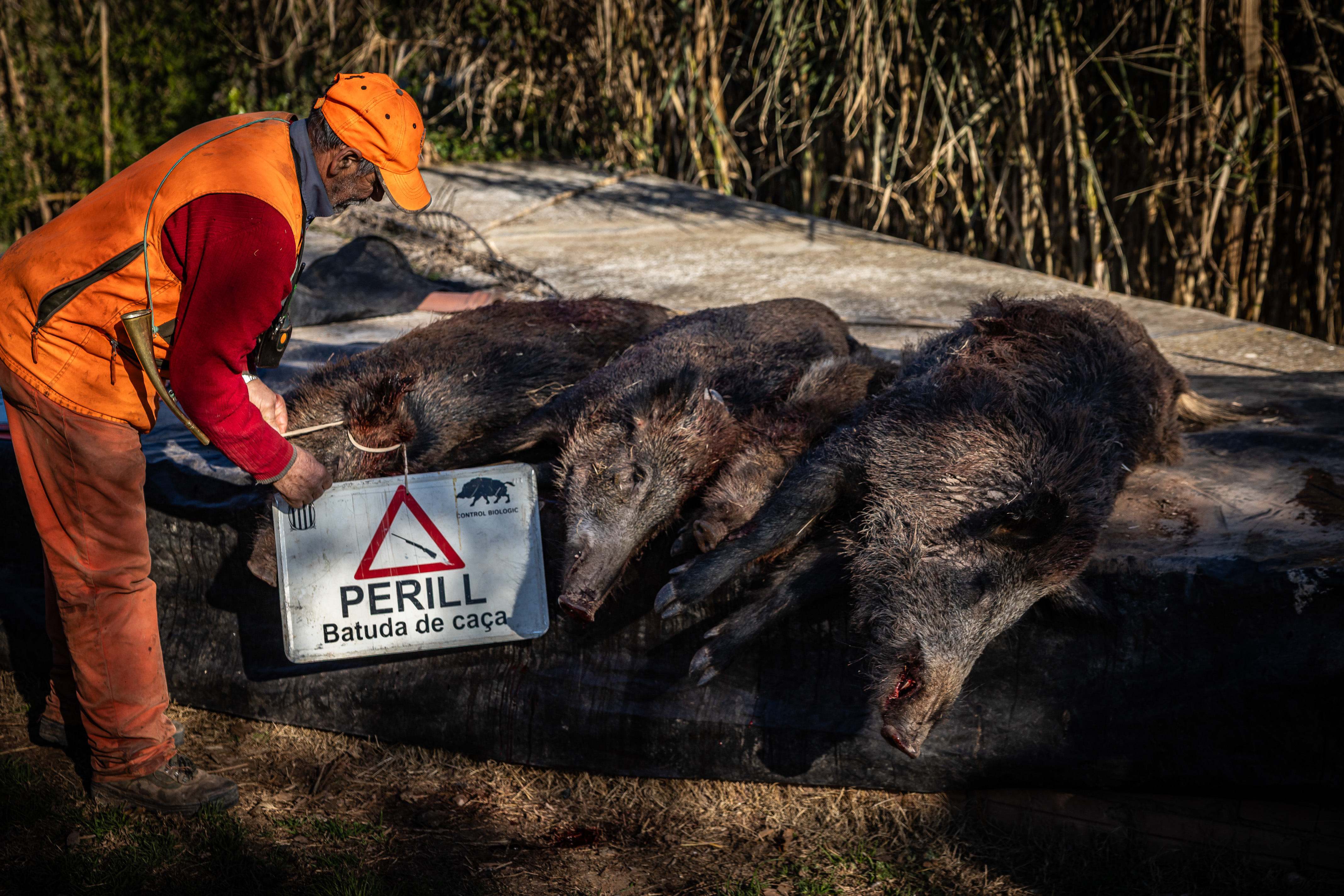
The farming sector faces severe health issues, leading to lower prices and layoffs across many plants. The last problem has been the African swine fever reported at the Collserola mountain with several dead wild boars.
The last diagnosed case in Catalonia was in 1994, and the disease does not yet have a vaccine. The first hypothesis points to a sandwich, but then the focus shifts to the IRTA-CReSA laboratory. A few weeks later, an audit said that the lab met safety standards.
Meanwhile, the beef industry sees an outbreak of lumpy skin disease in numerous farms in Girona, and the poultry sector registers cases of bird flu, forcing the confinement and killing of thousands of animals.
December 16
The Catalan coproduction 'Sirât,' directed by Oliver Laxe, is the big movie of the year. The adventure of a father (Sergi López) looking for his daughter in the desert at the musical techno rhythm of Kangding Ray, has been shortlisted for five Oscars.
The film already won the Jury Award at the Cannes Film Festival, and had secured two Golden Globes nominations for Best International Feature Film and Best Original Score.
Meanwhile, Catalan coproduction 'Los domingos,' directed by Alauda Ruiz de Azúa, won San Sebastián's Golden Shell, while Barcelona-born José Luis Guerin won the Special Jury Award. This is the second time in a row that a Catalan has won the main award.
Acclaimed filmmaker Carla Simón released her latest movie, 'Romería', which has secured the highest number of nominations at the Gaudí Awards.