One month after Gelida rail crash: Rodalies down 25%, metro up 700,000 trips, car traffic up 5%
Rail disruption lingers, with only 80% of services running
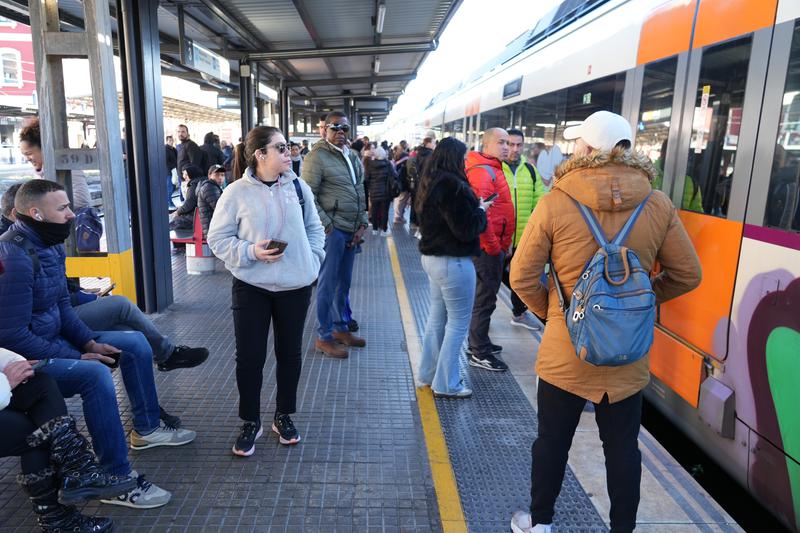

On the night of 20 January, the fatal accident involving a Rodalies R4 train in Gelida triggered an unprecedented crisis in the Catalan rail system.
Since then, the Rodalies commuter trains and the regional network in Catalonia has been hit by incidents, delays and breakdowns, reopening the debate on the state of the infrastructure and the management of a service that, one month later, has still not returned to normal.
Renfe is currently providing 80% of the usual rail service, while passenger demand remains 25% lower, according to the operator.
Traffic in the Barcelona metropolitan area has increased by 5% since the accident, while the metro recorded 700,000 more ticket validations in the following week.
The metro, trams and FGC, Catalonia's public railway operator, are seeing unusually high year-on-year passenger growth.
This rise has been influenced by the replacement bus services put on by rail operator Renfe, which at times have seen up to 230 buses in operation.
However, the increases have not been uniform. On the B-23, which connects Barcelona with the AP-7 south of the city, traffic actually fell by around 7.5%. This could be linked to the closure of the AP-7 southbound near the site of the Gelida accident.
Barcelona's metro network has also felt the impact of the mobility crisis in the form of rising passenger numbers. According to data provided by Transports Metropolitans de Barcelona (TMB), the system recorded 700,000 more ticket validations compared with the previous week.
As for the trams, passenger numbers rose by around 7%.
Investment plan and political oversight
Amid the operational crisis, authorities announced an agreement to expand the Rodalies investment plan to €8 billion to improve the service, and made Rodalies train travel free of charge until normal service resumes.
The head of Rodalies and Adif's maintenance chief were dismissed, and Spanish Prime Minister Pedro Sánchez appeared before Congress last week, admitting that the situation at Rodalies was "serious."
Social and labour pressure
Public discontent translated into protests and on February 7, two demonstrations took place.
The first was a demonstration called by the pro-independence group ANC, which ended with a speech by Lluís Llach urging pro-independence parties to push for early elections centred on independence, which he argued would solve the railway issues.
That same afternoon, another protest by train users brought together 3,000 people according to the city police (40,000 according to organisers), to denounce the "chaos" on the network.
The following week began with a train drivers' strike, which was called off after the first day thanks to an agreement with Spain's Ministry of Transport that includes improvements in infrastructure and safety investment, as well as the hiring of more staff.
At the same time, the debate spread to the labour sphere, as decrees and instructions have protected workers who were unable to reach their workplaces due to Rodalies disruptions, opening a dispute with employers' organisations over the impact of absences.