Long queues form outside offices for migrant regularization process
People stand for hours or days to collect a number to make an appointment or to be attended to
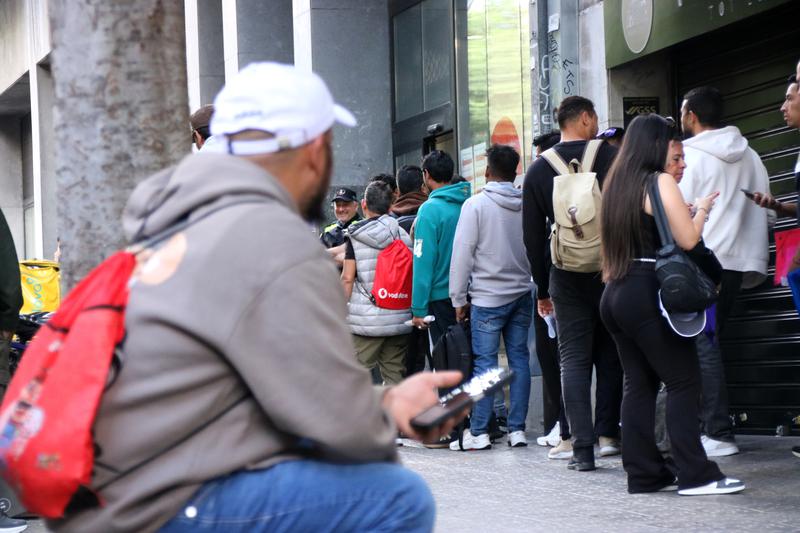

Earlier this month, Spain opened an extraordinary migrant regularization process, giving an estimated half a million people living in the country in irregular situations the chance to formalize their legal status. In Catalonia, it’s expected that up to 150,000 people could benefit from the initiative.
But since the process opened, offices in Barcelona to process applications have been inundated, with huge queues forming that stretch for numerous blocks.
More than a week after the regularization process opened, queues extended around the block at the Monumental Citizen Service Office (OAC), on Sicília Street. Some people had prior appointments, while others were waiting to collect a number to be attended to another day.
The same scenario has been playing out in other citizens' offices around the city, such as in Plaça Sant Miquel and on Tarragona Street.
The people waiting in line were all hoping to obtain the necessary documentation to start the extraordinary regularization process.
Last week, a spokesperson for the Catalan Immigration Commission said that the regularisation process is pushing public administration toward "collapse," with authorities are struggling to cope with demand.
Migrants who were in Spain before the end of 2025 and have remained in the country for several months will be eligible to apply, provided they have no criminal record. The government has framed the reform as a response to ongoing labor shortages, as well as a way to reduce irregular employment by integrating undocumented workers into the formal economy.
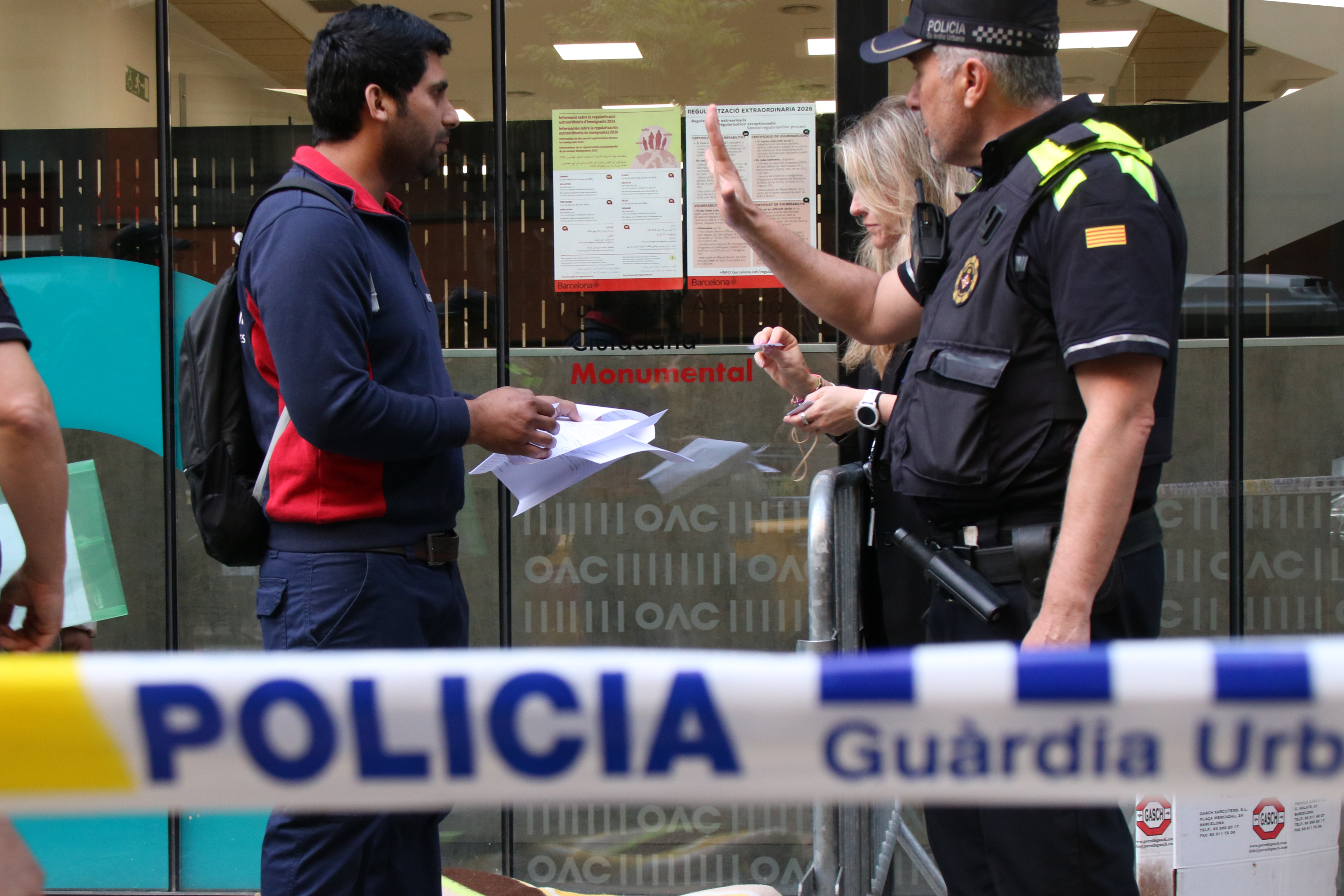
The regularization initiative grants successful applicants a temporary residence and work permit, allowing them to live and work legally in any sector and any location in Spain.
"Fights"
Constanza, originally from Colombia and living in Catalonia for four years now, is one of the many people who has spent a significant time queing at the Monumental Citizen Service Office.
She waited for 12 hours on Friday to be given a ticket for Monday, and reported a "huge commotion" at 9am on Monday, and “fights” as “the order of the queue wasn't being respected."
Constanza turned up at 1am on Sunday night into Monday morning to rejoin the queue to be attended to on Monday, even with having a prior appointment. “The attention is terrible” and “disastrous,” she said.
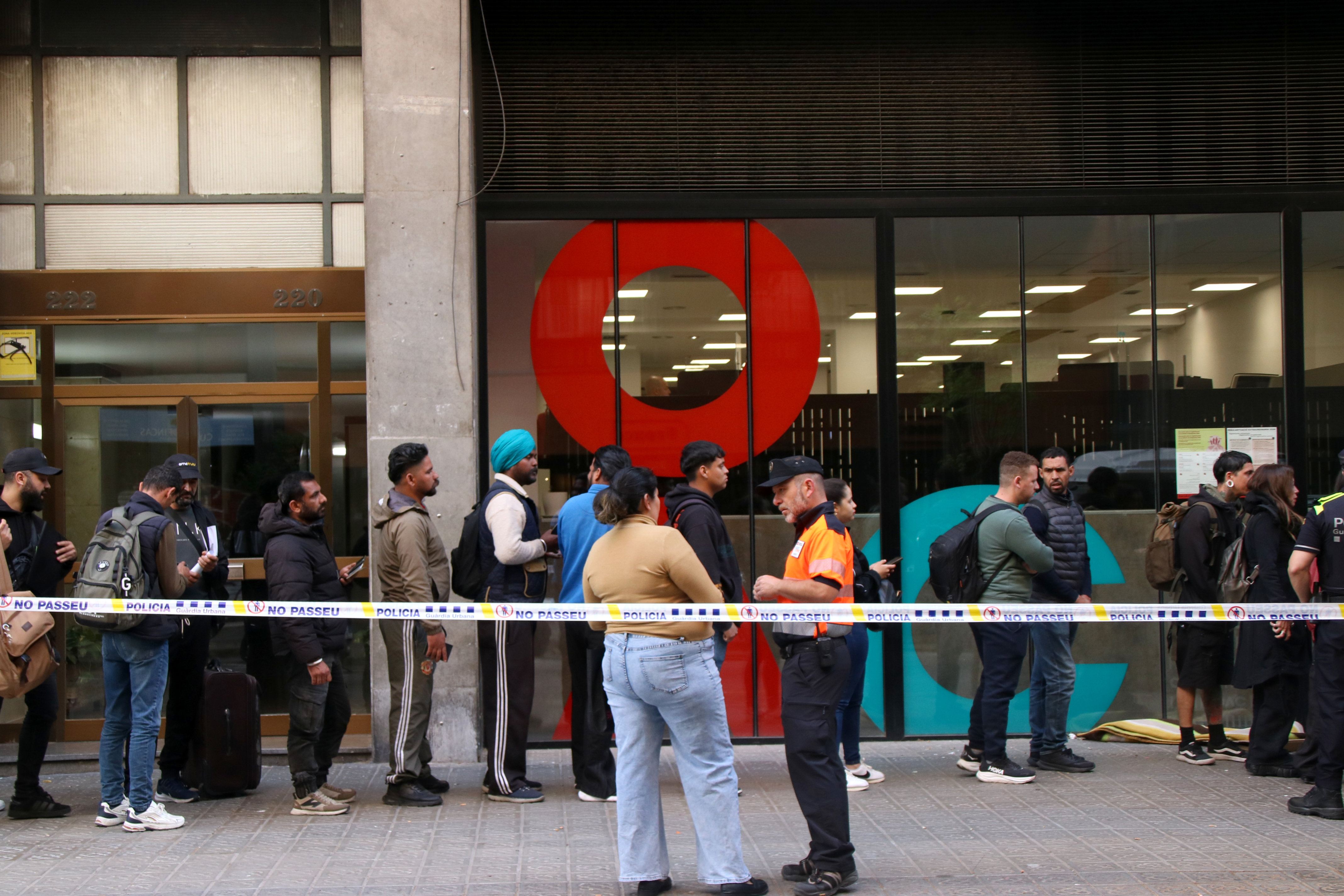
Meanwhile, Celia Chaparro, from Chile, is another migrant living here for the past four years seeking to regularize her status. Chaparro's husband queued up overnight, before she took the spot at 6am.
Over the past week, Chaparro has visited four different points to obtain the vulnerability report, and said there were "fights" in L'Hospitalet de Llobregat. Meanwhile, in another office in Barcelona, "they suspended it, because people weren't behaving well."
Despite everything, she remembered that "patience" was required.
Jon Ordóñez, originally from Latin America and who has been living in Catalonia for almost four years, is also critical of the set-up. “If we are already vulnerable, what's the need for the report?"
"We are undocumented immigrants with no income, working off the books," he said. Ordóñez explained that he had to endure the heat of the day and cold of the night while queueing outside the offices at Carrer Tarragona.