Officials warn of ‘collapse’ of system amid migrant regularisation process
Immigration Commission cites lack of preparation, document hurdles, and rise in scams
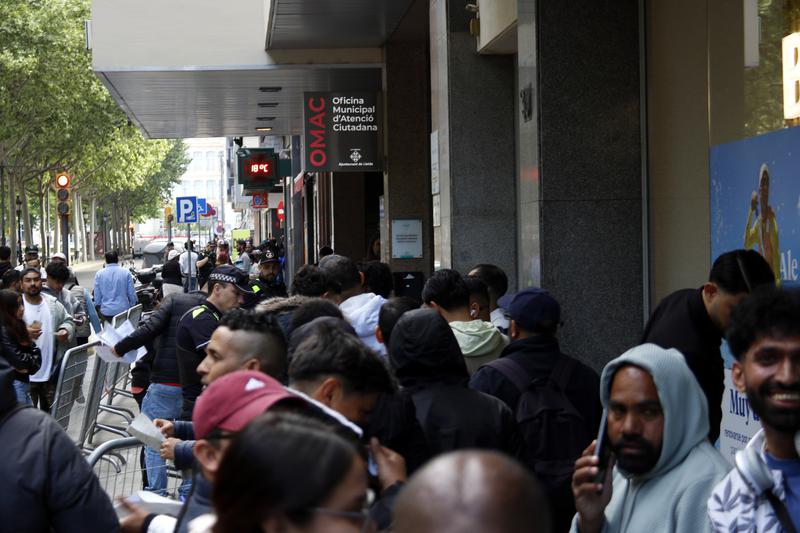

Spain's migrant regularisation process is pushing public administration toward "collapse," according to the Catalan Immigration Commission, which says authorities are struggling to cope with demand.
Marc Giménez Bachmann, spokesperson for the commission, said that administrations are "not prepared" for the workload generated by the extraordinary process. He also warned that organized groups are exploiting the system, while many migrants face serious difficulties obtaining required documents.
"They're giving people the runaround," Bachmann said, arguing that vulnerability reports should not be required, as undocumented migrants are already considered vulnerable under the law.
He added that the rollout "is not going well," citing uncertainty over requirements and frequent changes to forms and criteria. "Everything is being done rather hastily," he said.
While official guidelines list required documents, obtaining them can be slow and complex, especially when they must come from abroad.
Although applicants are given extra time, Bachmann described the process as overly burdensome and called for simplification.
The strain is affecting social security and postal services, as well as an online platform that often malfunctions. City halls are also overwhelmed and lack sufficient staff, he said, urging more automation.
Bachmann also warned of growing scams tied to appointment bookings and unlicensed advisors. "Anything that involves difficulty creates mafias," he said, urging migrants to consult accredited professionals.
Between 2,000 and 2,500 people have already booked appointments to begin the process, according to Spain's government delegate in Catalonia, Carlos Prieto, who acknowledged that rollout coordination has been limited, leading to long lines in cities like L'Hospitalet de Llobregat.
The government plans new measures to improve information access, support vulnerable applicants, and counter misinformation as the process continues.