Farmers ease some roadblocks but keep key ones in place for third day of Mercosur deal protest
Roadblocks on A-2 have been lifted, while those on AP-7, C-16 and at Port of Tarragona remain in place
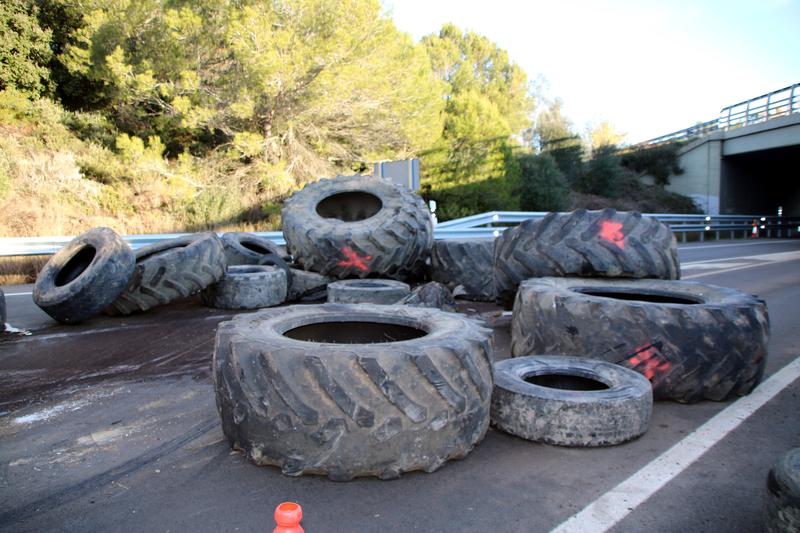

Farmers across Catalonia are protesting against the agreement signed on Friday by the European Union that will allow expanded trade with Mercosur countries.
The protests entered a third consecutive day on Saturday, and many are expected to continue for a fourth day on Sunday.
Roadblocks on the key AP-7 motorway, which runs along Catalonia’s Mediterranean coast to the French border, remain in place. The blockade is located between Borrassà, in the Alt Empordà county, and Vilademuls, in Pla de l’Estany.
Another major route, the C-16, also remains blocked between Berga and Casserres, in the Berguedà county.
This road is usually particularly busy at this time of year, as skiers and mountain visitors travel for weekend trips following recent heavy snowfall.
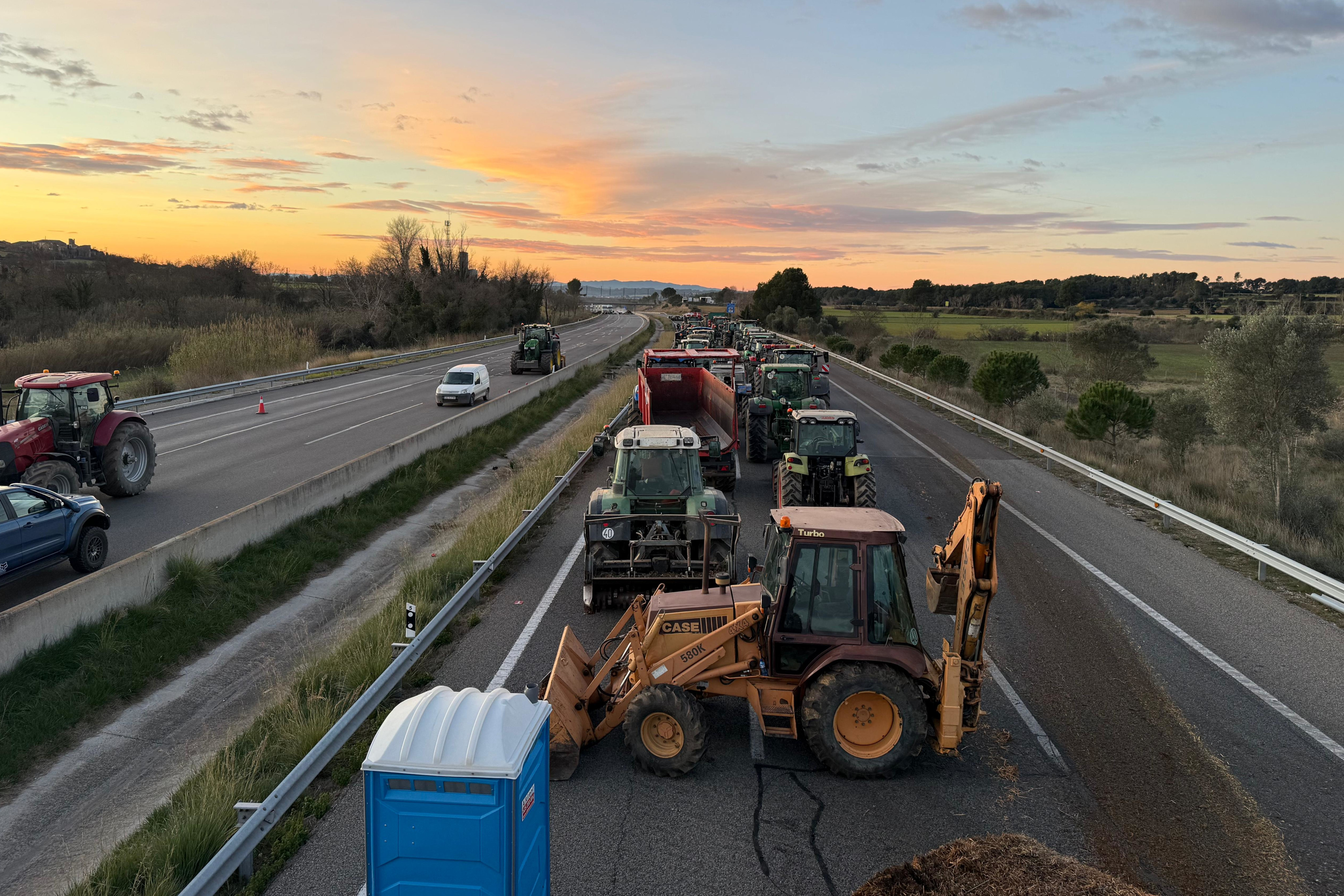
Several secondary roads also remain blocked, including the N-II in Alt Empordà, the A-27 at the Port of Tarragona, and the C-38 in Ripollès.
Meanwhile, the blockade on the A-2 motorway in the Pla d’Urgell area was lifted on Saturday at midday, after protesters had maintained it since Thursday.
Catalan Agriculture Minister Òscar Ordeig welcomed the lifting of the first roadblocks, saying it had taken place "in full cooperation and without incidents."
Ordeig called on those still blocking roads to act "responsibly" and said the government remains in "constant" contact with protesters to remove the remaining blockades as soon as possible.
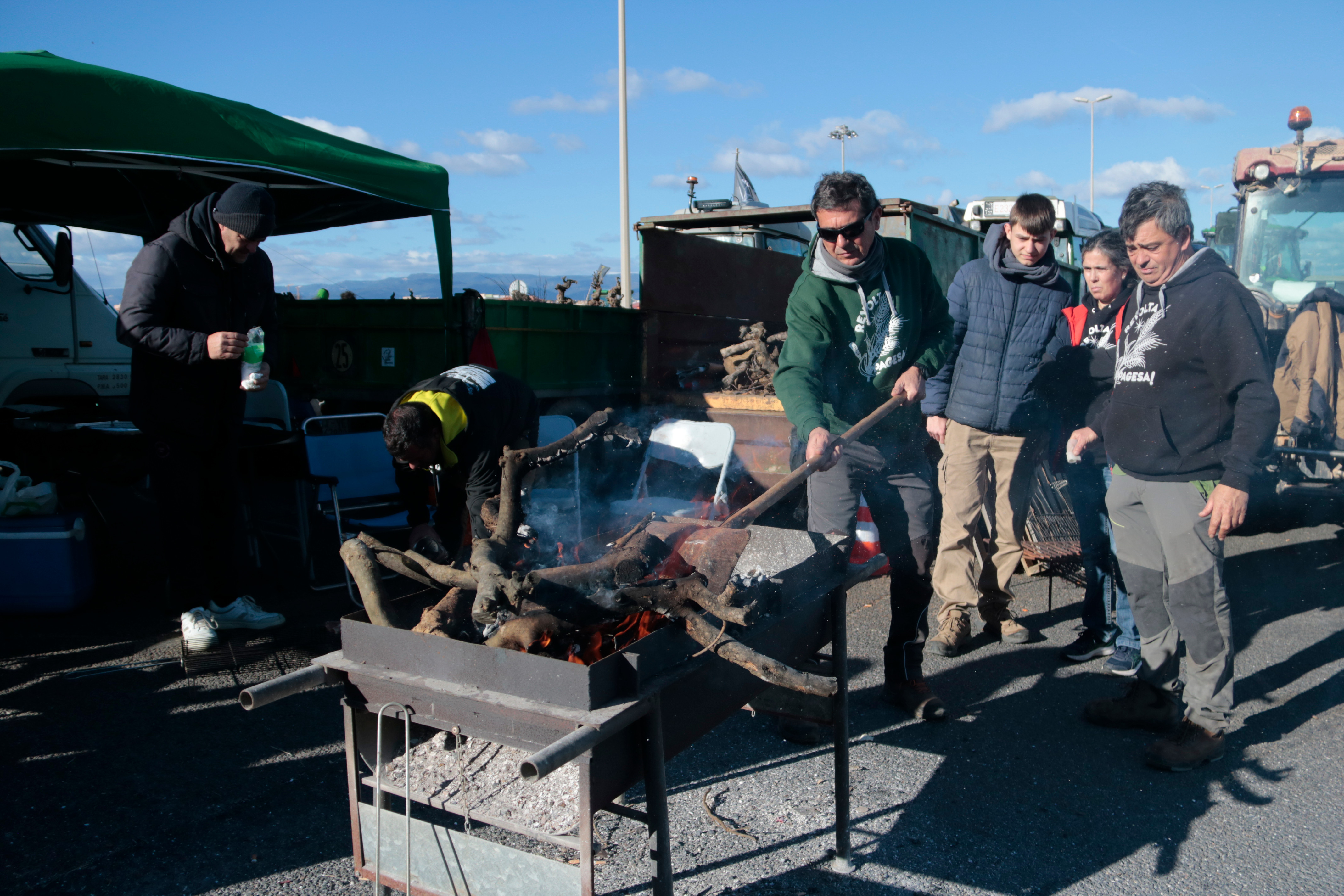
The protests are directed against the EU-Mercosur agreement approved on Friday and supported by the Spanish government.
Farmers are urging the Catalan government, despite having no direct authority over the deal, to pressure Madrid to reconsider its position.
They fear that a large influx of cheaper agricultural products from South America, produced under less stringent quality and safety standards than those in the EU, could seriously harm their livelihoods.