EU court set to rule on amnesty law that could clear path for Puigdemont's return
CJEU to decide whether Spanish law linked to Catalonia's 2017 independence bid complies with EU rules on terrorism and public funds


The Court of Justice of the European Union (CJEU) will decide on Thursday whether Spain's amnesty law is compatible with European law.
The ruling is set to have major consequences for former Catalan president Carles Puigdemont and other figures involved in Catalonia's 2017 independence bid.
The Luxembourg-based court is examining questions raised by Spanish judges in two separate cases.
One concerns the so-called "Operation Judas" investigation into members of the Committees for the Defence of the Republic (CDR), who are accused of terrorism-related offences.
The other concerns proceedings before Spain's Court of Auditors over public spending linked to the 2017 independence referendum.
The ruling will not immediately clear the way for Puigdemont's return to Spain.
Even if the CJEU finds that the amnesty law complies with EU rules, Spanish courts will still have to apply the decision to individual cases.
The former Catalan president has been living in Belgium since 2017.

Spain's Constitutional Court has broadly upheld the law, although some legal issues remain unresolved, and the Supreme Court would still need to resolve Puigdemont's outstanding proceedings before he could return without facing arrest.
Amnesty law
The amnesty law, which came into force in June 2024, covers people investigated, charged or convicted over their involvement in Catalonia's independence process, including senior figures such as Puigdemont and ERC leader Oriol Junqueras.
It was a key condition of the agreements struck by the Socialists with Catalan pro-independence parties that allowed Spanish Prime Minister Pedro Sánchez to form a government after the 2023 general election.
Opponents of the law, including Spain's conservative People's Party and far-right Vox, have challenged it on constitutional and legal grounds, while several Spanish courts have asked the CJEU whether it complies with EU law.
In the Court of Auditors public spending case, judges have questioned whether removing financial liabilities linked to the 2017 referendum could affect the European Union's financial interests.
They have also raised concerns about provisions requiring precautionary measures, such as asset seizures, to be lifted while the CJEU considers the case.
The terrorism case examines whether the amnesty's treatment of terrorism-related offences is compatible with the EU directive on combating terrorism, particularly in cases where acts did not involve "serious human rights violations."
In November 2025, CJEU Advocate General Dean Spielmann issued a non-binding opinion broadly supporting the amnesty law.
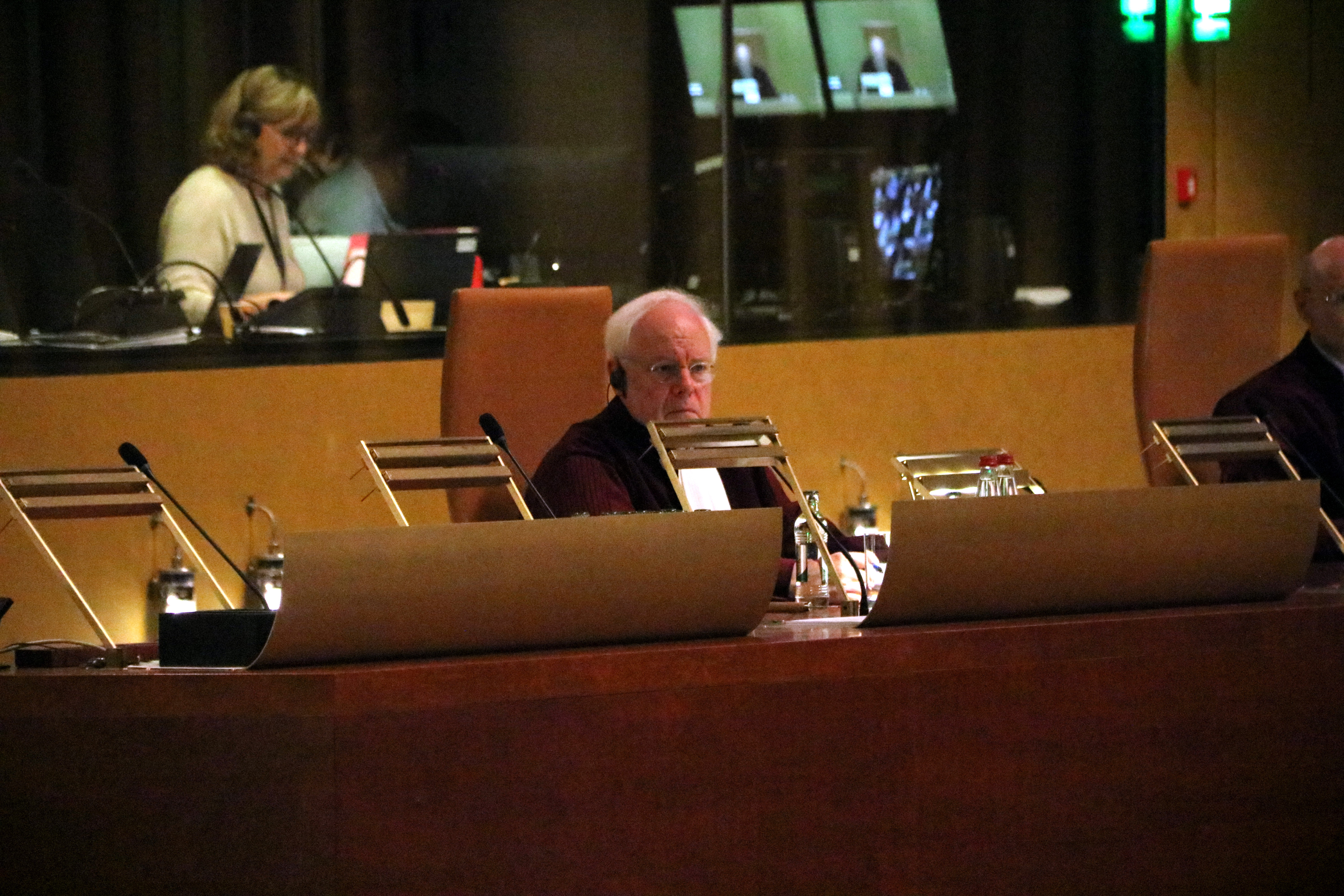
He argued that the Spanish legislation was compatible with EU law, including European anti-terrorism rules, and said that spending linked to the independence referendum did not affect the EU's financial interests.
However, he also raised concerns about some procedural aspects of the law, including deadlines imposed on courts and limits on the participation of some parties in proceedings.
The CJEU's ruling will not settle all outstanding legal questions over the amnesty, with Spanish courts still responsible for applying it in individual cases.
For Puigdemont and other former Catalan leaders still living abroad, a favourable outcome could remove a major obstacle to their return to Catalonia.
More broadly, those still affected by legal consequences of the independence process could regain eligibility to hold public office or stand in elections.