Hundreds of workers continue rescue operations at site of fatal Toledo train accident
Cranes and heavy machinery have been in operation throughout the night at the site where the two trains collided
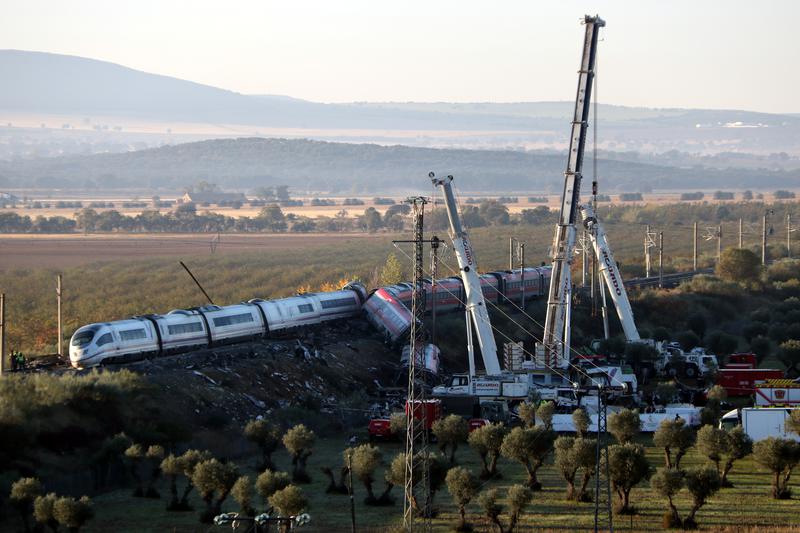

Rescue teams are continuing their work this Thursday in the area of Urda, outside Toledo, where the fatal train accident occurred 24 hours ago that left more than 60 people dead.
Hundreds of workers have spent the night and the early morning hours using cranes and heavy machinery to access the wrecked carriages, illuminated by high-powered floodlights.
Meanwhile, activity continues at the morgues in Toledo, where the bodies of the deceased passengers have been brought. Autopsies and formal identifications, involving family members of victims.
Throughout the night, efforts focused on searching for victims among the wreckage of the rear carriages of the Iryo train, which fell down an embankment, and the front carriage of the AVE train.
A large-scale crane has been set up, though the trains themselves have not yet been moved.
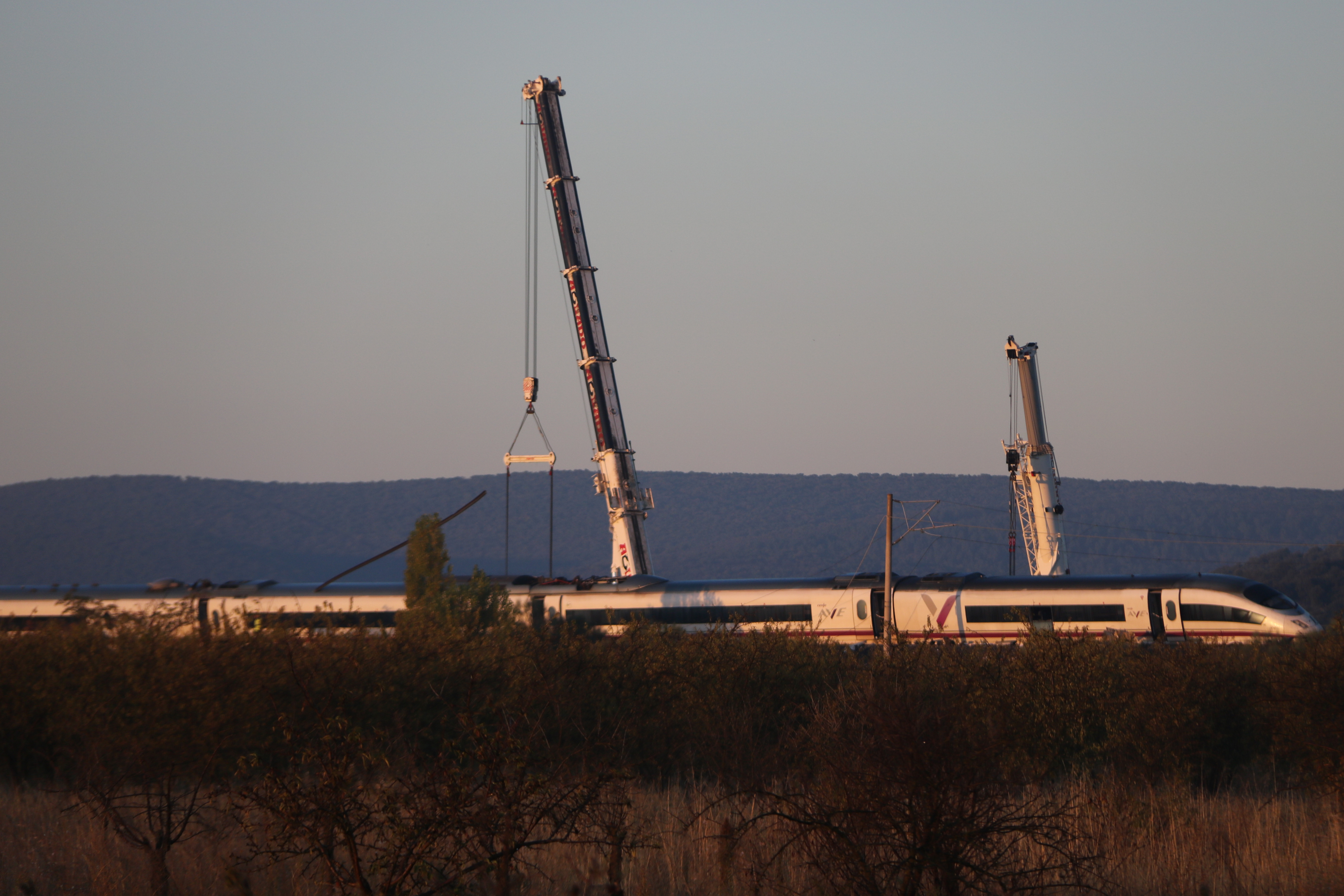
There was no ambulance activity during the night, although some media outlets have reported the presence of hearses.
The President of Castilla-La Mancha, Emiliano García-Page, warned on Wednesday night that there could still be more fatal victims found.
The need for medical services reduced through the evening and night, as the accident occurred in a way that allowed for rapid access by emergency responders and the evacuation of the injured, who were transported via ambulances and helicopters.
According to sources from the regional government of Castilla-La Mancha, 110 people were admitted to medical facilities throughout the day.
Half of them have since been discharged, while 53 remain hospitalized with injuries of varying severity.
While operations continue at the scene, details regarding the moments leading up to the accident are emerging.
Audio recordings of conversations between the Adif control center at Atocha, in Madrid, and the train drivers involved in the tragedy have now been made public.
The recordings reveal that the driver of the AVE train was instructed to resume travel at a "normal" speed, while, at the same time, the driver of the Iryo train reported that they were unable to get their train moving.