Human case of swine flu detected in Lleida
Meanwhile, African swine fever cases in wild boars are increasing in high-risk zones

The health department has detected a human case of swine flu in Lleida, located in eastern Catalonia.
This is the fourth infection of this virus in people reported in Spain since 2009 and the second in Catalonia, where the latest case was in 2024.
The health department has acknowledged that this is not a typical infection, as positive cases usually affect farm workers. So far, no additional cases have been detected, and the situation is considered to be under control.
The disease was discovered by accident, as the patient had gone to the hospital for other issues and had no respiratory symptoms, but a sample was taken as part of the epidemiological surveillance of influenza viruses.
Neither the patient nor any of their contacts had been exposed to pigs, farms, or other animals that could transmit the virus, and none of the contacts showed any symptoms.
Two possibilities are being investigated: asymptomatic flu, or that the patient was not infected but that, for some reason, there was environmental contamination affecting either the patient or the sample.
The department has emphasized that the risk to the public of contracting this virus is very low.
African swine fever
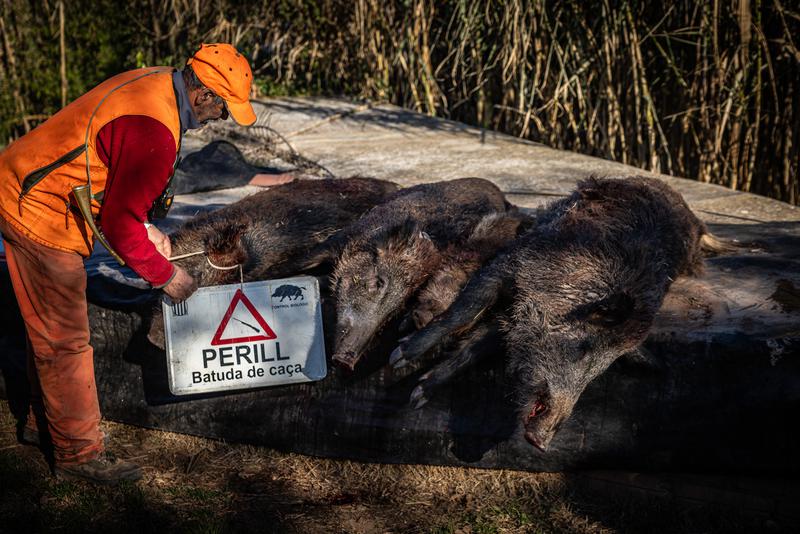
In addition, Catalan Agriculture Minister Òscar Ordeig has announced 33 new wild boars that have tested positive for African swine fever, which is not the same as the swine flu detected in the person in Lleida.
The new cases fall within the current high-risk zone and bring the total number of cases to 195.
The minister has warned that the process of eradicating the disease will not be quick. In this regard, he recalled that Belgium took more than two years to be declared free of the disease.
This has affected foreign trade, but according to Ordeig, 83% of international markets remain open.
He also called for cooperation from both citizens and institutions to ensure the measures remain effective, urging people to comply with the restrictions in place and to refrain from tampering with the devices installed by professionals on the ground.
In total, 16 municipalities are located, in whole or in part, within the high-risk zone, including a small section of Barcelona.
In these municipalities, access to natural areas and participation in outdoor activities, whether individually or in groups, is prohibited.
However, residents may still access their homes, carry out economic activities in enclosed spaces, and visit restaurants or sports facilities.