Spain's Christmas lottery skips Catalonia, as coveted 'El Gordo' falls in Madrid and Castilla
'The Fat One,' which awards €400,000 to each of 1,980 winning €20 tickets, went to number 79432


The traditional Christmas lottery, the largest in the world and the second-longest running, awarded more than €2.7 billion in prizes across Spain on Monday, marking yet another record edition.
The coveted top prize, 'El Gordo' (The Fat One in English), skipped Catalonia and went entirely to Castilla y León and Madrid, with the winning number 79432.
El Gordo awards €400,000 per 'décimo,' Spanish for one-tenth of a ticket, each priced at €20, with 1,980 winning 'décimos' assigned to the top number.
The second prize, which awards €125,000 per décimo, was 70048 and went entirely to a single lottery administration in Madrid.
Despite limited luck in the top prizes, the third prize, which awards €50,000 per décimo, fell to several Catalan towns, mostly in Sant Boi de Llobregat.
Catalonia also received several series of both fourth prizes, each awarding €20,000 per décimo. These prizes went to Barcelona, Badalona, Arenys de Mar, Olot, Sort, and Sant Boi de Llobregat, under the numbers 78477 and 25508.
Some series of several of the eight fifth prizes also went to Catalonia, distributed across Barcelona, Tarragona, L'Hospitalet de Llobregat, El Prat de Llobregat, Viladecans, Montgat, Sort, and Porqueres.
Prizes and results
- 'El Gordo' (€400,000 per décimo): 79432
- Second prize (€125,000 per décimo): 70048
- Third prize (€50,000 per décimo): 90693
- Fourth prize (€20,000 per décimo, on two numbers): 78477 and 25508
- Fifth prize (€6,000 per décimo, on eight numbers): 23112, 60649, 77715, 25412, 61366, 94273, 41716 and 18669.
In addition to these major prizes, there are smaller prizes like the pedreas, which award €100 per décimo to nearly 2,000 numbers.
The smallest prize is the reintegro, a cashback prize where you receive your €20 back if your ticket’s last digit matches the last digit of the winning number.

The lottery is deeply embedded in Spanish culture, with an estimated 70-90% of the adult population taking part each year.
This year, Spaniards spent €3.55 billion on the lottery, an average of more than €72 per person. In Catalonia, spending was slightly lower, at around €53 per resident.
Castilla y León was the autonomous community with the highest spending, averaging €118 per person.
For those unfamiliar with it, the scale and traditions surrounding the lottery can be hard to comprehend.
To illustrate, people line up for hours at places believed to bring good luck, travel to other cities to buy tickets, and perform all sorts of quirky rituals in the hopes of winning.

How does it work
The lottery system is unique and can be a bit confusing, even for those who have grown up with the tradition.
Unlike other lotteries, where a single winner claims a massive prize, Spain's Christmas lottery distributes its winnings widely, creating thousands of winners.
There are only 100,000 ticket numbers, ranging from 00000 to 99999, and each number is printed on 1,980 décimos.
A décimo, which means "a tenth of a ticket," is the most common ticket people buy, costing €20.
The total prize pool is €2.7 billion, divided into thousands of prizes.
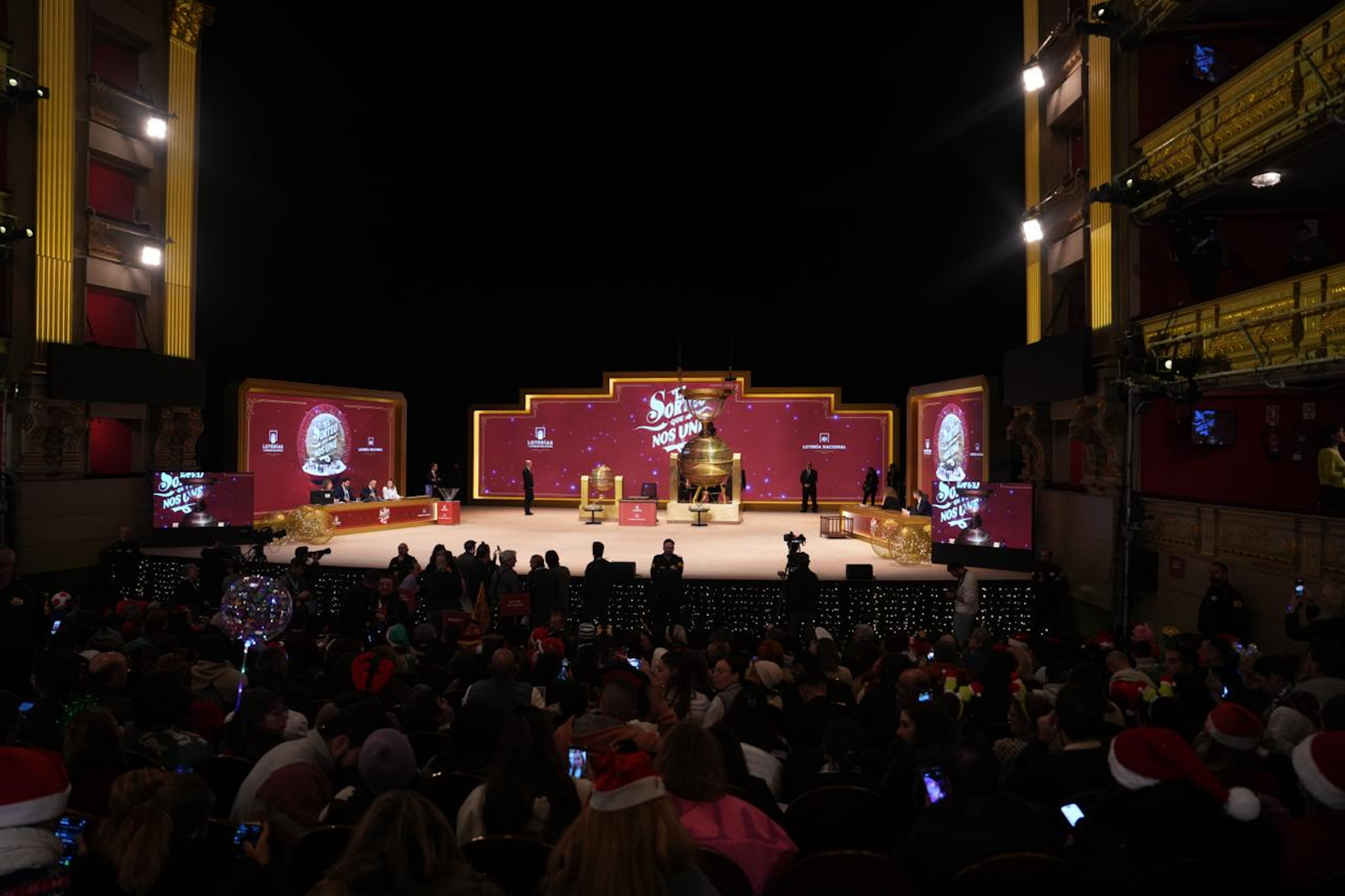
The draw
The draw has traditionally taken place at Madrid's Teatro Real. If the lottery itself is steeped in mysticism, the draw is even more so.
Two large golden 'bombos,' drums, hold the balls used in the draw. The larger 'bombo' contains all the lottery numbers, from 00000 to 99999, while the smaller one holds the corresponding prizes.
The process is fairly simple: one ball is drawn from each bombo and announced to the audience.

Adding to the ceremony's uniqueness is the way the numbers are announced, they are sung by children from the San Ildefonso school.
This school, formerly an orphanage, now houses children aged 6 to 14 whose families are facing difficult economic situations. The residence provides schooling, accommodation, and meals throughout the week.
In the stands of the Teatro Real, hundreds of people with décimos gather, hoping to hold the winning number. It is traditional for them to dress in quirky ways to attract luck for the prize.
To learn more about 'El Gordo,' listen to this episode of our podcast Filling the Sink from 2024.