Sagrada Família: timeline of a temple under construction for 144 years
Glory facade remains last challenge, with plans to relocate residents to fulfill Gaudí's envisioned staircase
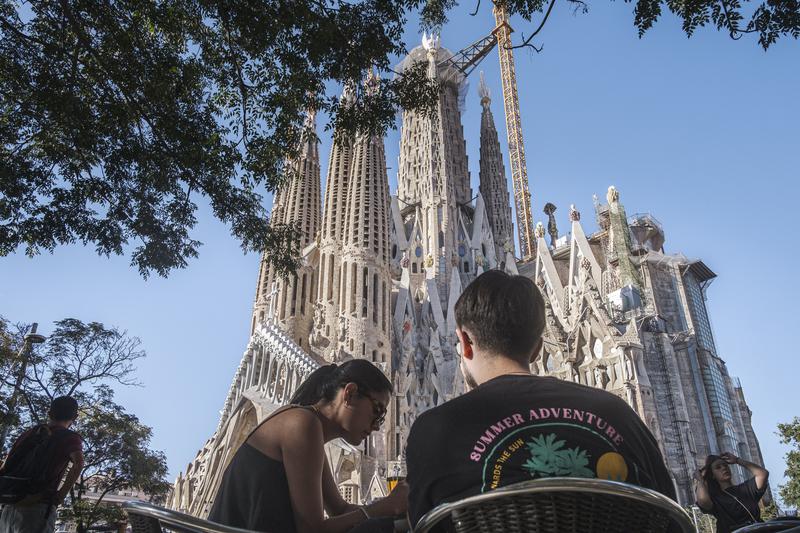

When Pope Leo XIV blesses the Tower of Jesus of the Sagrada Família next Wednesday, June 10, it will be exactly 144 years, 2 months, and 22 days since the laying of the first stone of the famous temple.
Back on March 19, 1882, the first construction project was promoted by the Association of Devotees of Saint Joseph, and Antoni Gaudí was not part of the initial plans.
The brilliant architect did not take over the reins until a year later, and in doing so, he turned the original neo-Gothic design upside down, turning it into the iconic work that, nearly a century and a half later, is beginning to look almost as he imagined it.
However, the final projected end date is still a decade away, in 2036.
Beginnings
In 1881, the Devots de Sant Josep association bought a 12,800m² plot of land between Marina, Provença, Sardenya and Mallorca streets to build a temple.
Originally, it was to be a neo-Gothic style construction, in line with the prevalent style of the day, under the vision of diocesan architect Francisco de Paula del Villar. However, a year later, Antoni Gaudí took over the project after del Villar was dismissed due to disagreements with the association.
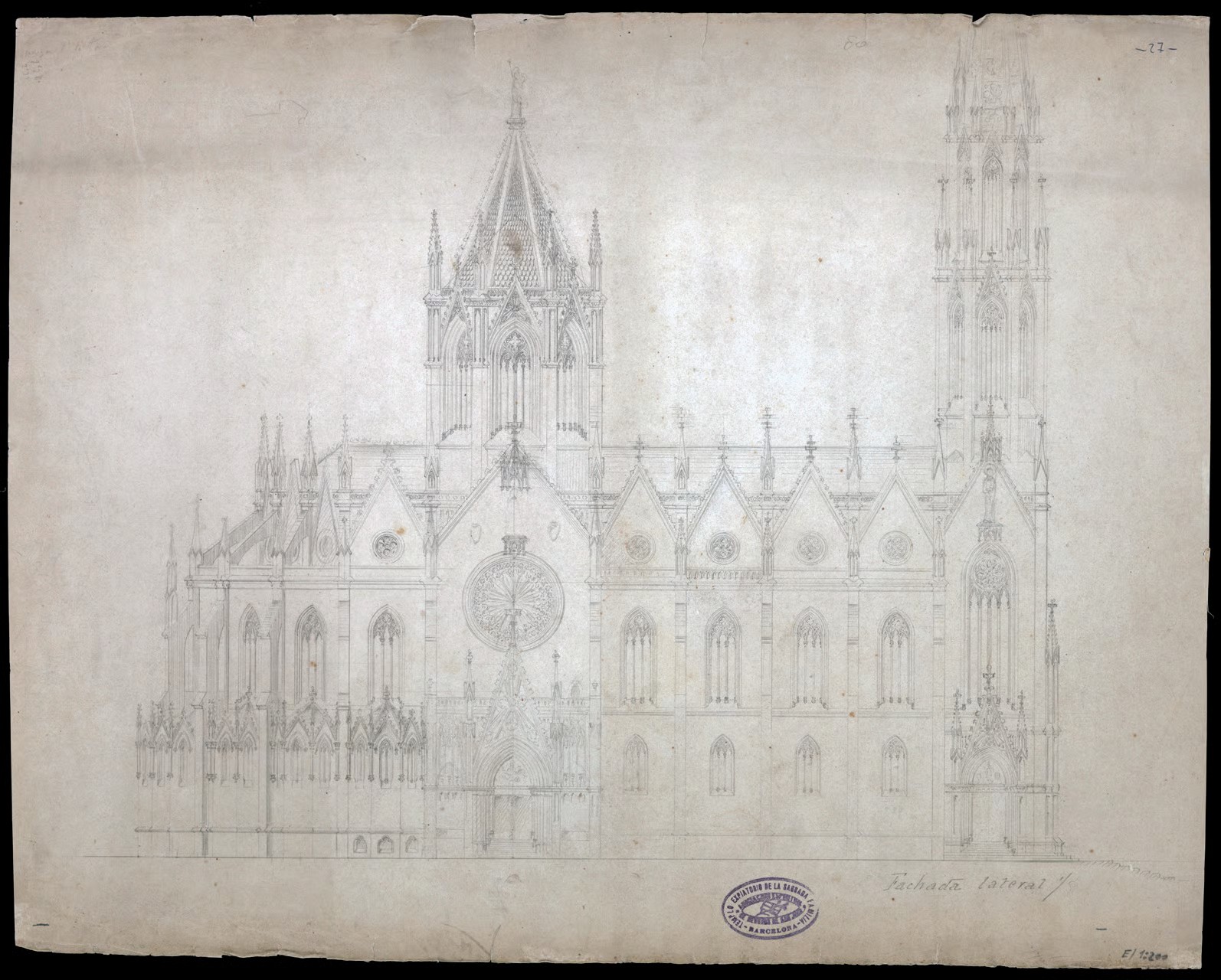
The modernist architect transformed the designs from top to bottom, and imagined the colossal modernist marvel that today is visited by nearly 5 million people annually.
What Gaudí saw in his lifetime
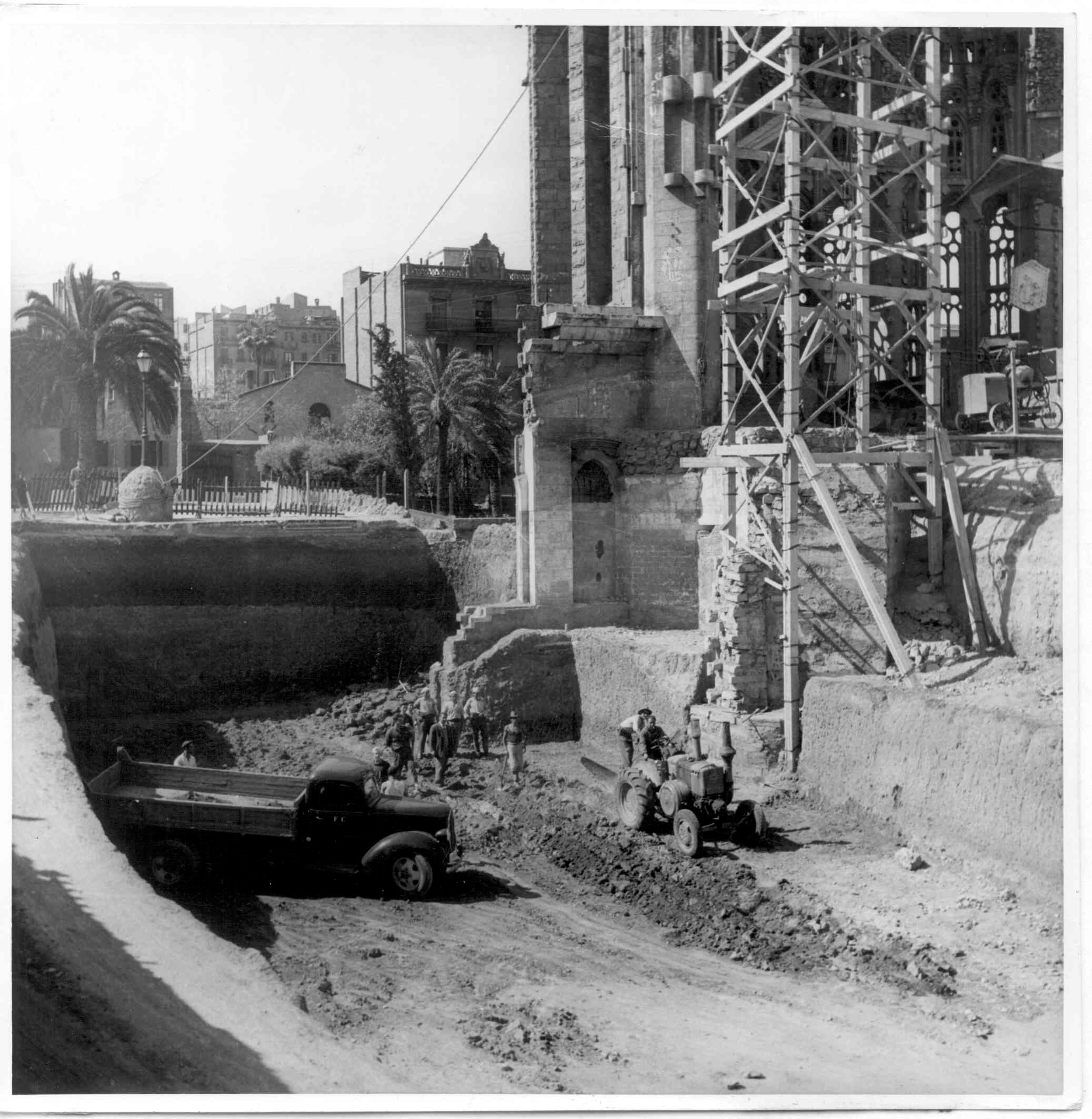
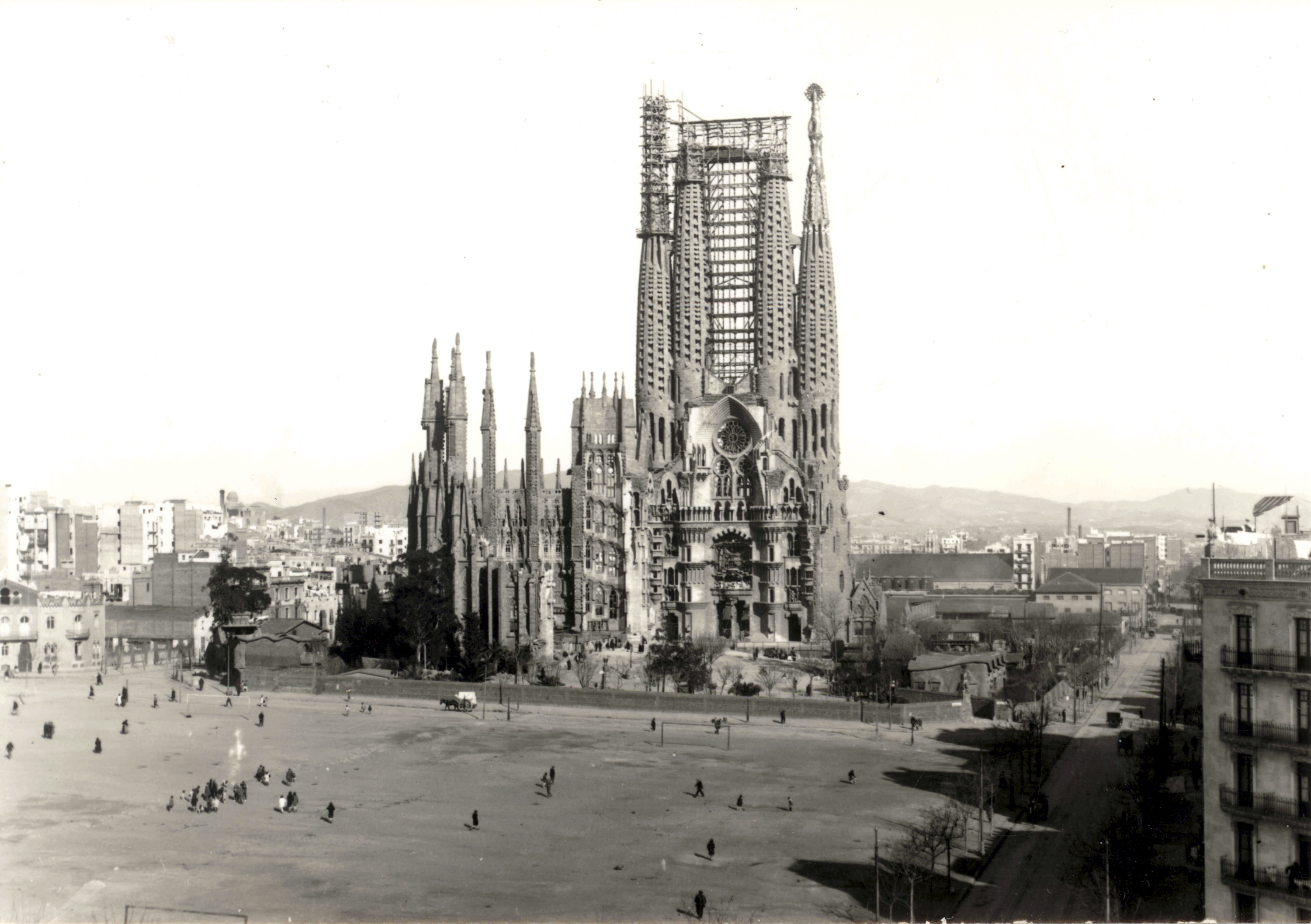
Of the temple that we know today, Antoni Gaudí was only able to witness the construction of the chapel of Sant Josep in the crypt (1885), the apse facade, which is the exterior wall at the altar end of a church (1894), the portal of the Rosary (1899), the schools (1909), and the Nativity facade up to the crowning of the bell tower dedicated to the apostle Barnabus (the first to be built, in 1925).
In 1926, Gaudí was the victim of a tragic accident, when he was struck by a tram on Gran Via de les Corts in Barcelona. He ended up dying from the injuries caused by this collision three days later, on June 10. Gaudí was buried in the Chapel of Our Lady of Mount Carmel inside the crypt.
From then on, his own disciple Domènec Sugranyes took over the work. His period was marked, above all, by the fire caused in 1936 in the temple by a group of anarchists after Franco’s coup d’Etat and the start of the Civil War, which burned the crypt where Gaudí's workshop was located.
In the fire, plans, drawings, original photographs were burned and some of the scale plaster models that the architect had left were shattered.
Recovering plans, first collections
The architect Francesc de Paula Quintana, a collaborator of Gaudí in the last years of his life, rebuilt some of the damaged models, which have served as models to continue with the work "according to Gaudí's original idea," as the temple's Construction Board says.
Until the mid-20th century, work continued on the foundations of the Passion facade, the steps of the Nativity facade, and in 1958, the sculptural ensemble representing the holy family, the work of Jaume Busquets, was installed.
In those years, the first collection was also organized to pay for the works.
Visit from John Paul II
In the middle of the 1970s, the Sagrada Família began to take the shape that makes it so recognizable today, although at a much reduced scale compared to today.
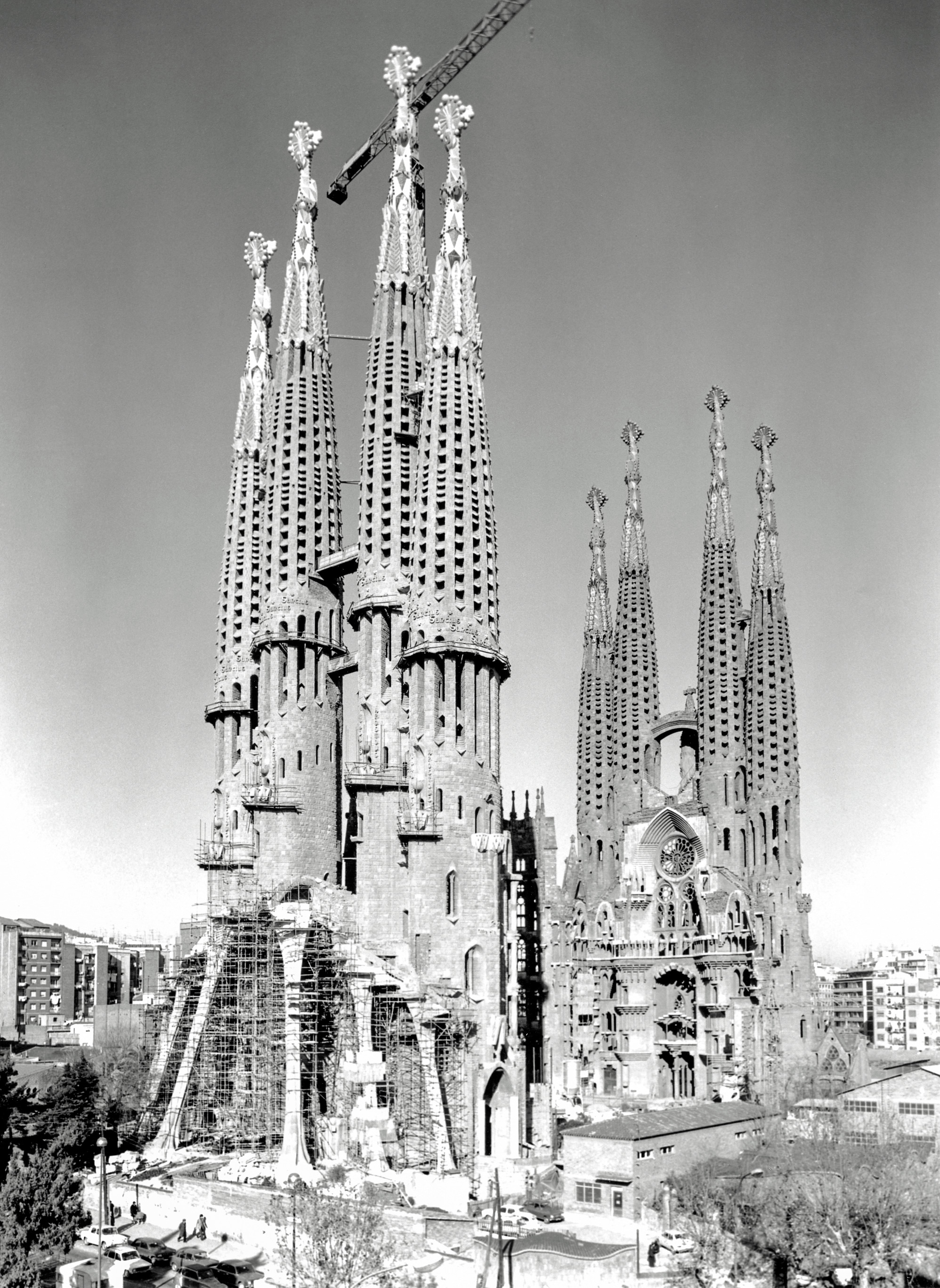
Photos from 1976 show a church with the Nativity and Passion facades completed, with their bell towers, and the beginning of the facades of the side aisles.
Pope John Paul II witnessed this construction phase, even without the central nave of the church covered, when he visited Barcelona in 1982, exactly a century after the start of the works.
In the mid-1980s, construction began on the foundations of the columns, vaults and facades of the main nave, the transepts, and the apse. These works were completed, as a whole, in 2010.
21st century
In the last quarter of a century, the pace of works has accelerated significantly, driven by the income generated by international tourism which has grown exponentially.
The declaration of the Nativity facade and the Crypt as a UNESCO World Heritage Site in 2005 also contributed to this growth.
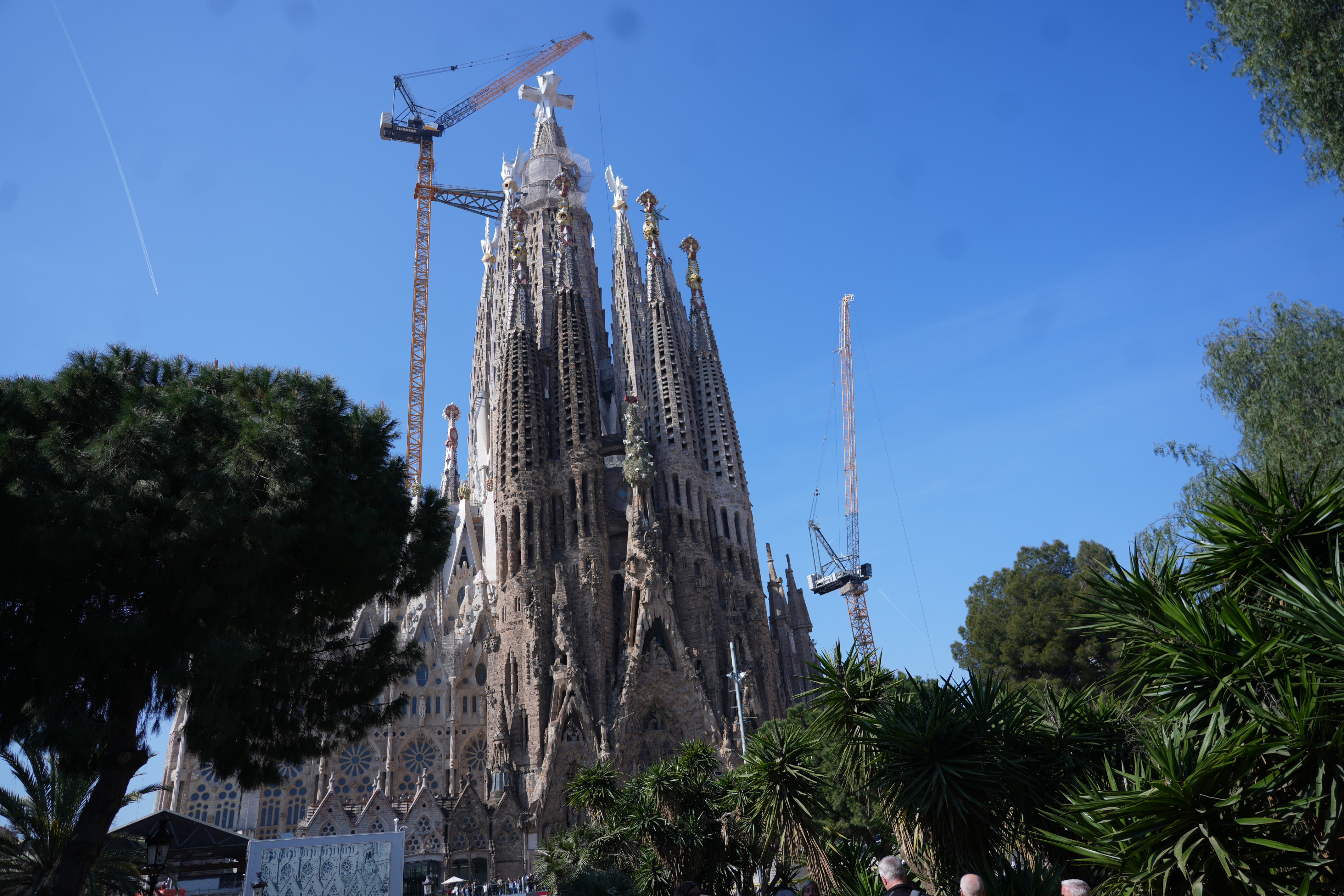
In 2010, Pope Benedict XVI visited the basilica.
Two years later, the last change in leadership of the architectural project came, when Jordi Faulí succeeded Jordi Bonet as coordinator.
The last decade has seen the construction of the great towers of the Sagrada Família, including the central towers of the four Evangelists (Mark, Luke, John and Matthew), the tower of the Virgin Mary, and the tallest of all, that of Jesus Christ.
All of this came despite a significant pause in construction forced by the coronavirus pandemic.
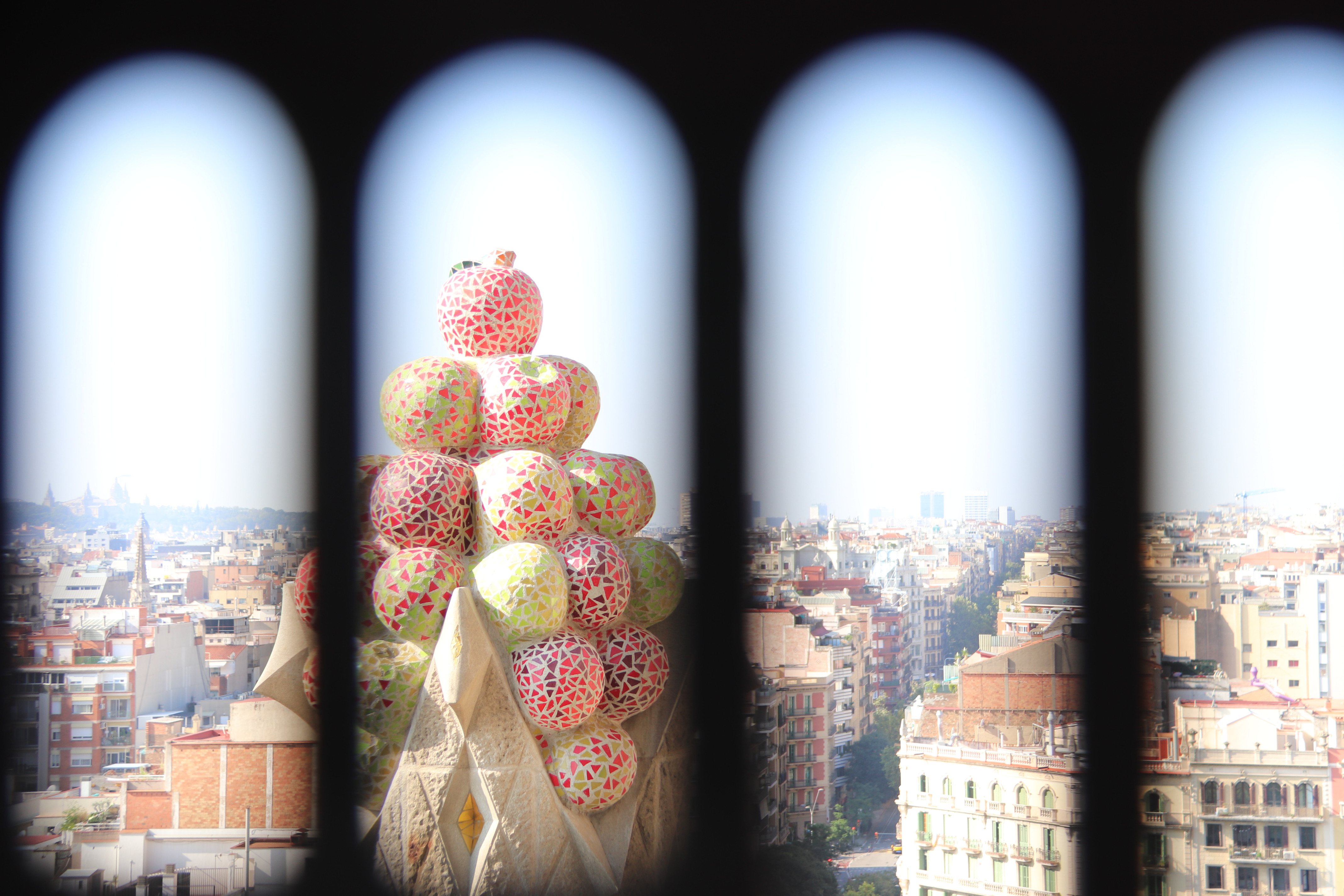
Due to this halt and the drop in income due to the impact on international tourism, the Construction Board announced that plans to finish the Sagrada Família in its entirity in 2026 would not be fulfilled, as has been the case.
A new milestone was achieved in 2021 with the completion of the tower of the Virgin Mary, crowned with a 12-pointed star that illuminates the night of Barcelona. It is the second tallest tower in the temple, and for some years was the tallest before it was overtaken.
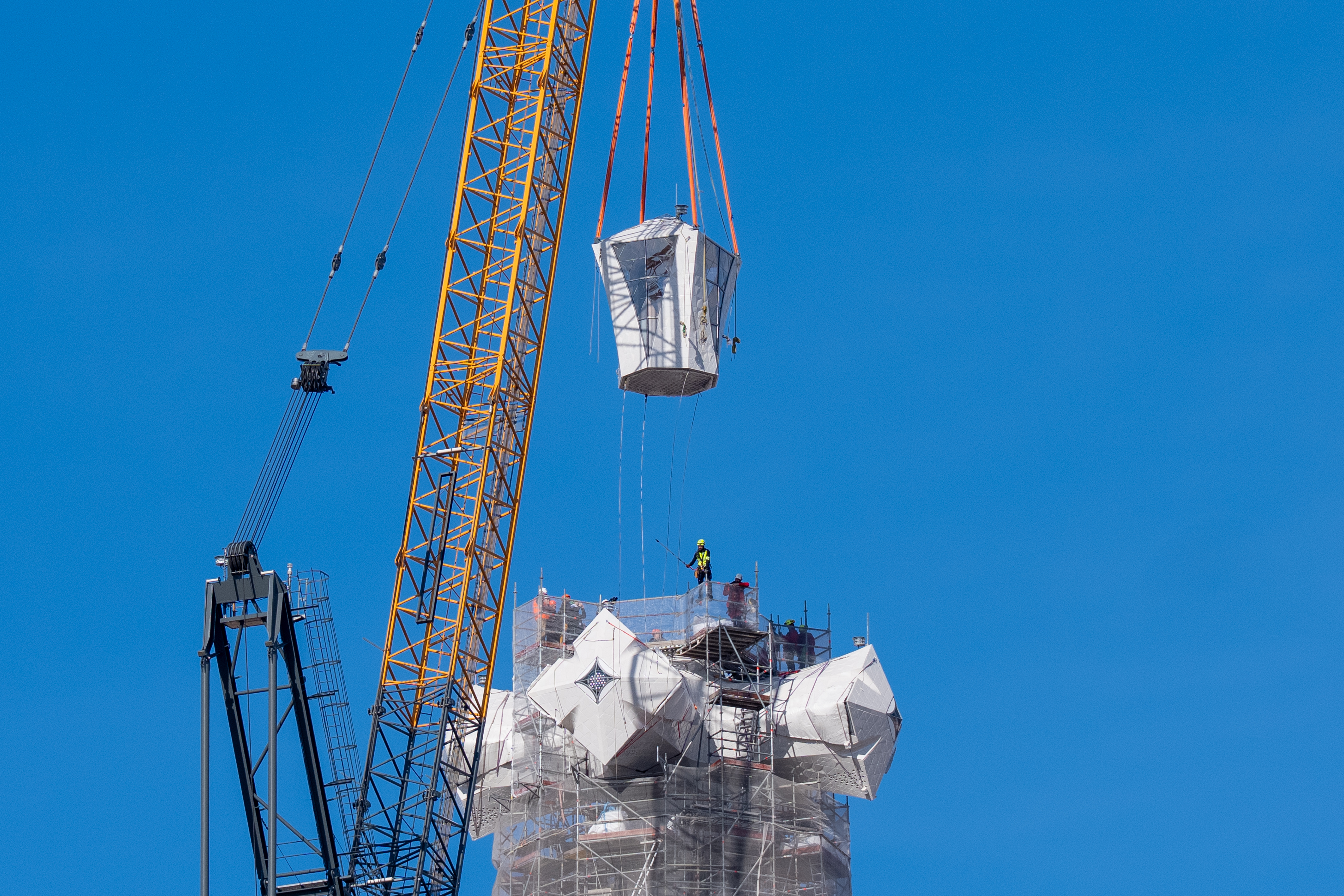
On February 20, 2026, the tower of Jesus Christ, crowned by a large white cross, was completed.
2036, the last horizon
The last constructive challenge of the temple is the Glory facade. Gaudí's original project included a long staircase that, if carried out, would involve the demolition of some residential buildings nearby on Carrer Mallorca.
According to the Construction Board, an agreement with Barcelona City Council is “close” to charge the urban plan to allow for this, which would involve expropriation of the land and relocation of residents.