'I will pay you next time': inside Catalonia's informal labour market
Fear of reporting and insufficient labour inspections allow informal work to persist in Catalonia
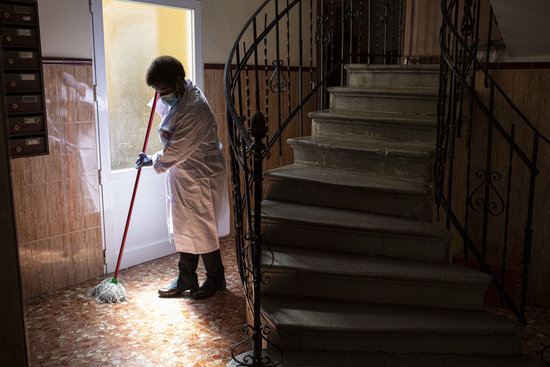
Over 840,000 people are estimated to live in Spain as undocumented migrants, according to 2026 data from the Funca Foundation.
Out of these, labour unions calculate over 190,000 of them reside in Catalonia, although "the official number does not exist," according to Óscar Riu, Secretary of Union Policy at UGT.
Riu explains the challenges undocumented people face: "For these individuals, finding formal employment is impossible."
So what do all of these people do for a living? The reality is that many end up working "informally," without a legal contract, and are paid under the table in cash.
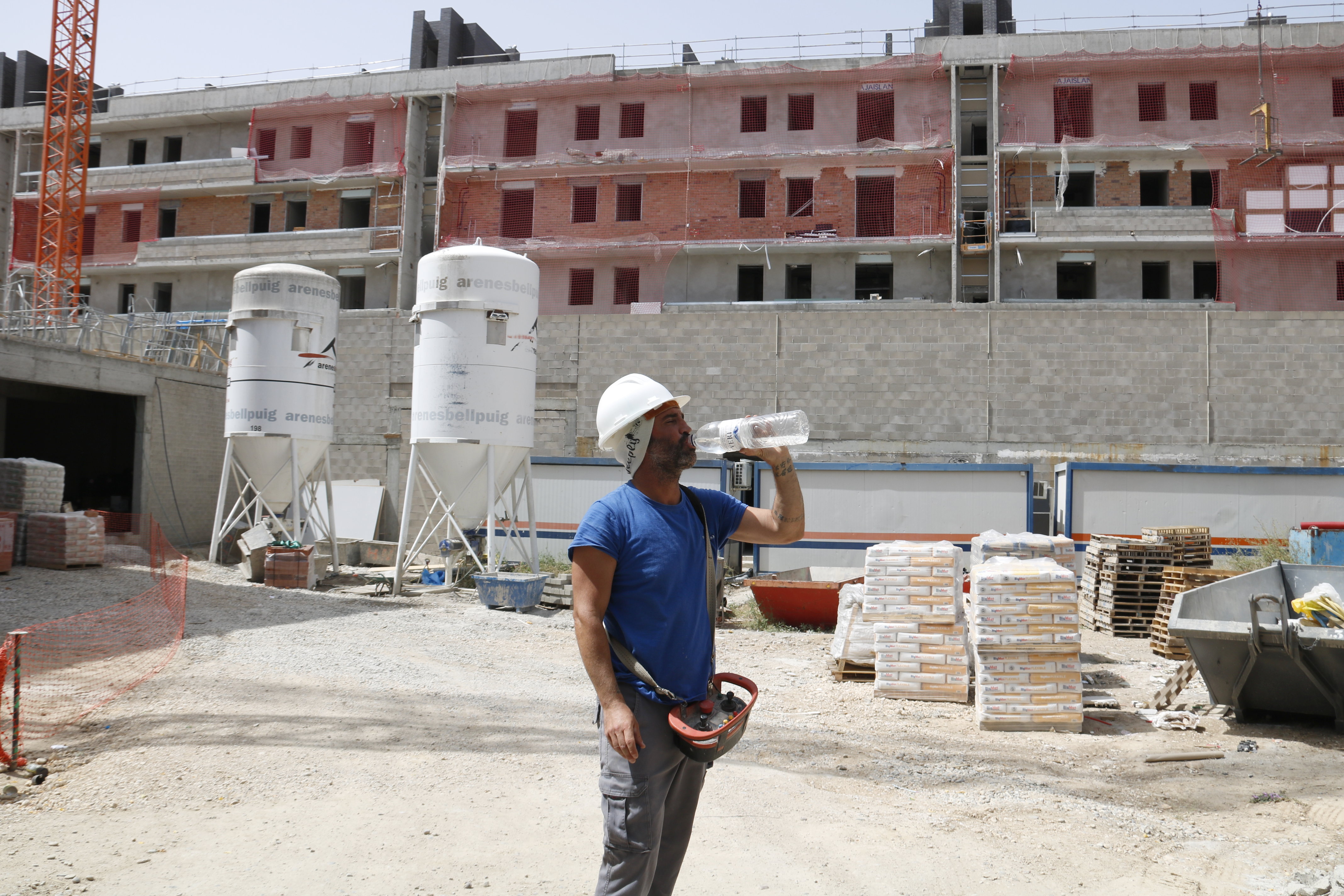
Some sectors are more affected than others. When speaking to labour unions, both Riu and Fany Raquel Galesas Sánchez, Secretary of Equality, Women, and Domestic Workers at CCOO, highlighted the same sectors as being particularly affected: agriculture, domestic and care work, construction, hospitality, and delivery services.
Long days, low wages and mistreatment
To work legally in Catalonia and elsewhere in Spain, one must obtain a NIE – a personal identification number and tax code for foreigners.
As Catalan News has previously reported, obtaining this number can be extremely difficult.
In addition, non-EU residents must obtain work and residence permits – the documentation needed to access the formal labour market.
In certain sectors, hiring people without documentation is not uncommon, and one of the most affected is the domestic sector.
"Many foreign women are employed to work in private homes, often caring for elderly family members, and are frequently expected to be available 24 hours a day, earning as little as €500–€600 per month with no vacation time," Galeas Sánchez says.
She continues: "Since many of these workers come from countries with even worse conditions, and because domestic jobs often provide food and housing, this income is often enough for them to send money back to their families."
In addition, reported mistreatment in the domestic sector cannot always be investigated by labour inspectors.
"There is a law that prohibits the labour inspection from entering a private home without a court order," Galeas Sánchez explains.
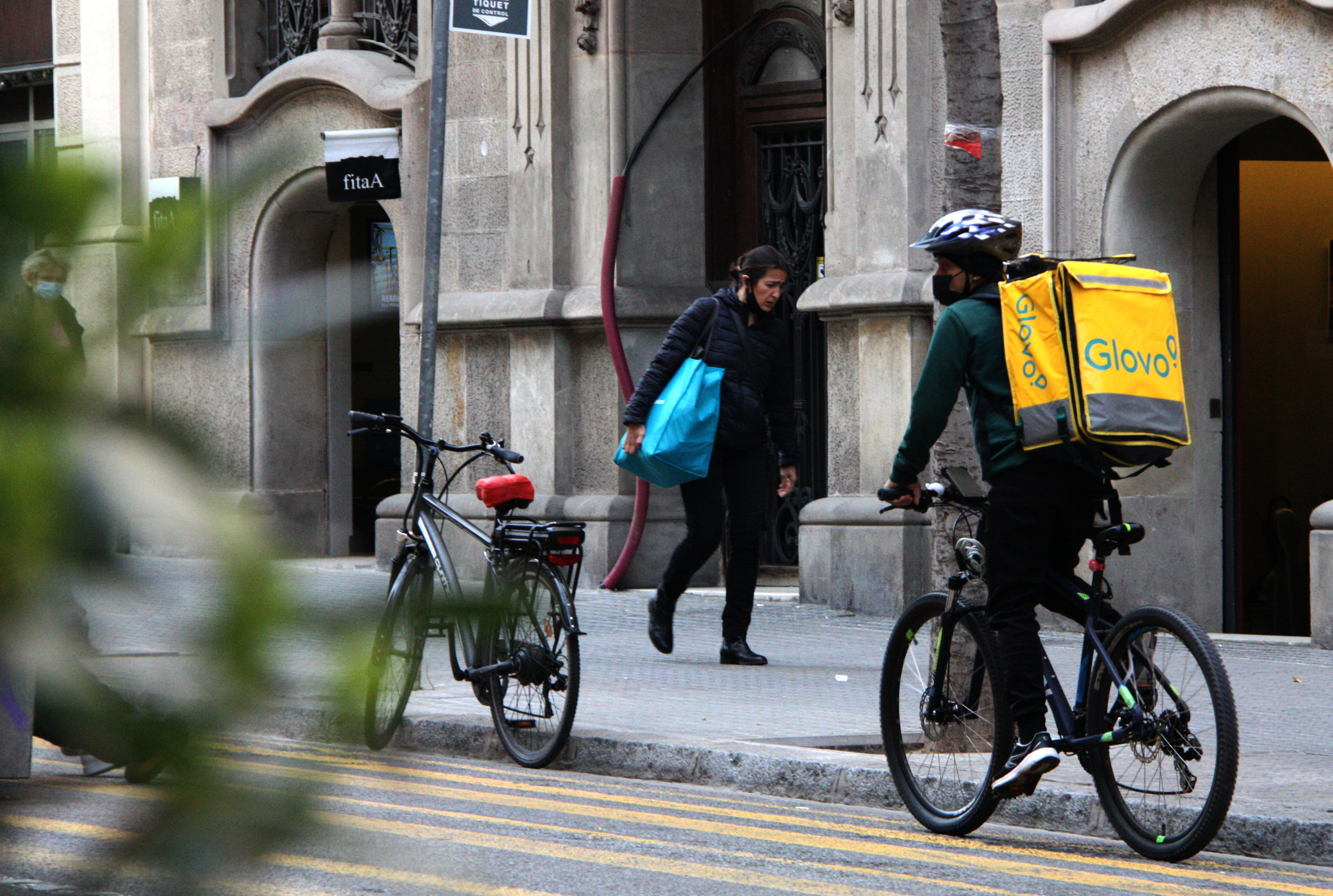
Another sector where it is common to work without documentation is the delivery sector. However, here the system is often bypassed in other ways, according to Nuria Soto, spokesperson for the riders' association "Riders X Derechos."
Workers sometimes use accounts registered under someone else's name, a person who has a valid NIE, while the person actually doing the job is someone else.
"There are people behind the accounts who work 30–40 hours a week but only get paid €500–€600 because the rest goes to the account holder," Soto explains.
"I will pay you next time"
Although informal work mainly affects non-regularized migrants, it is also common among Catalonia-born residents.
"In Catalonia and across Spain, there are still sectors that prefer not to hire workers formally and pay them off the books. Occasional jobs, delivery work, and especially summer positions in the hospitality industry are particularly affected," Riu explains.
Catalan News spoke with a legal resident who works in the restaurant sector and wishes to remain anonymous. He fears what could happen if his employers found out that he spoke to the media about his experience of working informally.
"I have a full-time contract with one part of my pay declared and the other part paid under the table. For example, all the over-time hours are paid under the table." he says.
The person has faced problems as "it turns out that if the money is not declared, it is very easy for the owner to tell you that he owes you nothing, because there is no proof of it. He always told me: 'I will pay you next time.'"
However, the next time never came.
While the contract specified 40-hours a week, this was in reality not the case as the owner wanted the man to work less hours in winter and more in the summer.
"He wanted me to work 20-25 hours all winter and then 65-70 hours in summer. I cannot do that," he says.
Hidden figures and lack of labour inspections
"People do not report things because they are afraid, if they do, they will lose their jobs." Galesas Sánchez tells Catalan News.
Despite the number of complaints being filed, both Riu and Galesas Sánchez say enforcement remains insufficient.
"There should be many more inspectors in Catalonia, we have one of the lowest ratios of labour inspectors per 100,000 workers in the European Union," Riu says.
The official number from the Catalonian Labour Inspection (La Inspecció de Treball de Catalunya) was 194 inspectors in 2025.
Spain has around one labour inspector for every 11,000 workers, which is below the International Labour Organization's benchmark of one inspector per 10,000 workers in industrialised economies.
It is also lower than the European average of about one inspector per 7,000 workers.
Catalan News contacted the Catalan Labour Inspection for a comment on this issue. However, they declined to participate in an interview.
Additionally, Dilara Ekmen, Co‑Director of the Catalan Commission for Refugees (CCAR), points out that in Spain asylum is often granted on a temporary basis and must be renewed periodically, making asylum holders dependent on the informal labour market.
By the end of 2024, more than 700,000 people were registered as asylum seekers or refugees in Spain, with hundreds of thousands of others still waiting for decisions, according to data from the United Nations.
Some people who work formally after receiving asylum may lose their status if their renewal application is denied.
When this happens, their documentation and work permit are immediately revoked, forcing them into the informal labour market.
South Americans most affected by informal work
Although informal work is common among immigrants arriving in Catalonia, Riu and Galesas Sánchez say people from South America make up the largest group, followed by Moroccans.
According to Galesas Sánchez, this is partly because many South Americans can enter Spain without a visa. She also points to difficult economic and social conditions in their home countries, which in some cases are worsening.
However, both Riu and Galesas Sánchez express hope that the new extraordinary migrant regularisation process will improve the situation for people working in the informal sector.
The measure could benefit around 500,000 people across Spain, including an estimated 120,000–150,000 in Catalonia, granting them the documentation needed to enter the formal labour market.