Best things to do this Christmas in Barcelona and Catalonia
From festive markets and decorated streets to big trees and traditional events, winter brings the territory to life
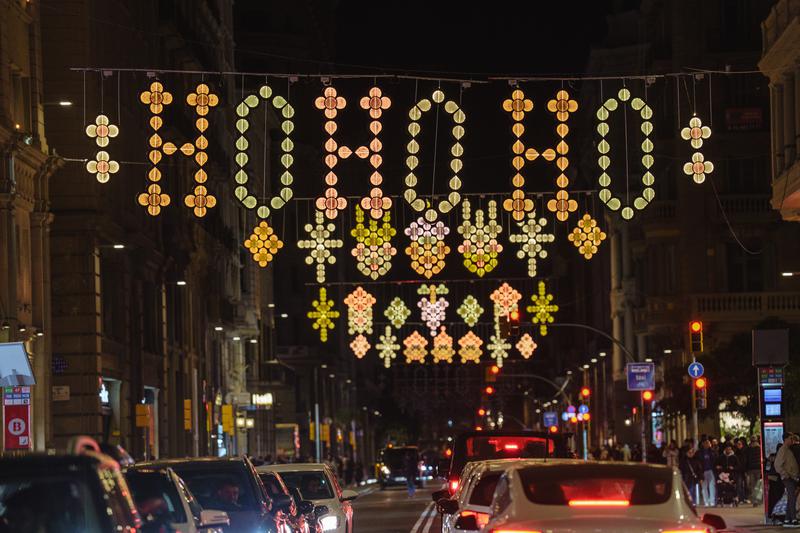

The Christmas season is here, and Barcelona and Catalonia are full of things to do. From festive markets and decorated streets to big trees and traditional events, winter brings the territory to life. Here's a simple guide to some of the best things to enjoy this time of year.
Christmas markets
Catalonia might not be the first place that comes to mind for Christmas markets, often linked to colder regions, but it actually has a wide and lively selection. These are some of the best ones to visit.
Santa Llúcia market
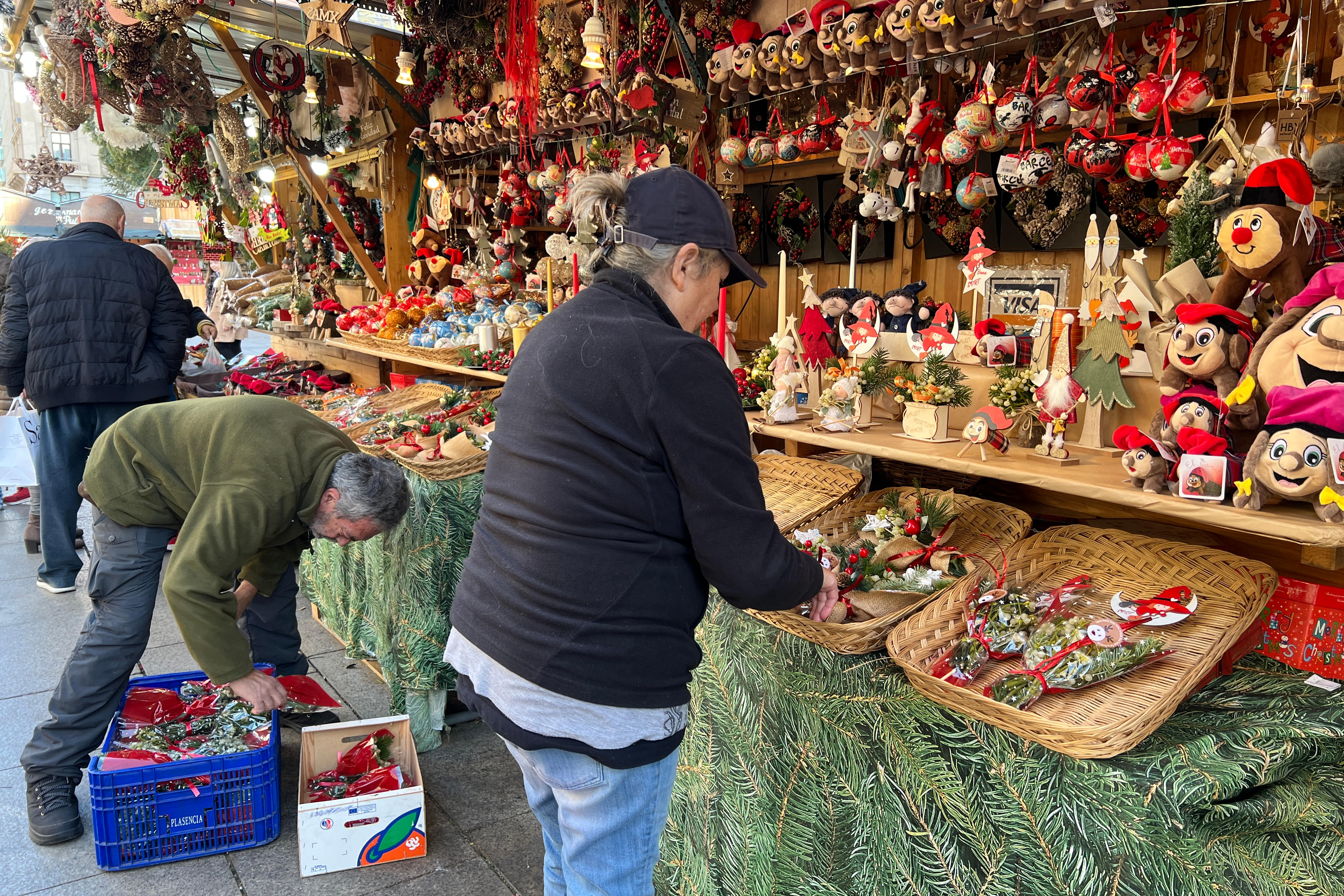
Right in the heart of Barcelona, in front of the Cathedral, you'll find the Santa Llúcia Fair. It's one of the oldest and largest Christmas markets in Catalonia. The stalls are filled with Christmas trees, decorations, nativity figures, and the famous 'caganers.' There are also plenty of handmade gifts and artisan products. The market runs until December 23.
Port Vell fair
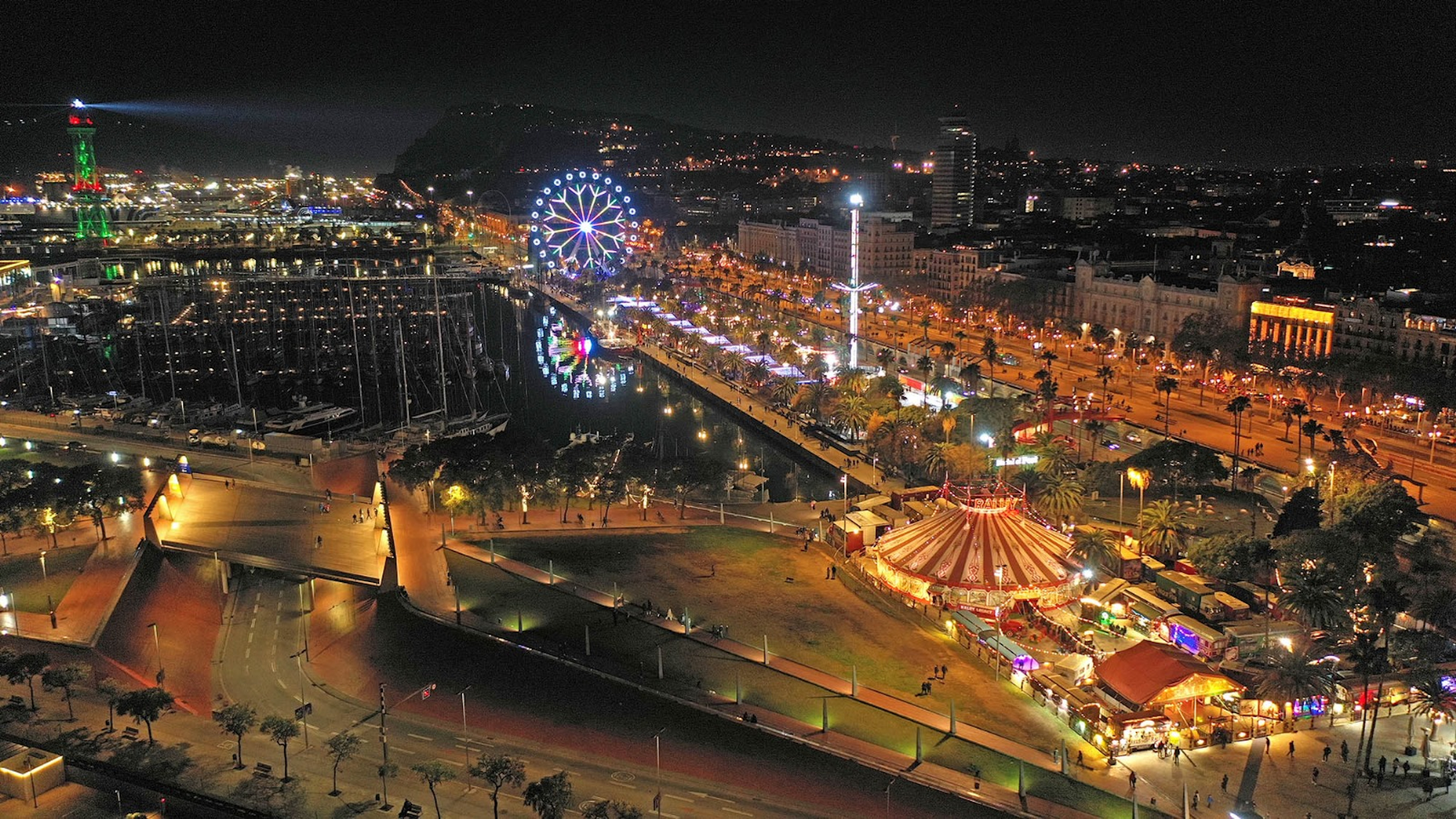
From the oldest to one of the newest markets in the city. Nadal at Port Vell is now in its seventh year and is set by the harbour, near Drassanes. It covers more than 24,000 square metres, and there's a giant Ferris wheel, a large ice-skating rink, and even a floating nativity scene. It stays open until January 6.
Festa del Tió
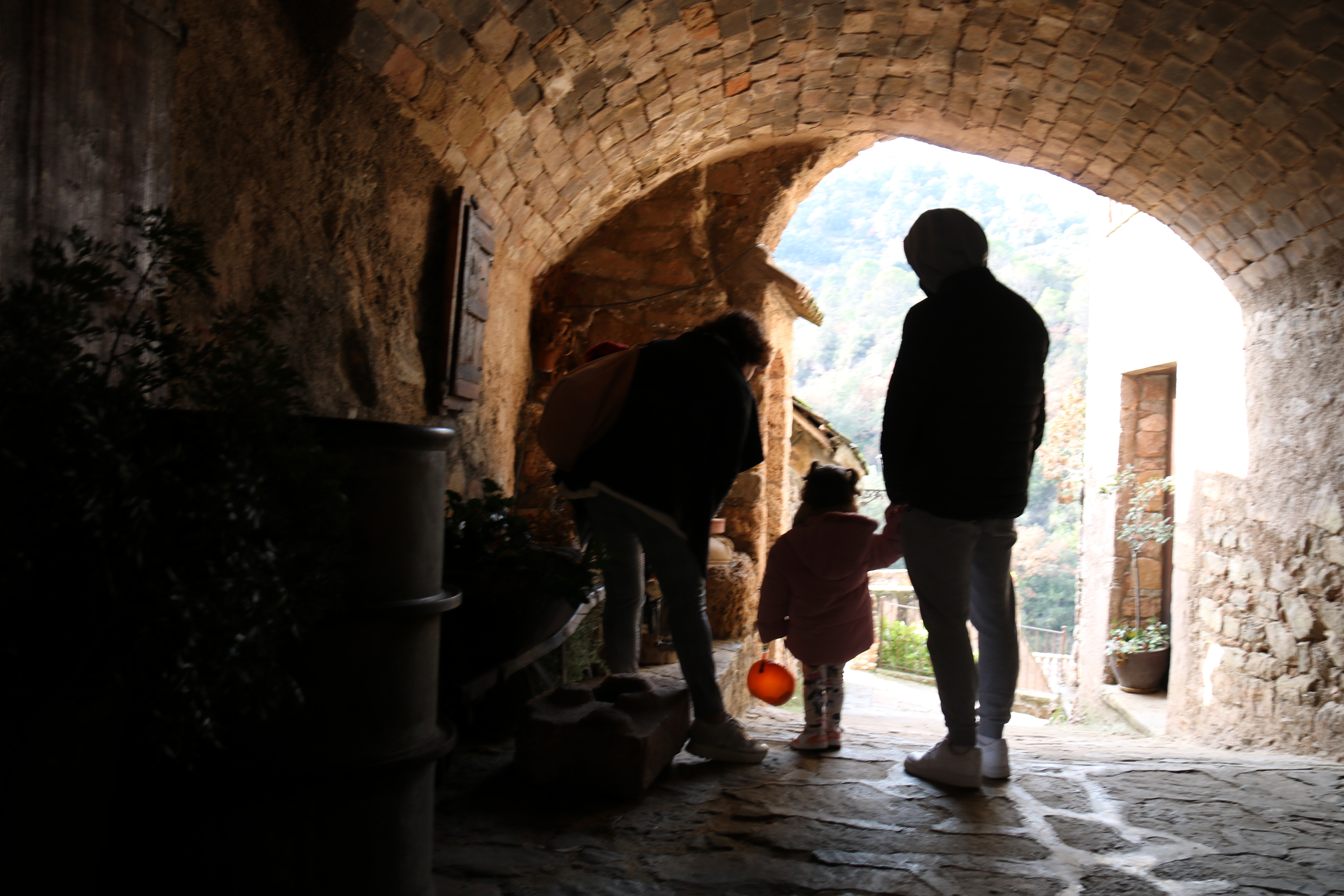
If you want to leave the city behind and experience something more traditional, the Festa del Tió in Mura is a great option. This small village, with just over 200 residents, is about an hour from Barcelona. The festival celebrates the 'tió,' the smiling log that "poops" presents. The town fills with decorated logs, making it a great place to walk around with the family, spotting them one by one in a warm, Christmassy atmosphere. The fair runs until December 21.
Christmas lights
Barcelona's main lights
While all Catalan towns get decorated with Christmas lights, Barcelona goes all out, and thousands of Catalans from outside the Capital descend here one day or another to see them. This year, lights are bigger than ever. They stretch across 126 kilometres of streets, lighting up 63 streets and 39 markets around the city. They also stay on later: until 1 am on weekdays, and until 2 am on weekends and festive nights.
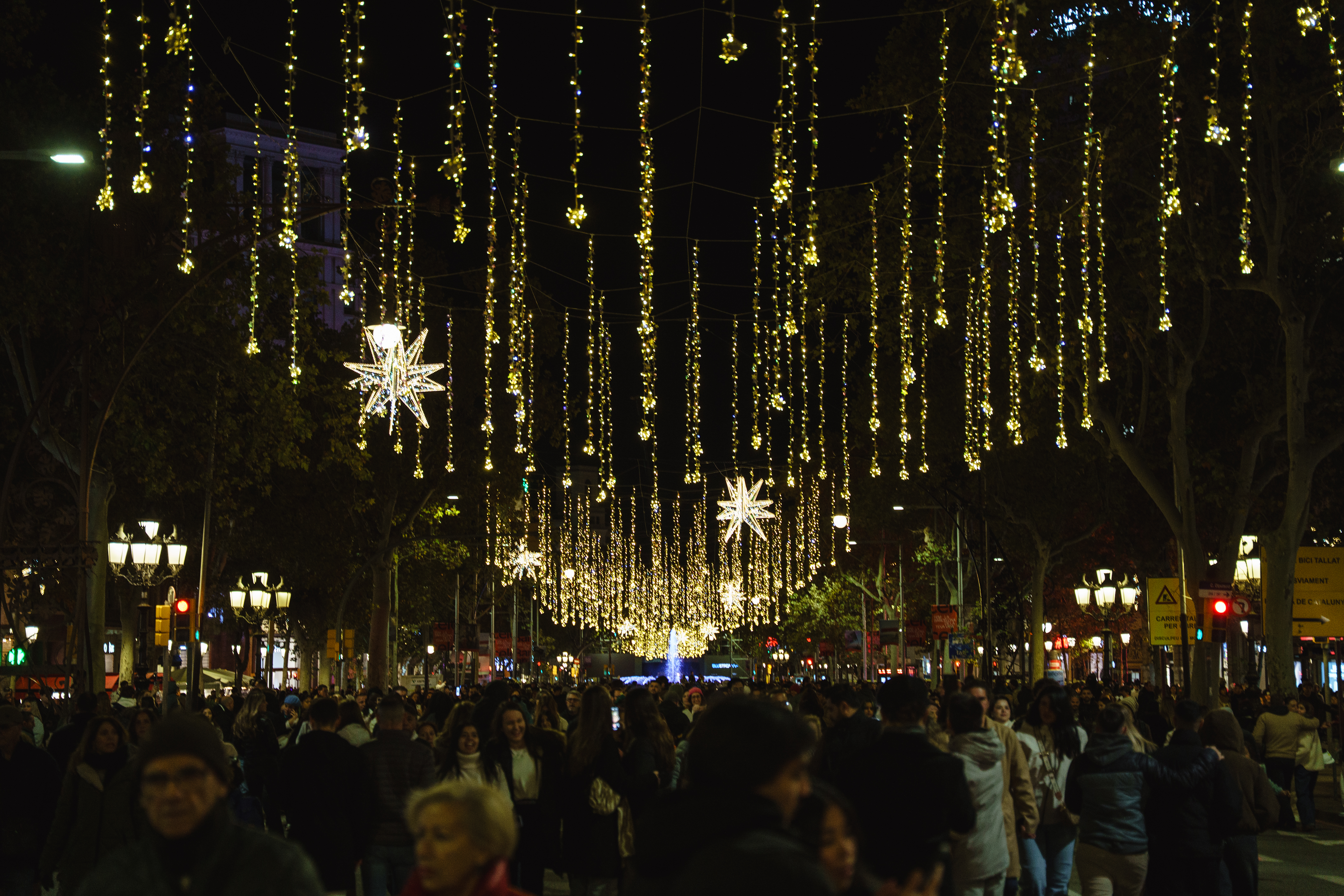
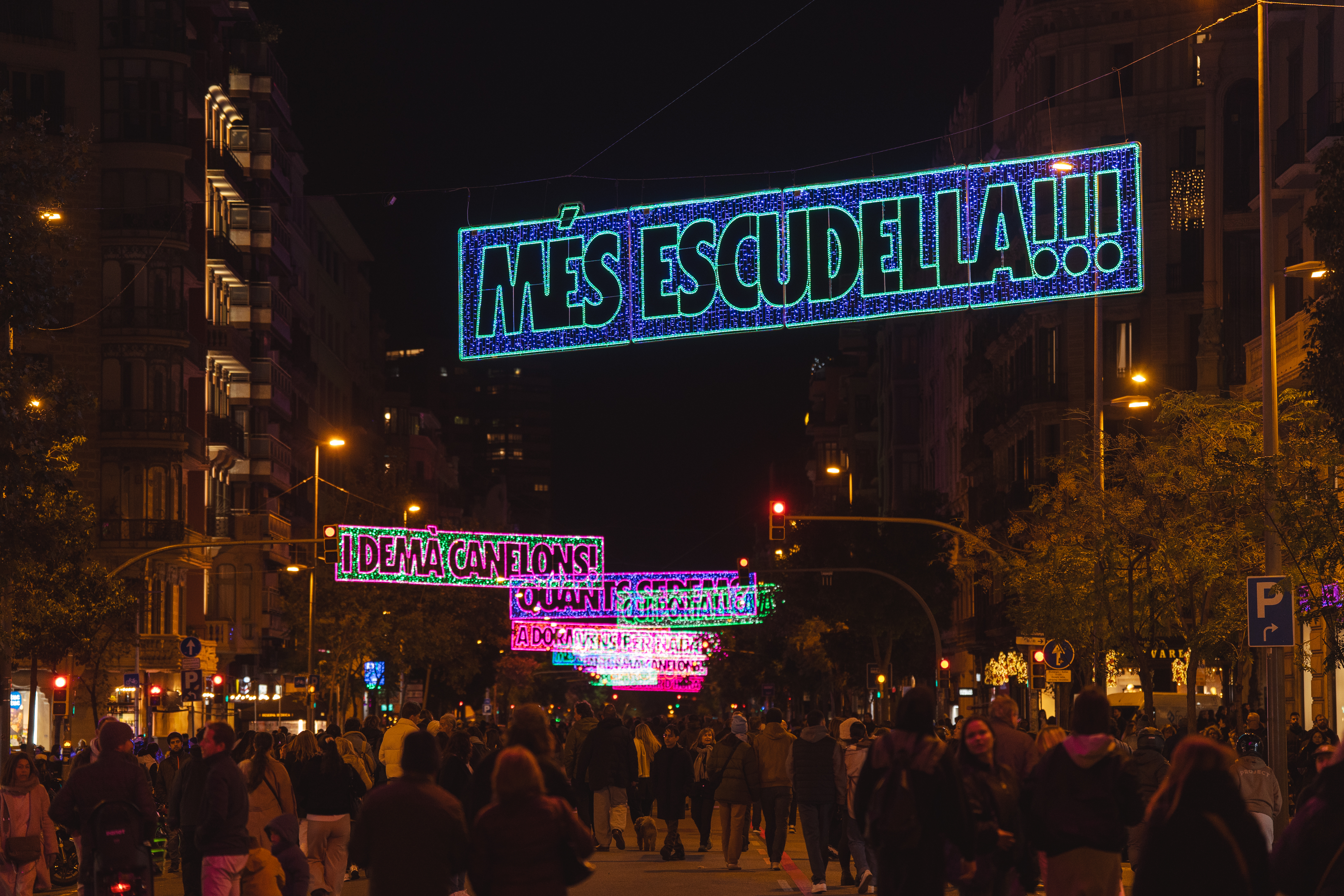
The lights have been especially innovative this year, and none more so than on Aragó Street. There, the displays have sparked plenty of debate. Some people love them, others really don’t. Instead of classic shapes, the lights feature phrases commonly heard during Christmas in Catalonia, like "I demà, canelons!" ("And tomorrow, canelons!," the traditional dish eaten on Boxing Day) or "Més escudella" ("More escudella," the classic Christmas soup).
For some, it’s a fun way to celebrate local traditions. For others, it just doesn’t work visually. Either way, it’s worth going to see them and picking your favourite saying.
Sant Pau Hospital
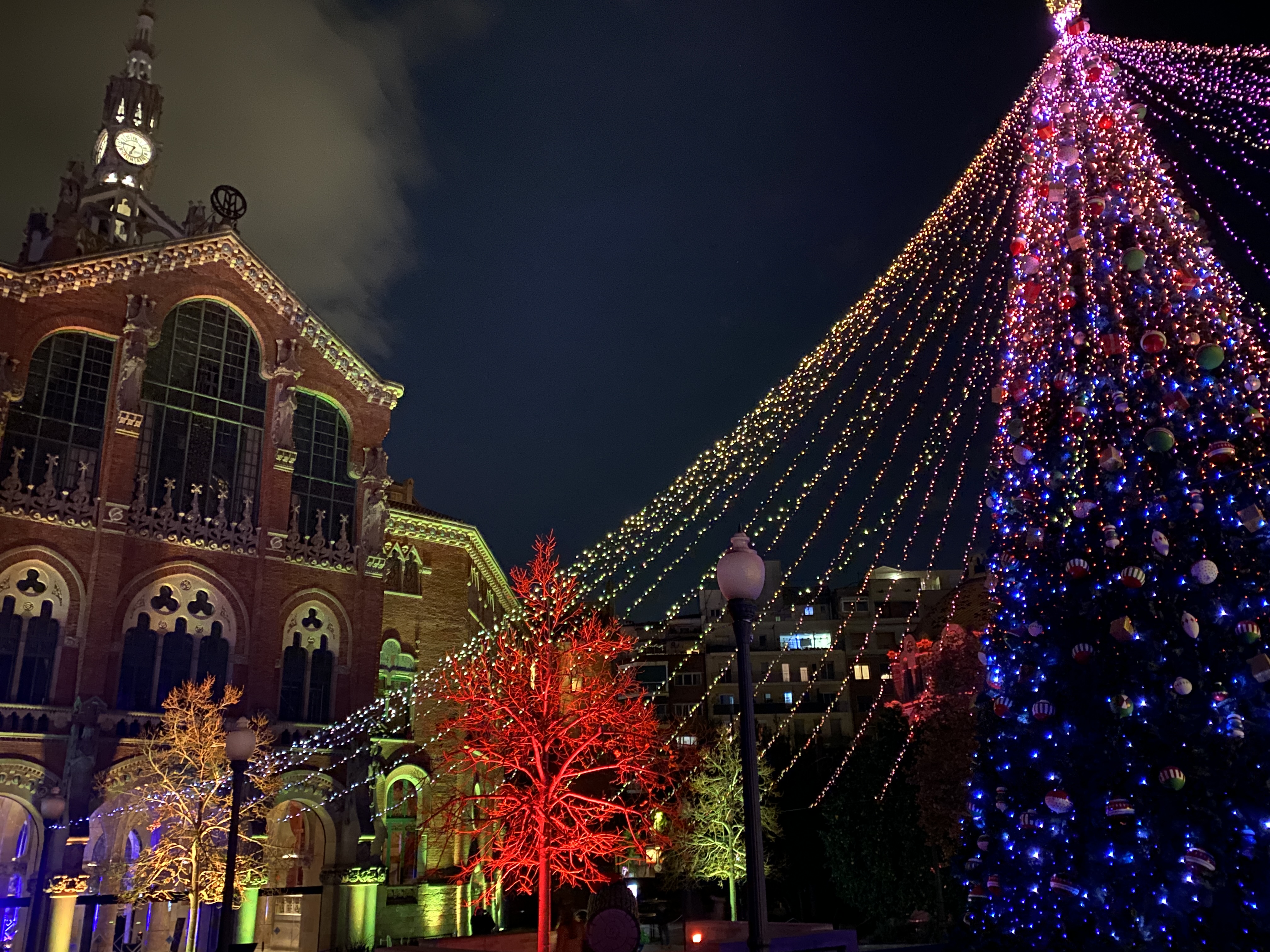
If you've already seen the main lights, or just want something different, there's more to discover. The Recinte Modernista de Sant Pau is a stunning Art Nouveau complex and a UNESCO World Heritage Site. It's impressive on its own, but during Christmas it becomes even more special.
Every year, Sant Pau sets up its own light show, and this edition aims to attract around half a million visitors before it ends on January 11.
The route includes 18 interactive stops, with augmented reality displays, a stained-glass installation by local artists, and a children's area designed as "King Balthazar's Camp."
Visitors are also invited to solve the 'Llumienigma,' a coded Christmas message hidden along the way.
Tickets are available for most nights, except December 24, December 31, and January 5. On selected days, reduced tickets are available for €10.
The tallest trees
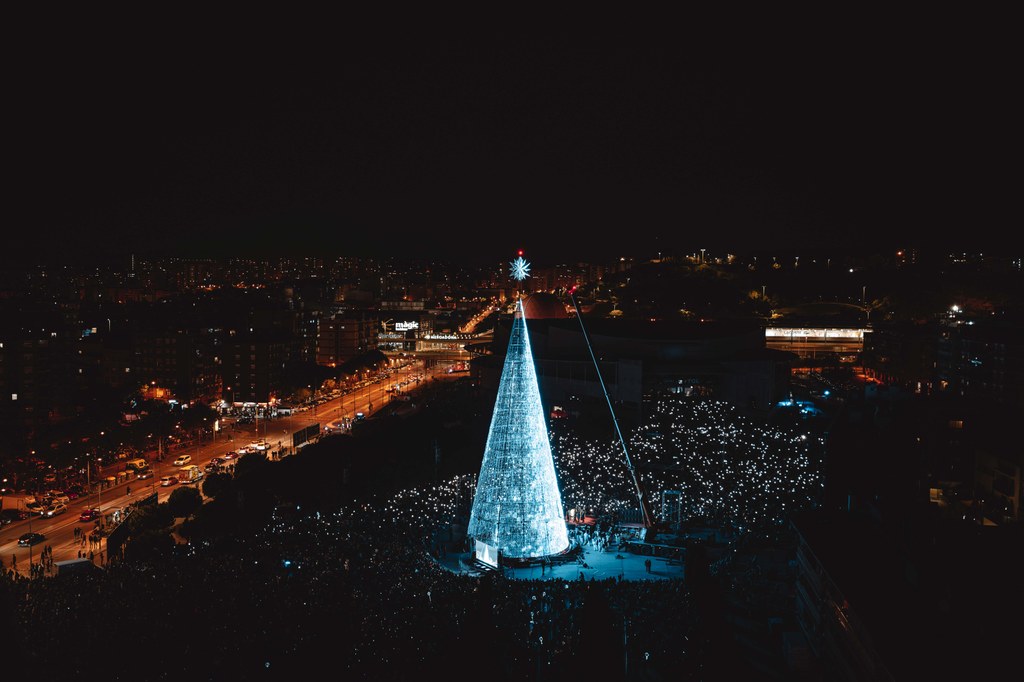
In recent years, Christmas trees have clearly entered a who-has-the-biggest-one competition. The current heavyweight champion is the Badalona Christmas tree, which stands 43 metres tall. The city claims it's the biggest in Spain, although Vigo, in Galicia, strongly disagrees. Either way, if you're into truly massive trees, this one is hard to miss.
Barcelona also has a good collection of large trees you can visit and take photos with. One of the most central ones is in Sant Jaume Square, right between the city council and the Catalan government buildings. It's a classic 15-metre tree in the heart of the city.
Just a short walk away, in front of the Cathedral and next to the Santa Llúcia Fair, there's another impressive tree set against a beautiful backdrop. It’s one of the most photogenic spots of the season.
This year, a new big tree has joined the list on Passeig de Gràcia, in front of Casa SEAT. At 12 metres tall it's not the largest, but it’s easily one of the prettiest, topped with a star inspired by the one on the Sagrada Família.
Christmas bus tour
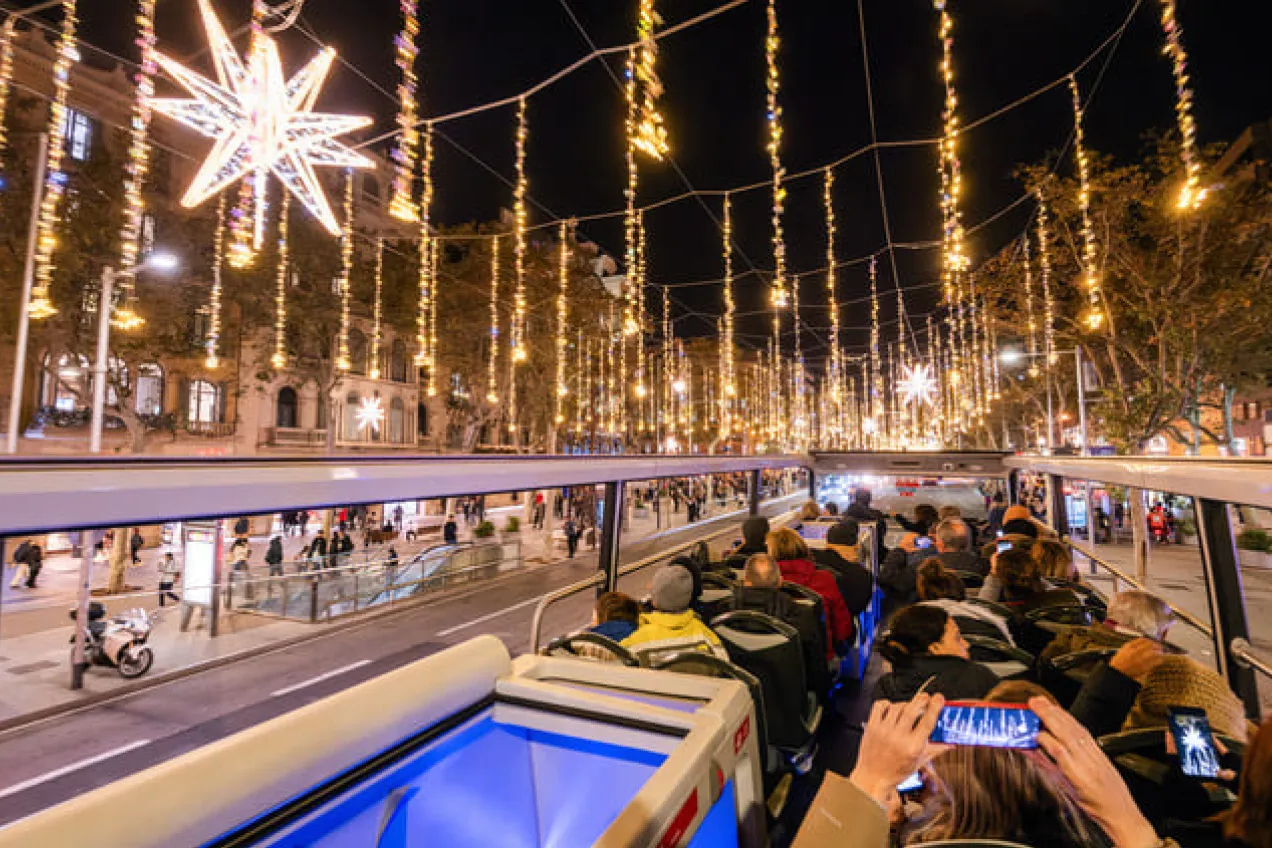
A fun way to see all the lights, trees, decorations, and festive vibes in Barcelona is by hopping on the Christmas bus tour.
The 90-minute route includes a guided tour in Catalan, Spanish, and English. It passes through the city's main festive spots, such as Passeig de Gràcia, Sagrada Família, La Pedrera, and Mercat de Sant Antoni.
Tickets cost €15 for adults, €10 for children, and children under 4 go free. Seats on the top deck are guaranteed, giving you the best view of the city's Christmas magic.
Nativity scenes
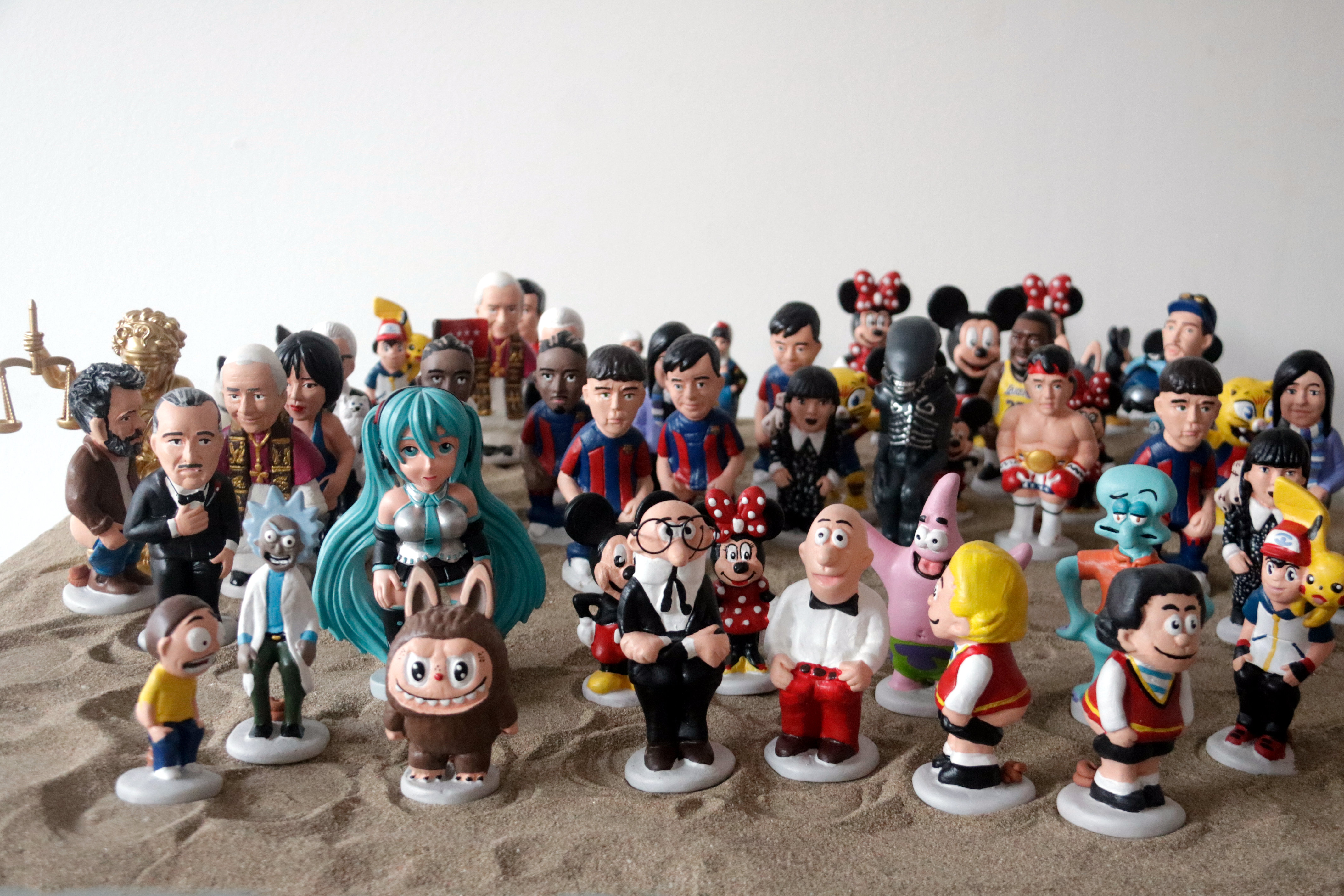
Nativity scenes are a classic Christmas decoration in many Catalan homes. Known as 'pessebres' in Catalan, they can be very detailed and often include something you won’t find anywhere else: the caganer.
This small, funny figure shows a person squatting with their trousers down. It’s usually hidden in a corner of the scene, waiting to be spotted. Its origins go back to the 17th century, when it symbolised fertility and good luck.
Today, the tradition has evolved. Caganers now come in all shapes and forms, featuring famous people like footballers, politicians, and celebrities, with new designs appearing every year.
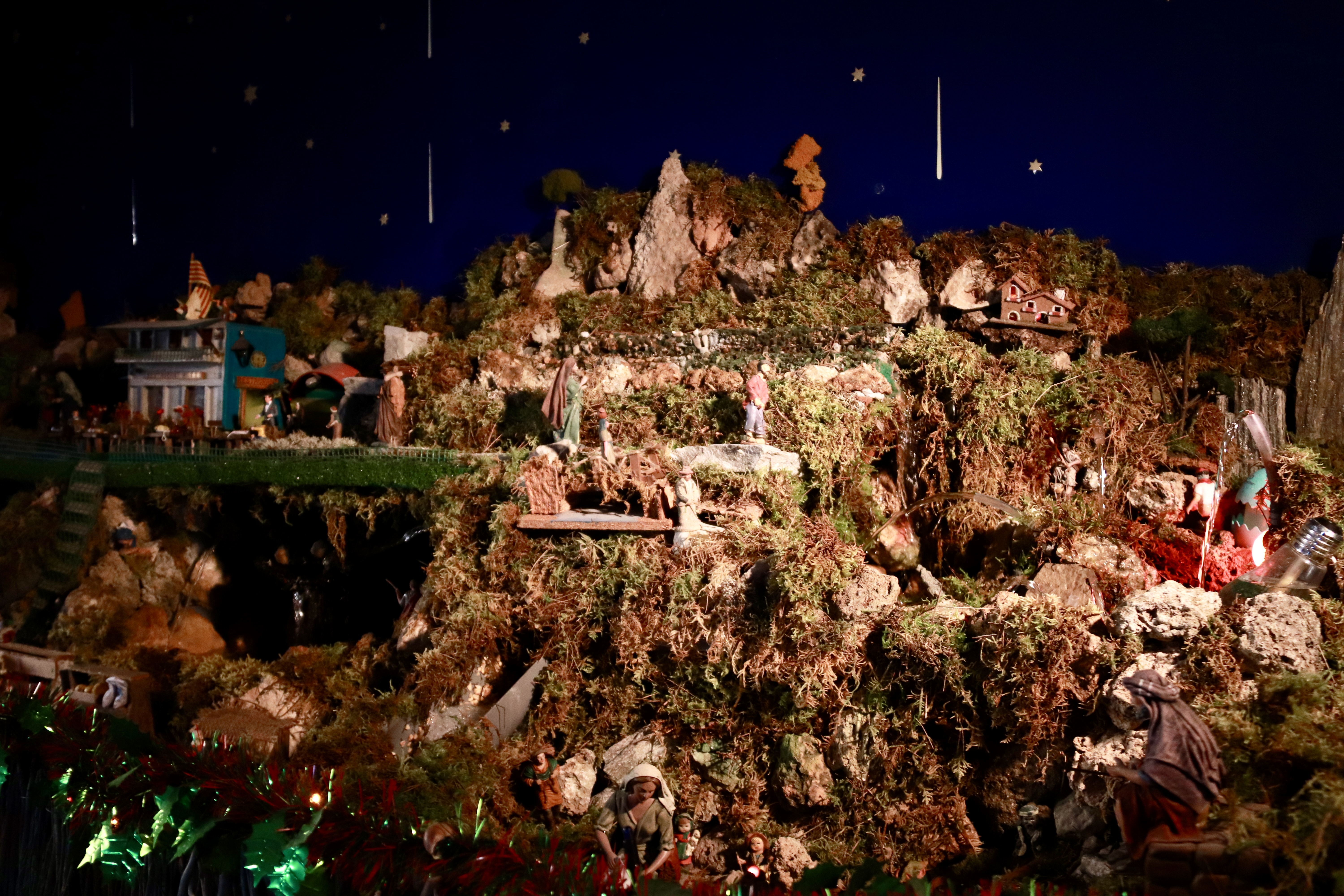
Barcelona's main pessebre is located inside the city council building in Sant Jaume Square. Entry is free, though you may need to queue for a bit.
Beyond these displays, Catalonia also has a strong tradition of 'pessebres vivents,' or living nativity scenes.
There are more than 40 across the region. Some of the most well-known take place in Corbera de Llobregat, Sant Guim de la Plana, and Brunyola.
Immersive open-air projection
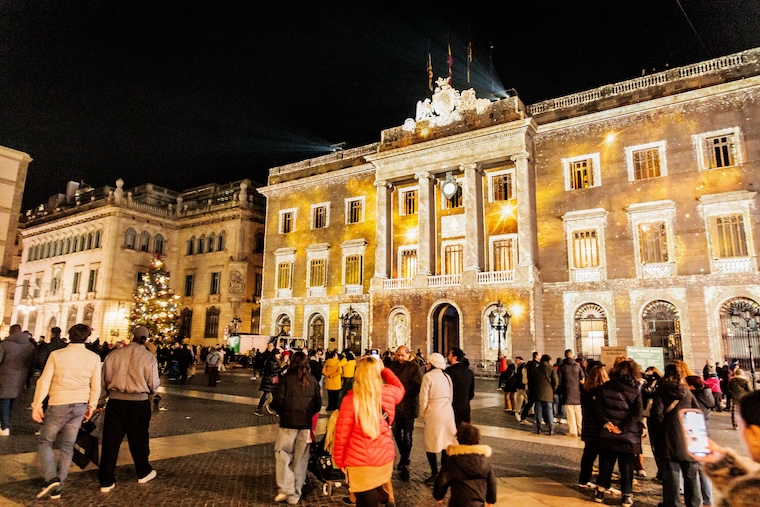
Plaça de Sant Jaume is at the heart of Barcelona's Christmas celebrations, and the city always sets up a central installation here. In the past, it was home to the nativity scene (now moved indoors), and last year a huge illuminated star took center stage. This year, they’re trying something new: an immersive open-air projection.
Called Symphony of Stars, the projection transforms the façades of the city council and the Catalan government buildings with digital Christmas art. Classic holiday imagery is reimagined with stars and silent rhythms, creating a magical, modern twist on tradition.
The projection was designed by Xavi Bové Studio and runs Monday to Thursday from 6.30 pm to 10 pm, and on Fridays and Saturdays until 11 pm.
Palau de la Música concerts
As every year, the iconic Palau de la Música in Barcelona hosts a full program of concerts for the Christmas season, under the cycle 'Nadal al Palau.'
This year’s program features 28 special concerts running until January 11. The most iconic event is the Boxing Day concert (or Sant Esteve in Catalonia), which reaches its 112th edition this year. Tickets for this legendary performance are already sold out.
A highlight of the season is Bach’s Christmas Oratorio on December 19, performed by the Cor de Cambra del Palau. The concert features four of Bach's six cantatas commemorating different liturgical celebrations during the Christmas season.
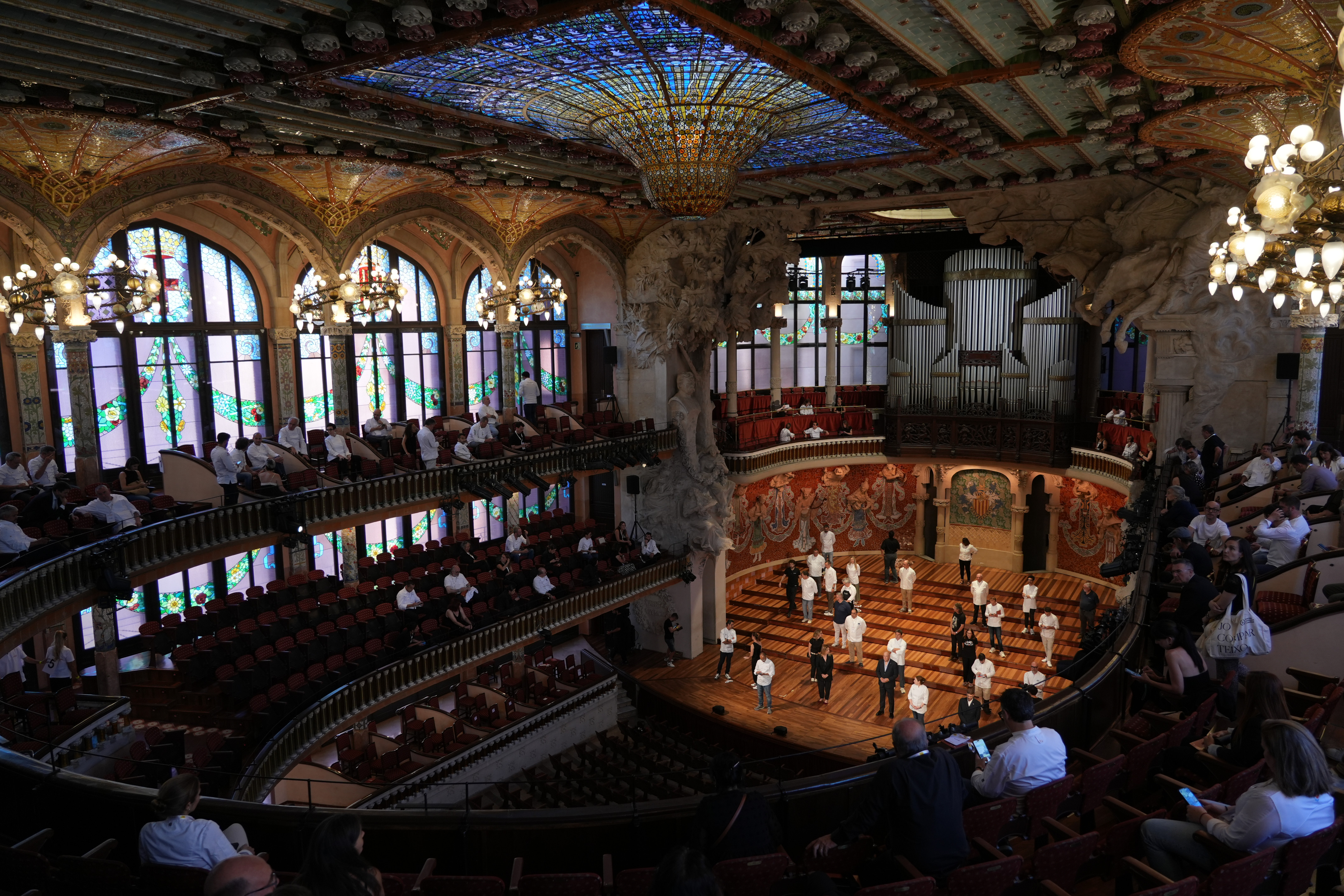
On December 29, the Palau will host the traditional Christmas Concert, directed for the first time by Xavier Puig, and this year performed in front of the Cathedral.
Other concerts include Handel’s Messiah, a soundtrack concert featuring works by Ennio Morricone and Nino Rota, Tchaikovsky's Nutcracker, and Vivaldi’s Four Seasons.
There will also be a special tribute to John Williams and Hans Zimmer, featuring excerpts from iconic film scores such as Star Wars, Interstellar, Schindler’s List, Gladiator, and The Da Vinci Code, among others.
New Year's Eve
After the Christmas celebrations, it's time to welcome 2026, and Barcelona hosts the main celebration.
For the past eleven years, the city's official New Year’s Eve event has taken place on Avinguda Reina Maria Cristina, between Montjuïc's Font Màgica and Plaça Espanya.
The combination of fireworks, lights, and music is truly breathtaking. Last year, over 120,000 people attended.
This year, the event will feature Barcelona musician Marc Parrot, who will blend traditional instruments with futuristic sounds.
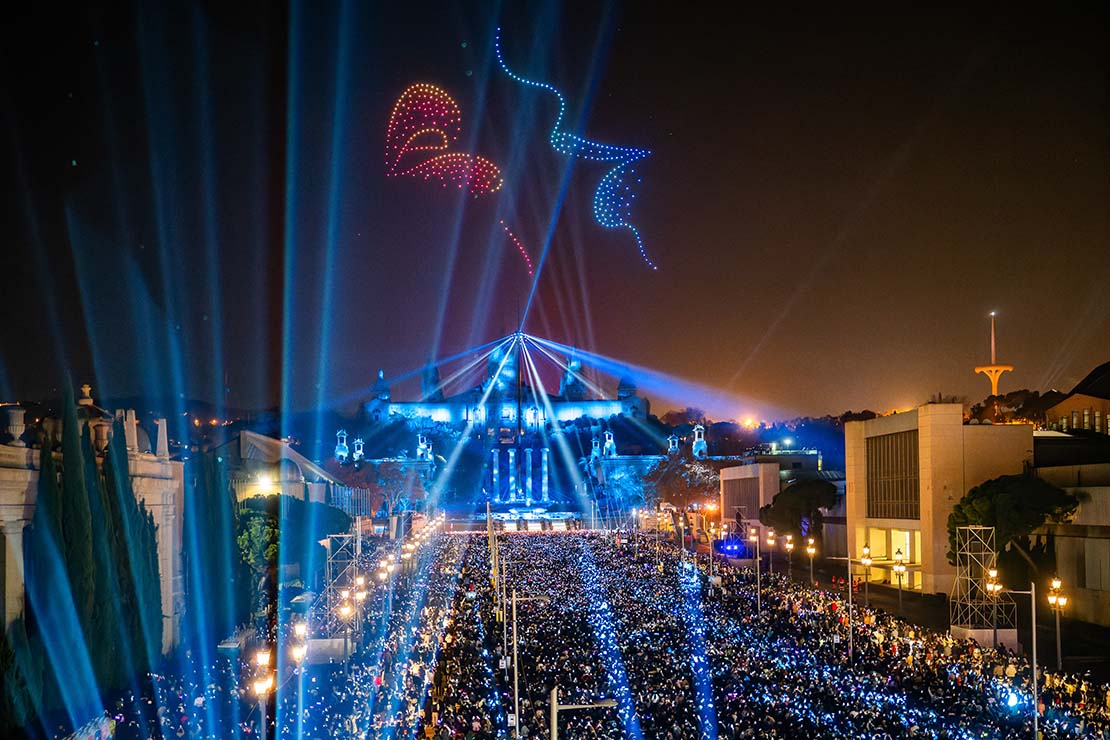
The show, produced as in previous years by Groupe F, is divided into four parts inspired by the elements: air, water, earth, and fire.
Each element represents an aspect of Catalan character and is accompanied by music that combines tradition with a modern twist.
The spectacle starts ten minutes before the midnight bells and continues into the first ten minutes of 2026.
It's recommended to arrive before 9.30 pm to secure a good spot. The event is free and has no capacity limit.
Three Wise Men parades
The festive season in Catalonia wraps up with the arrival of the Three Wise Men, or Els Reis Mags in Catalan.
Melchior, Gaspar, and Balthazar arrive on January 5 in magical parades across towns and cities throughout the region.
Spectators of all ages are treated to a spectacular welcome, with the Wise Men throwing candy and sweets to the crowds.
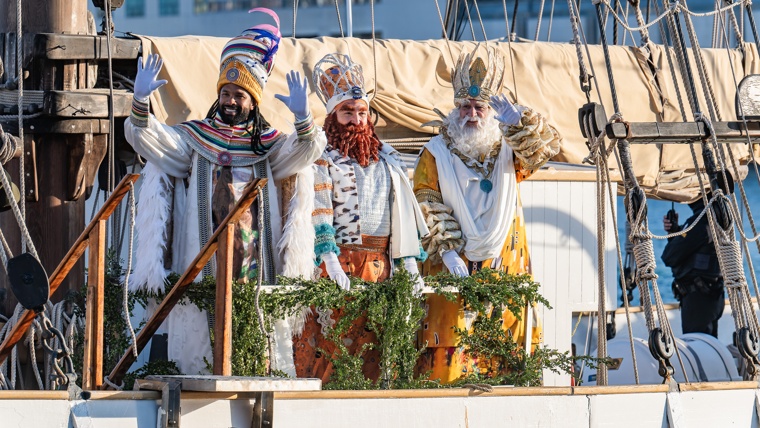
This year, parades will take place in Barcelona, Girona, Tarragona, Reus, and many more towns.
In Barcelona, the celebration kicks off at 4.30 pm when the Wise Men arrive by boat at the Portal de la Pau.
At 6 pm, the main parade begins, moving through the city along Avinguda del Marquès de l’Argentera and Paseig de Colom, continuing toward Avinguda del Paral·lel and Ronda de Sant Pau.
After passing Sant Antoni Market, the parade heads along Carrer de Sepúlveda to finish at Plaça d'Espanya.