Speak Catalan, the initiative of two young people to help foreigners speak Catalan in social settings
Arnau and Eloi organize social activities for newcomers to practice the language and learn the local culture

After Eloi and Arnau returned to Barcelona from Erasmus in England and France, they realized that it was becoming "more difficult" to speak Catalan in their homeland.
Their international experience made them see that, abroad, there were communities that organized social activities to connect with the local culture, but they felt like such initiatives here were lacking.
Thus, they launched Speak Catalan, a social media profile which has gained 10,000 followers since January.
Through this platform, they have started to organize activities to help foreigners learn and speak Catalan in fun and relaxed social settings, and discover local traditions such as calçotades, visits to castellers, or excursions to Montserrat.
They say their initiative "dispels the myth" that newcomers do not want to integrate into the local culture.
"Tired of feeling like a tourist? We are your new Catalan friends." This is how the first post that Eloi Rodríguez, from Barcelona, and Arnau Torner, from Igualada, posted on social networks in their new initiative.
The project was born from the "shock" they felt after returning to Catalonia from abroad. They wanted to offer "tools" to newcomers to integrate, in the same way that they had received them when they had lived abroad.
They started with an initial Catalan language exchange meeting that, with just a little bit of publicity on social media, managed to bring together around thirty people.
Since then, they've gone on to organizing vermouth sessions while playing Kahoot, to trips to Montserrat, and even introducing foreigners to the quintessential Catalan barbecued onions, calçots.
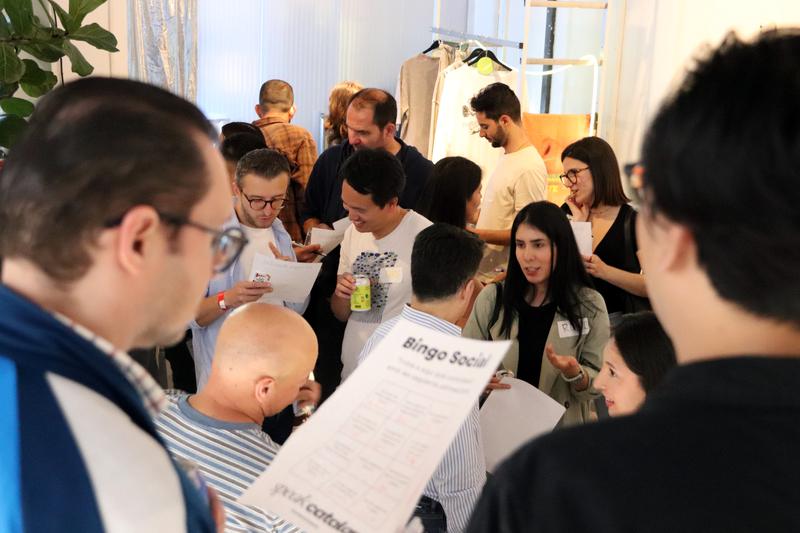
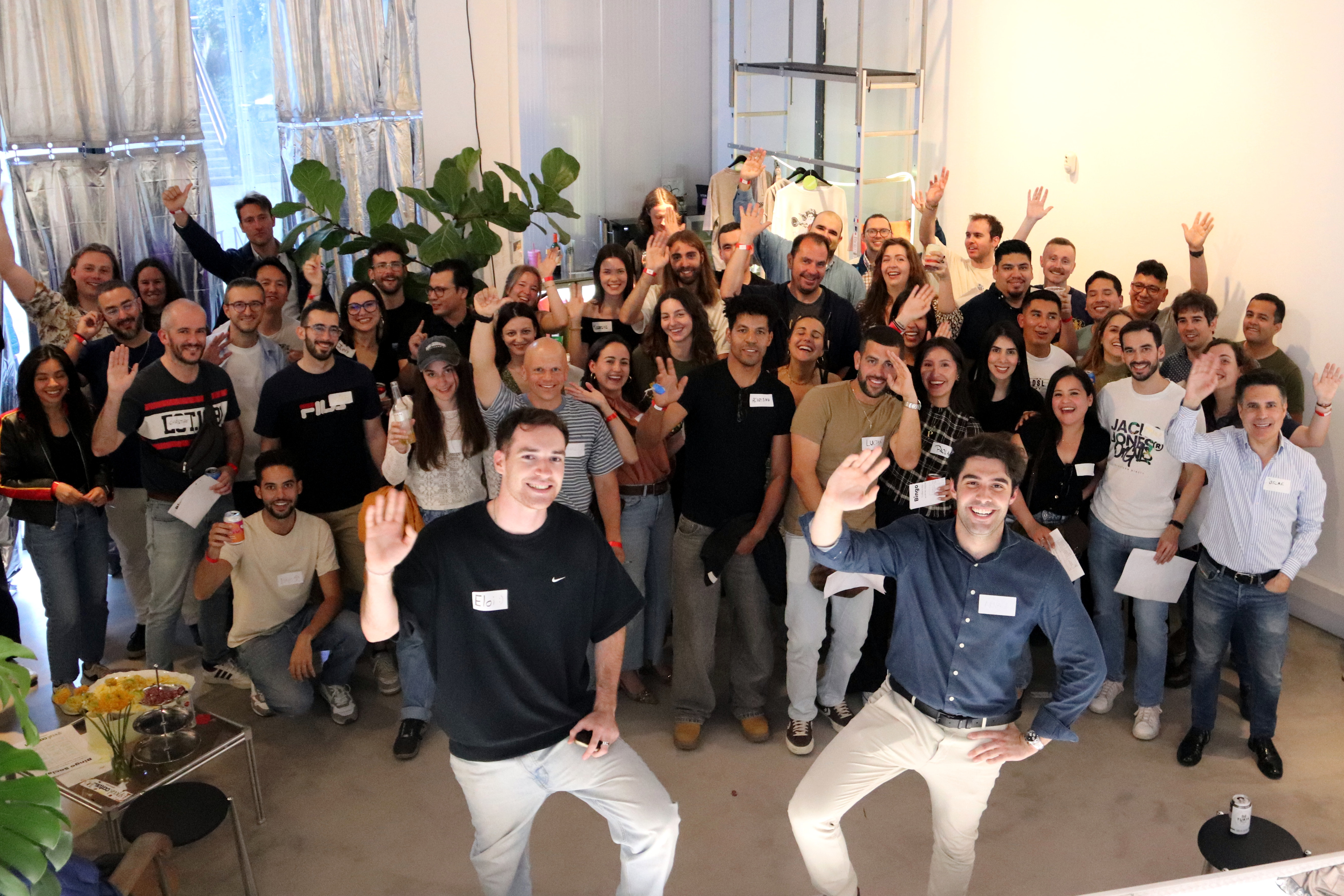
The last meet-up was a social bingo and karaoke session that gathered about 40 people to a clothing store in Poblenou.
Expats "want to integrate"
According to organizer Eloi, the initiative "dispels the myth" that foreigners do not want to integrate.
"People have come from Vic, Berga, or Andorra, just to do an activity for a few hours," he said. "There is really a lot of desire to learn the language. If they have the tools and find social use for it, they learn it."
One of the main problems foreigners have who want to learn the language is that they lack "real interactions" in Catalan. "Many don't speak it at work, others live with roommates who are also foreigners, and they don't meet a Catalan person in their day-to-day lives," Eloi says.
"They may interact at the bakery or supermarket, but they lack someone to have a coffee with and speak to," he adds.
Arnau criticizes the "stigma" that says newcomers don't integrate. "There is a lot of talk in the news and on social media that expats don't want to integrate. We are surprised because we have seen the opposite, that there is actually a lot of interest," he says.
He also criticizes the term 'expat', which implies higher purchasing power. "There is a lot of stigma on social media that expats are rich, and that's not what we see here. Most of them are normal people, immigrants who have come here to find a better life. Yes, there are some who have good jobs, but in the end they are working here, paying taxes," she explains.
Learning the language to "be part of" Catalan society
Agustina moved from Buenos Aires to Barcelona five years ago and felt the need to learn Catalan "to be part of" Catalan society, and has been to two Speak Catalan events thus far.
She took one of the government-operated Catalan course but says she "didn't have many opportunities" to socialize in Catalan outside of class because Catalans "have their own groups."
For this reason, Speak Catalan has helped her meet people and "socialize fluently" in Catalan.
She says that, for a person who speaks Spanish, learning Catalan is "easy," as she can ask for a word in Spanish at any moment.
Sigurd, from Norway, is another member of the group. He's been at four activities already, and is now a volunteer member of the team that organizes gatherings.
He has been living in Catalonia for almost two years. He learned the language because he needed to communicate with his ex-girlfriend's family in Girona. "They didn't speak English and they didn't want to speak Spanish, and I said, either I learn the language or I won't survive," he says.
This opened the door to a language that he "loves" and that he has been learning on his own. He says that it has been "quite easy" to learn it because the people are "very welcoming."
So far, most of the activities that Speak Catalan has carried out have been in Barcelona, but Arnau and Eloi want to take it to other corners of Catalonia, and are already organizing a meeting in Girona that will take place soon.