Gaudí’s estate made public: house in Park Güell and 3,000 pesetas
Architect’s final wish was for assets to be sold to fund construction of Sagrada Família
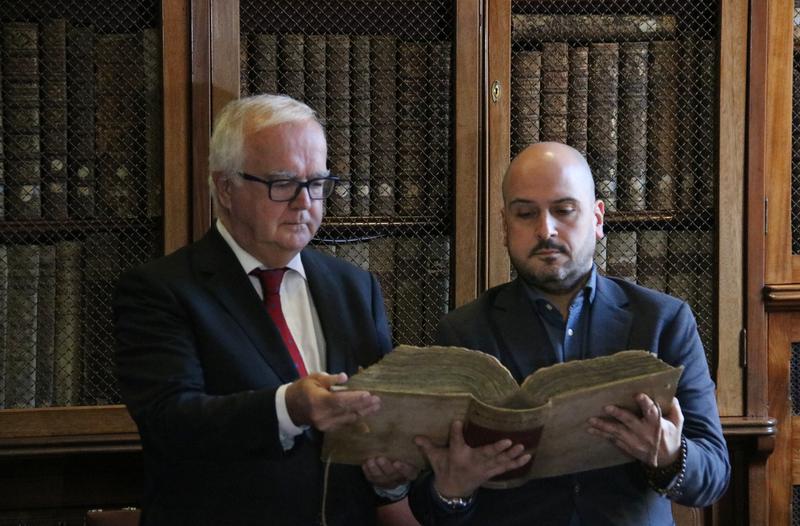

The inventory of Antoni Gaudí’s estate has been made available for public consultation one hundred years after the document was signed in November 1926.
The Notarial Association of Catalonia has presented the inventory of the architect’s estate, which lists a single property and two bank accounts containing a combined roughly 3,000 pesetas.
His residence in Park Güell is a part of the estate, with an estimated value of 45,000 pesetas, as well as an account at the Bank of Spain with a balance of 1,870 pesetas, and another with 1,121 pesetas at the Savings and Old-Age Pension Bank.
Furthermore, Gaudí appointed three trusted heirs, Reverend Gil Parés, Dr. Pere Santaló, and the architect Domènec Sugrañes, to carry out his wish: that all his assets be sold and the proceeds used to fund the construction of the Sagrada Família.
The architect drew up his will on June 9, 1911, in Puigcerdà, before the notary Ramon Cantó, however, the archive containing the document was destroyed by fire in 1936, during the Civil War.
Thus, in 1926, notary Lluís Rufasta signed the inheritance deed, the document that has now been made public, based on a copy.
Gaudí died in June 1926 with no direct ancestors or descendants, and named three trusted heirs: Gil Parés i Vilasau, a priest and chaplain-custodian of the Sagrada Família, Dr. Pere Santaló i Castellví, and the architect Francesc Berenguer i Mestres.
However, Berenguer i Mestres passed away in 1914, before Gaudí, so Domènec Sugrañes i Gras stepped in as a substitute heir under the terms of the will.
As is the case with all notarial documents, the inventory of the architect’s estate was kept for the first 25 years at the notary’s office where it was signed.
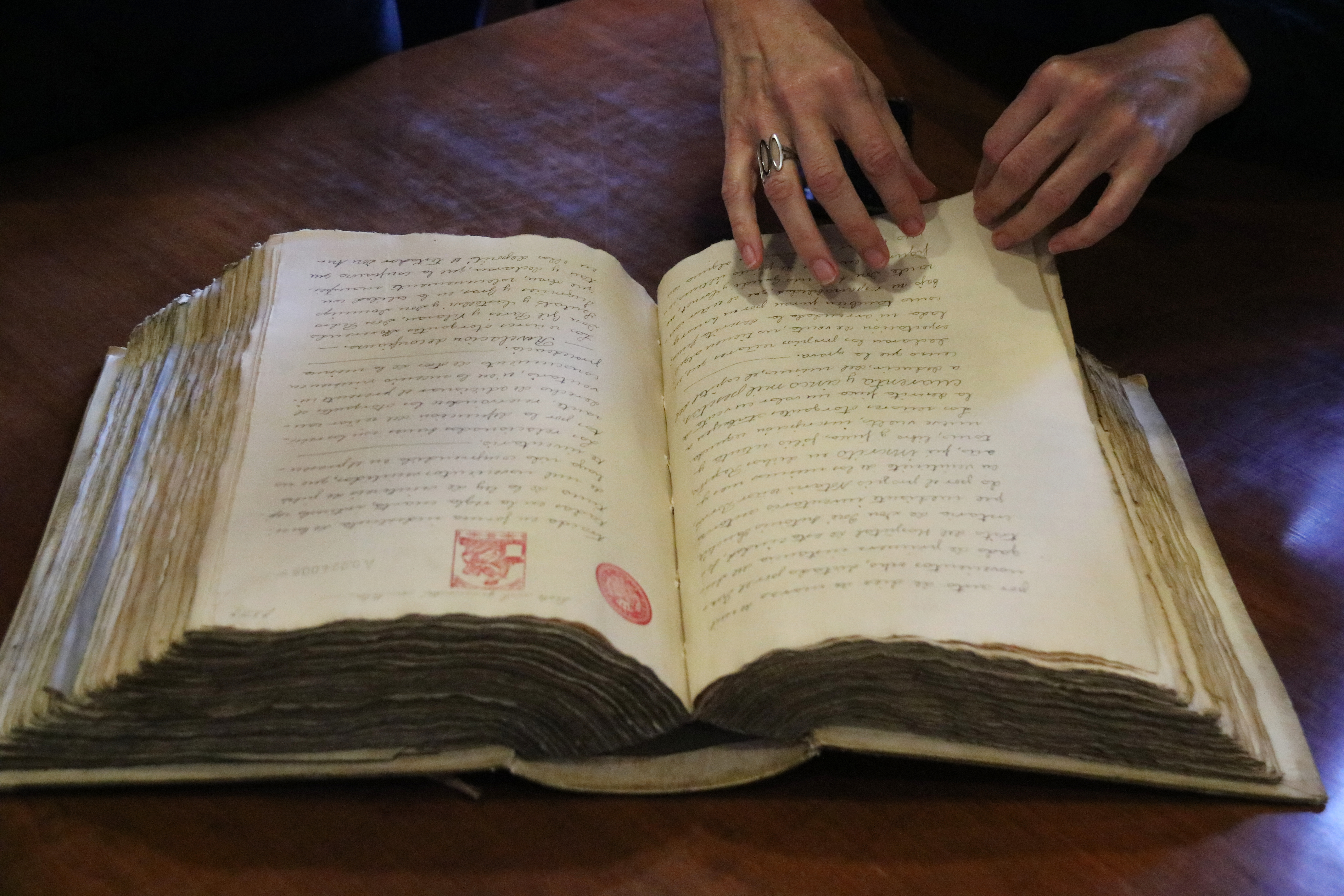
The document was later brought to the Historical Archive of Notarial Protocols of Barcelona, housed at the Notarial College of Catalonia.
Now, one hundred years after its signing, the document has become available for public consultation.
House in Park Güell
The architect owned only one piece of real estate, his residence in Park Güell.
One half of the house was inherited from his father, Francesc Gaudí, and the other from his niece, who passed away in 1912.
In light of the architect’s wish to sell all his assets, the trustees transferred the property to private Italian owners in 1926. In 1960, the heirs of those buyers sold it to the association Friends of Gaudí, and three years later, in 1963, it opened as the Gaudí House Museum.
It was transferred to the Foundation of the Sagrada Família Construction Board, and since 2024, the house has been managed by Barcelona municipal services.
José Alberto Marín, Dean of the Notarial College of Catalonia, explained that Gaudí was required to pay an 'emfiteusi' (a form of ground rent) to the Güell family for the land on which the property stood, amounting to approximately 564.20 pesetas per year.