How to watch the total solar eclipse safely in Catalonia
Doctors, consumer authorities and retailers urge viewers to buy certified eclipse glasses
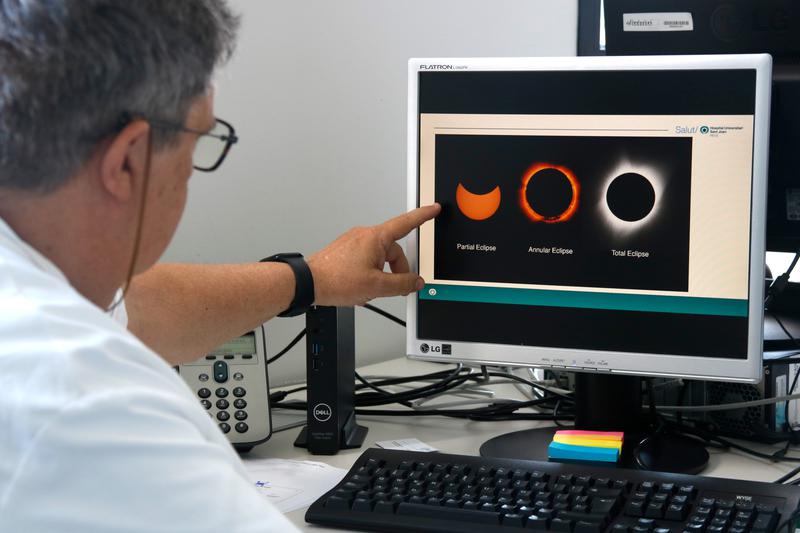

Anticipation is building ahead of the first total solar eclipse visible from Catalonia since 1905.
With one month to go until the August 12 event, ophthalmologists, consumer authorities and specialist retailers are urging the public to take precautions and use only certified equipment to observe it safely.
Looking directly at the Sun without proper protection can cause serious and irreversible eye damage, doctors warn.
The risk is particularly high in the moments immediately before and after totality, when sunlight begins to reappear.
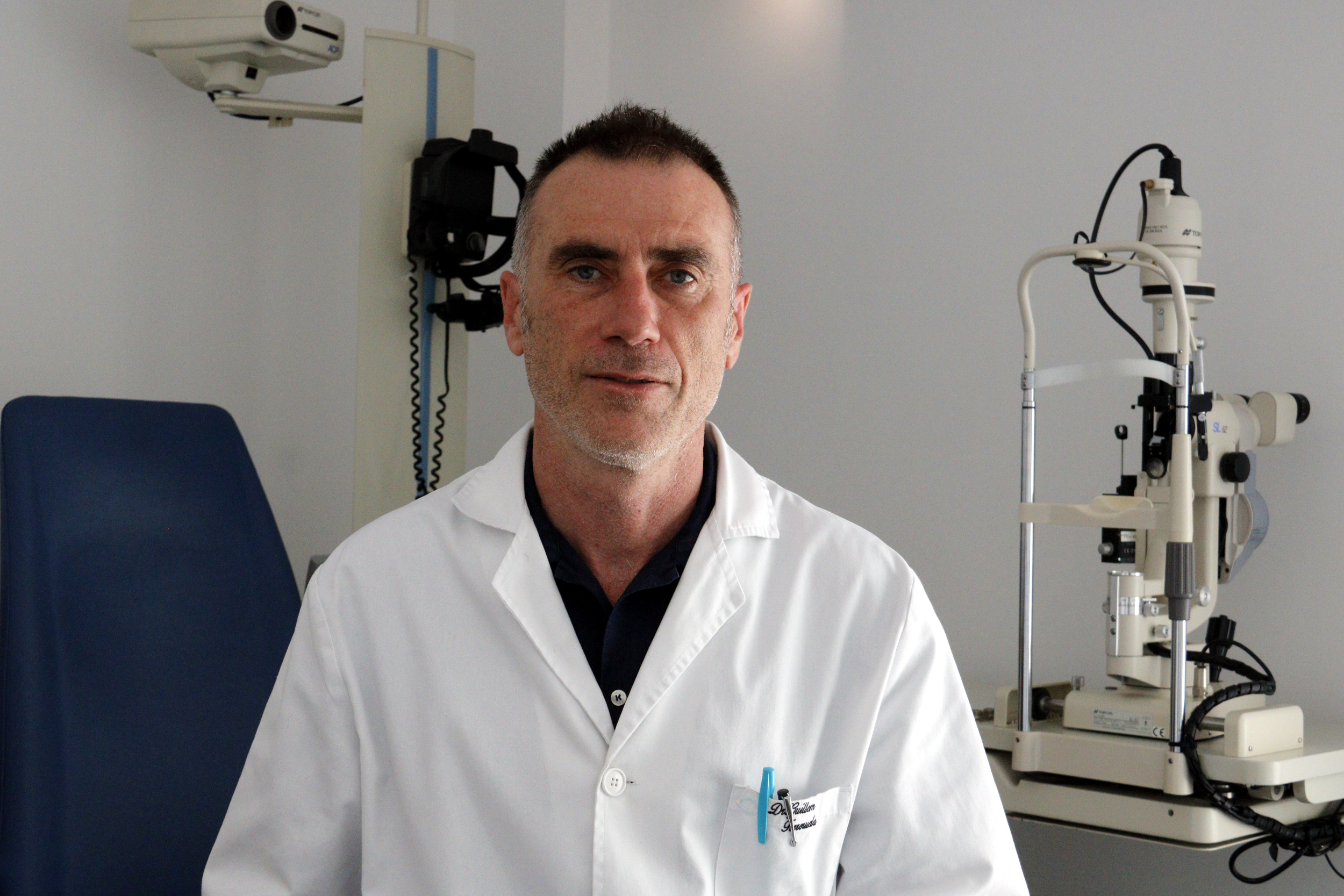
"If we want to watch the eclipse, we must do so using certified eclipse glasses specifically designed for solar viewing," Dr Guillem Ferreruela, medical director of the ILO Ophthalmology Institute in Lleida and a retina specialist, told the Catalan News Agency (ACN).
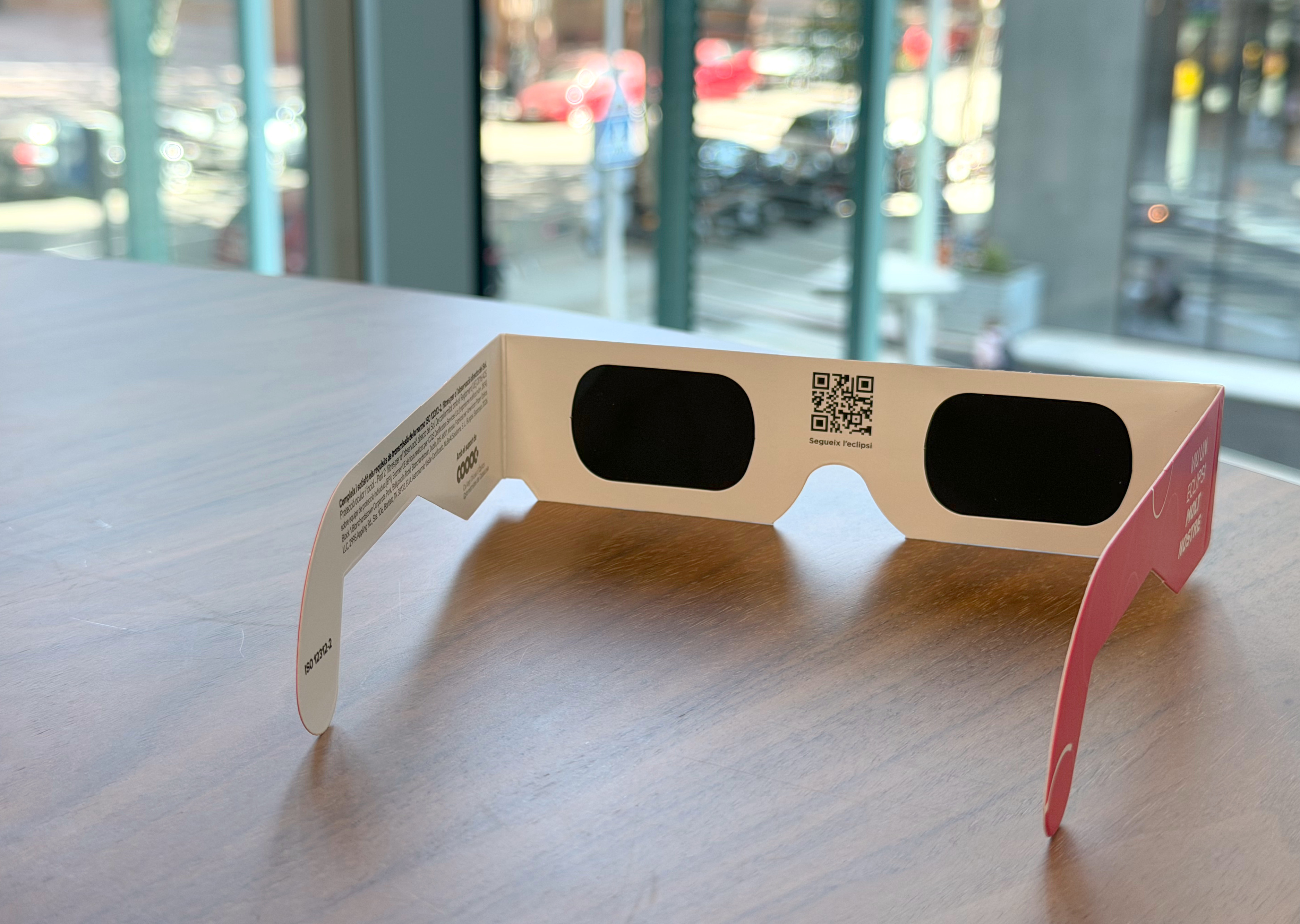
The glasses must comply with the ISO 12312-2 standard for filters used to observe the Sun directly.
Dr Pere Romero, head of ophthalmology at Sant Joan de Reus University Hospital, warns that viewing the Sun without protection can cause retinal injuries that "last for life."
Ferreruela also cautions against using improvised filters, warning that some commonly suggested methods are unsafe.
"People have often said you can watch an eclipse using X-ray films or a welding mask. No. The only safe option is certified eclipse glasses," he reiterates.
Risk of permanent retinal damage
Without proper protection, looking at the Sun during an eclipse can cause a condition known as solar retinopathy, which can lead to blurred vision, distorted images, changes in colour perception or a dark spot in the centre of the field of vision.
"The eye works like a camera. Its lenses focus light onto the retina, and that can end up causing a kind of burn," Ferreruela explains.
Although cases are relatively uncommon, doctors warn that the damage can be permanent. Symptoms often do not appear immediately after exposure, but can develop hours later.
The ophthalmologists are also urging adults to pay particular attention to children and teenagers, who may be tempted to remove their glasses to get a better view.
Recording
"If you are recording the eclipse, you still need to wear eclipse glasses because sunlight can enter from the sides, meaning you need both your glasses and your phone," Romero says.
"But it is a once-in-a-lifetime event, especially a total eclipse, and the best thing is to enjoy it rather than focus on recording it."
Totality in Catalonia
The eclipse will be total in parts of southern and western Catalonia, while other areas will only experience a partial eclipse.
Towns and cities within the path of totality include places such as Lleida, Tarragona, Reus and Amposta.
In Barcelona and Girona, the eclipse will be partial, meaning observers should keep certified eclipse glasses on throughout the entire event.
During the brief period of totality – when the Moon completely covers the Sun – viewers may remove their glasses to see the solar corona, but only while no direct sunlight is visible.
As soon as the first rays of sunlight appear again, the glasses must be put back on immediately.
Authorities check eclipse glasses on sale
The Catalan Consumer Agency (ACC) is inspecting eclipse glasses sold in shops and online ahead of the eclipse, checking that products meet safety requirements.
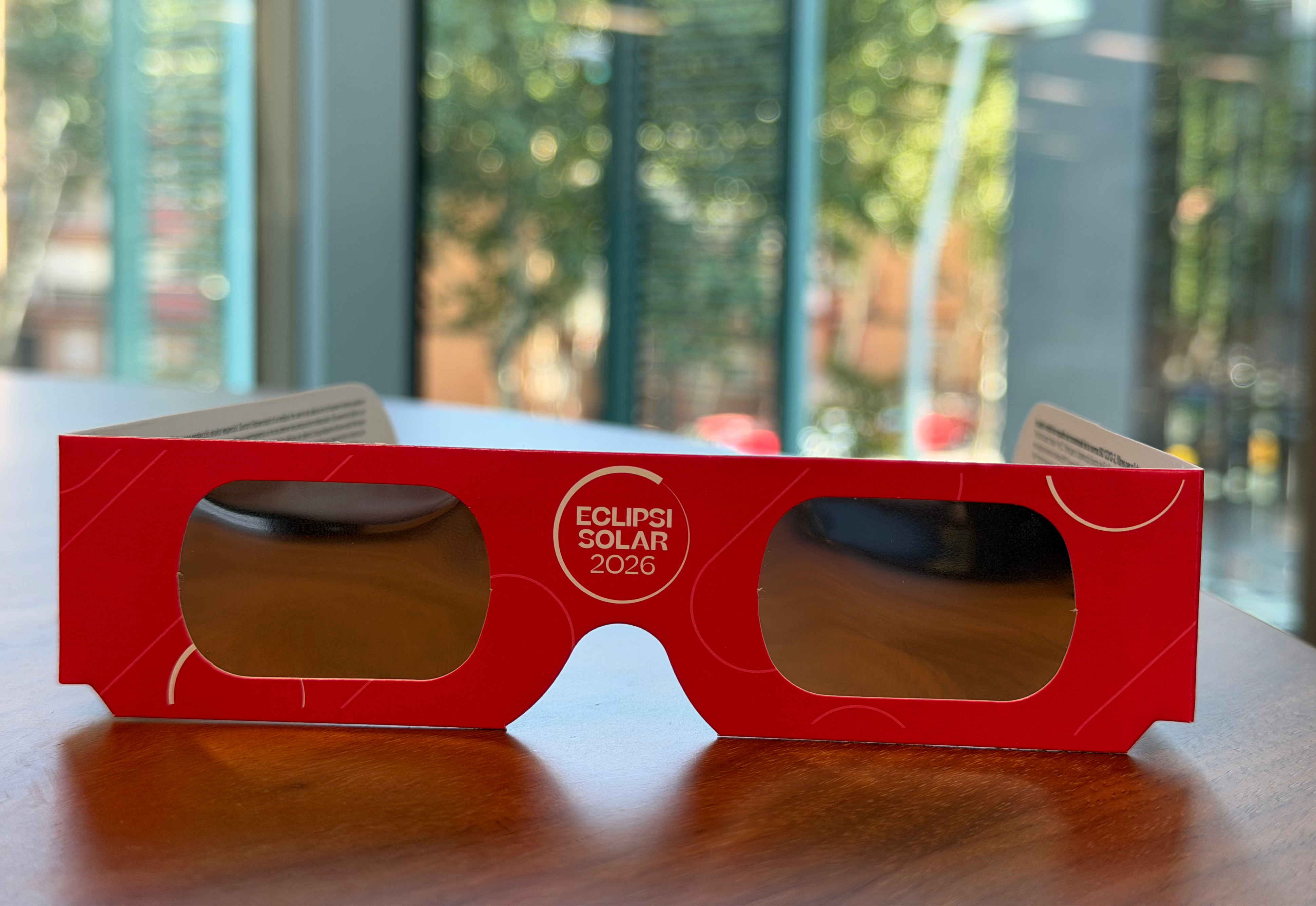
The agency is reviewing 15 models available in Catalonia and says any glasses that fail to comply with regulations will be withdrawn from sale.
"People should not take risks, because poor-quality glasses can cause irreversible eye damage," said Judit Pujol, deputy director of market oversight at the ACC.
She urged consumers to follow official recommendations and buy certified eclipse glasses from trusted retailers.
Shops see rising demand for protective equipment
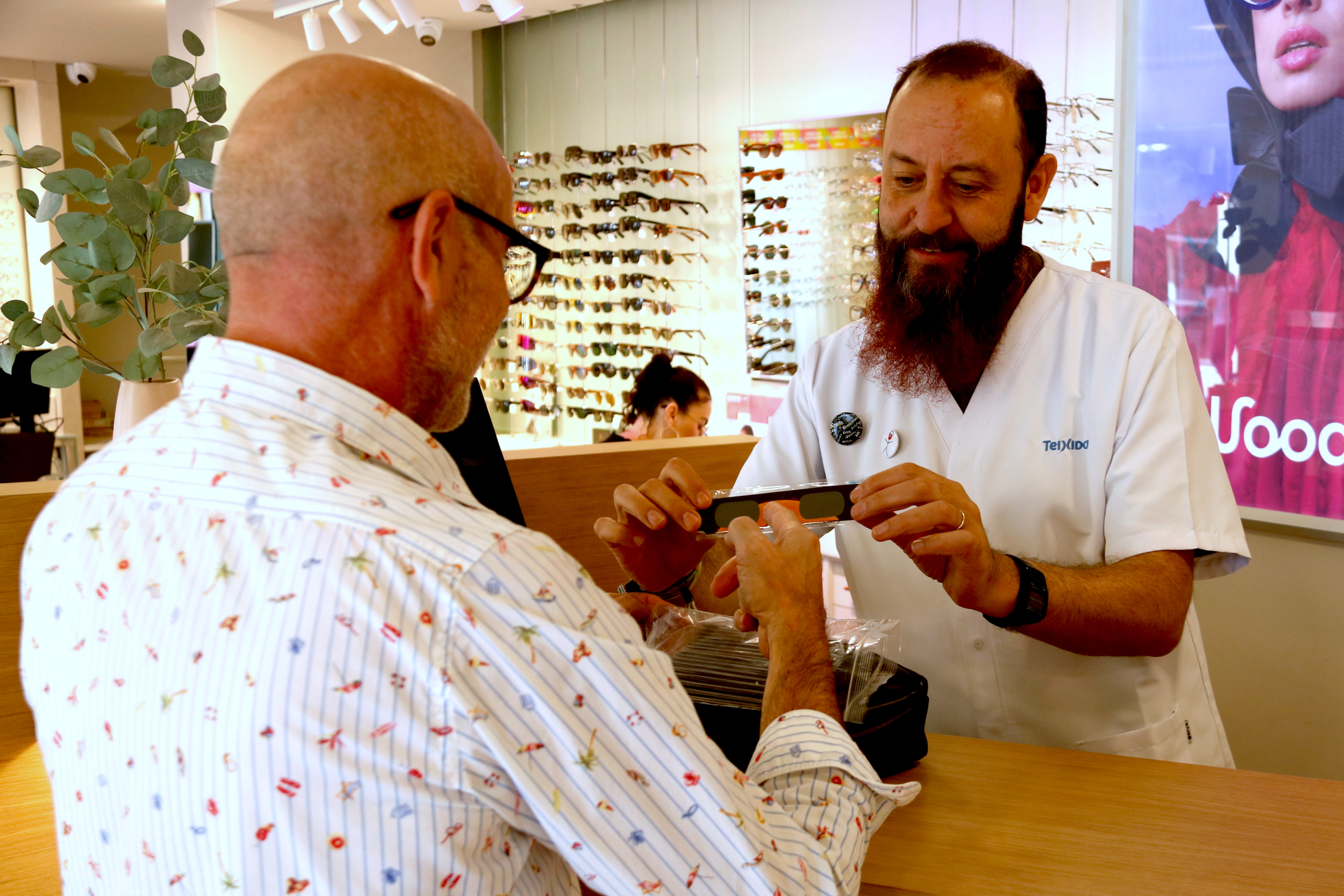
Those retailers – astronomy shops and opticians – are already seeing increased demand for eclipse glasses and filters as awareness of the event grows.
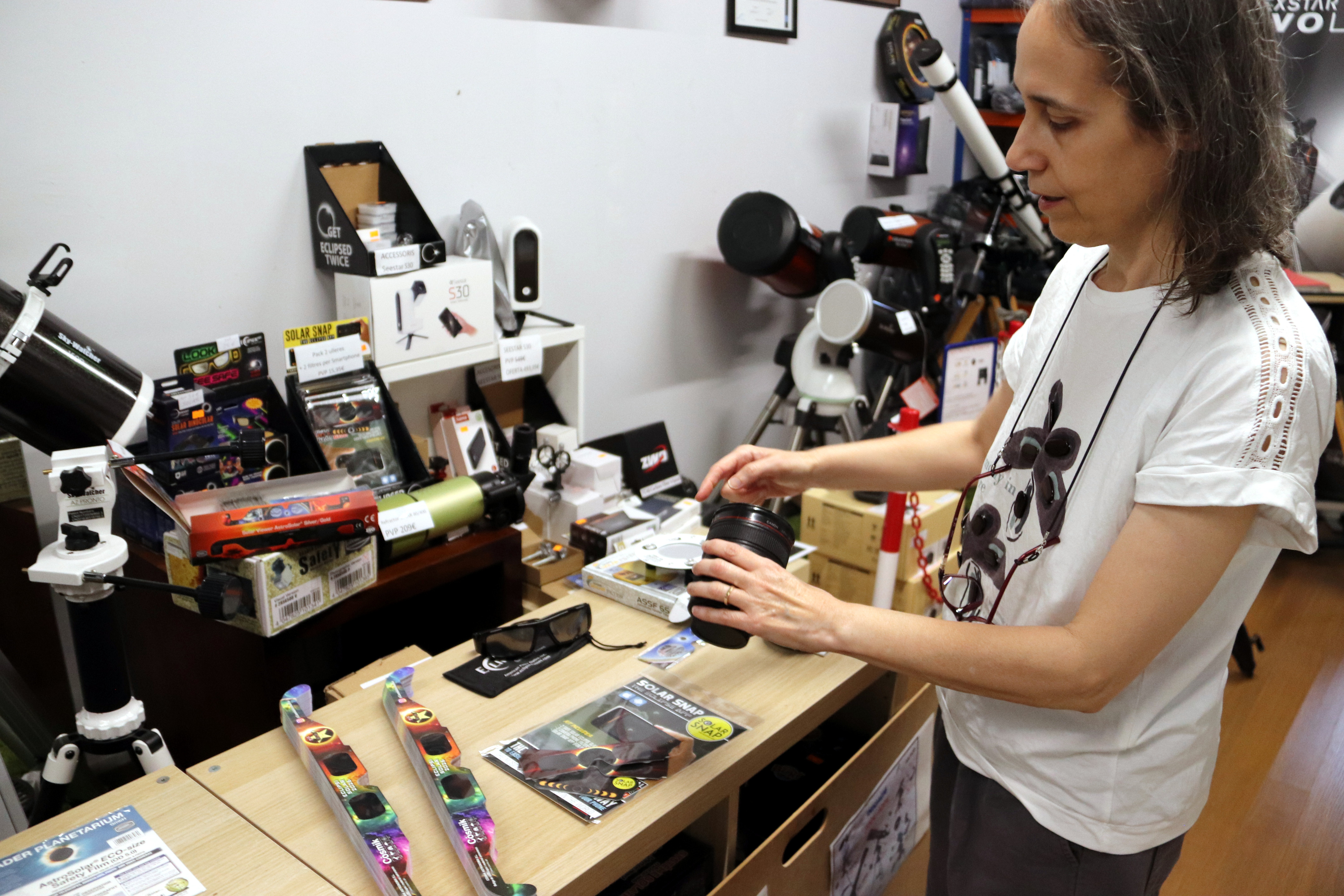
At Còsmik, an astronomy shop in Barcelona, cardboard eclipse glasses are the best-selling product, accounting for around 80% of sales. The shop is also selling filters for mobile phones, cameras, telescopes and binoculars.
Àngels Gil, co-owner of Còsmik and an astrophysicist, said customers range from experienced astronomy enthusiasts to people who simply want to experience the rare event.
In Reus, Teixidó Òptiques has also seen strong demand, with optometrist Vicente Berbegal saying many customers are looking to buy certified glasses for their families.
Safe ways to enjoy the eclipse
The Catalan government recommends using only certified eclipse glasses or indirect viewing methods, such as telescopes fitted with appropriate solar filters or simple pinhole projectors that project the image of the Sun onto a surface.
Viewers should avoid using sunglasses, photographic film, X-ray films, CDs or any other method that does not provide certified protection.
Authorities are also advising those travelling to areas within the path of totality to plan ahead, choose a viewing location with a clear view of the sky, bring water and basic supplies, respect the environment and expect heavy traffic after the eclipse.
The event is the first total solar eclipse visible from Catalonia since 1905, and thousands of people are expected to travel to experience it.