Train journeys between Barcelona and regional capitals now take longer than they did in 2000
R4 in Penedès region 20 minutes faster in millennium year compared to November 2025
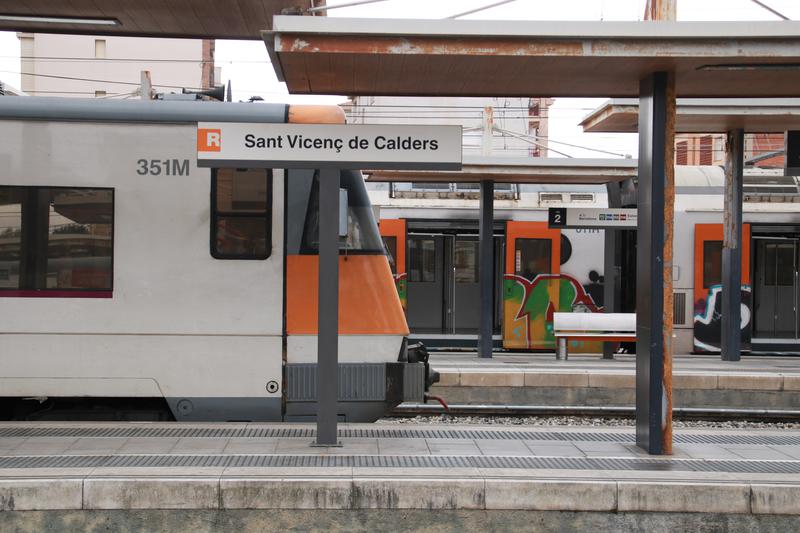

Journeys on commuter and regional trains between Barcelona and the 24 regional capitals are now longer than they were in 2000.
According to an analysis by the Catalan News Agency (ACN) based on the official timetables of May 2000 and November 2025 – just two months before the Gelida accident and subsquent implementation of speed limits –, trains need in some cases up to half an hour more to make the same journey.
Some longer travel times are partly explained by the fact that trains made fewer stops in 2000 than they do now on many routes.
However, some differences are large, such as on the R4 in the Penedès, where it took 20 minutes longer than in 2000, with only two new stops added on the route.
Industry sources justify the data by the need to expand the network's capacity and maintain the infrastructure, and call for more semi-direct trains.
The analysis has taken into account the shortest journey times towards the Catalan capital, leaving aside the first and last trains, which are not usually representative. In all cases, the calculations are based on the timetables that were published in both 2000 and 2025, not necessarily those that were complied with.
The Rodalies de Catalunya network, which includes both suburban and regional trains, connects Barcelona with 24 regional capitals. In all cases, journeys are now slower.
The president of the Association for the Promotion of Public Transport (PTP), Adrià Ramírez, believes that "there is an increase in trains that stop at all stops and in frequencies," but "what has not increased is the capacity of the network."
Thus, he says that if more trains are installed and that stop at more places, the fastest or semi-direct trains "are forced to share more space and, therefore, take longer, or have simply disappeared."
Meanwhile, the director of Terminus, the Centre for Transport Studies, Joan Carles Salmerón, justified the data by alleging a lack of investment in infrastructure that has led to a "weakness of the railway system."
In addition, he says that "three or four years ago, when they finally started investing money," works began that have also led to longer travel times.
The rail expert also calls for the return of semi-direct trains, which involves building "new overtaking tracks," so that the fastest trains can reach their destination before those that stop at all stops.
Longer journeys
The biggest increase in travel time is seen on the R4 line, especially the section that passes through Penedès and Baix Llobregat.
The quickest journey between Martorell and Sants in 2000 was just 28 minutes. Before the Gelida accident in January, the journey took 39 minutes, an increase of 39%, with trains stopping at two more stops.
Similarly, between Vilafranca del Penedès and Sants, it took a minimum of 53 minutes to make the journey at the start of the century, and 25 years later, it won't take less than 70 minutes.
From El Vendrell station to the Catalan capital, what used to take 69 minutes now takes 90 minutes.
The R13 and R14, which connect the Catalan capital with the western Ponent regions, also show significant differences.
In 2000, the fastest regional service trains covered the Lleida-Barcelona route in 2 hours and 8 minutes, stopping at 11 stations. Last November, the route stopped at six more stations and was 20 minutes slower.
Other capitals on the same lines, such as Borges Blanques – with 29 more minutes of travel in 2025, the most among regional capitals –, Valls and Montblanc, have also registered increases in time of between 15-25%.