Thousands of teachers march in Barcelona as unions and government clash over pay demands
USTEC demands minister's resignation if no "firm" proposal is brought as strike action continues across Catalonia
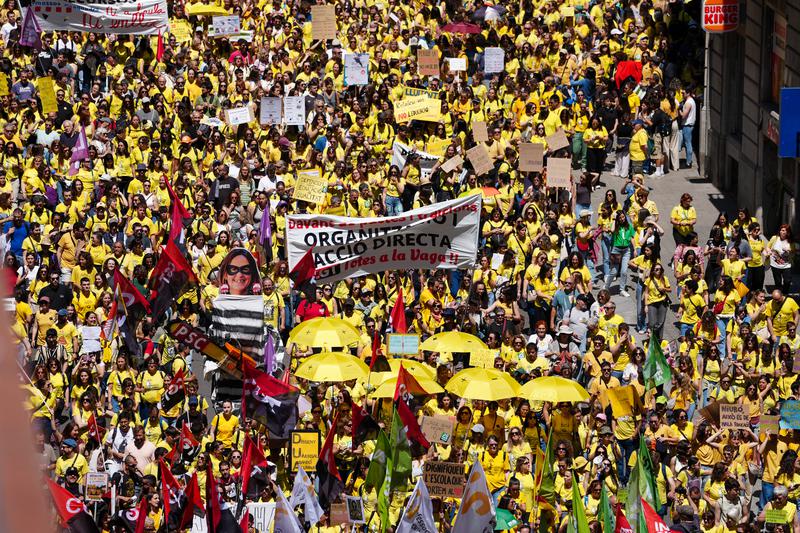

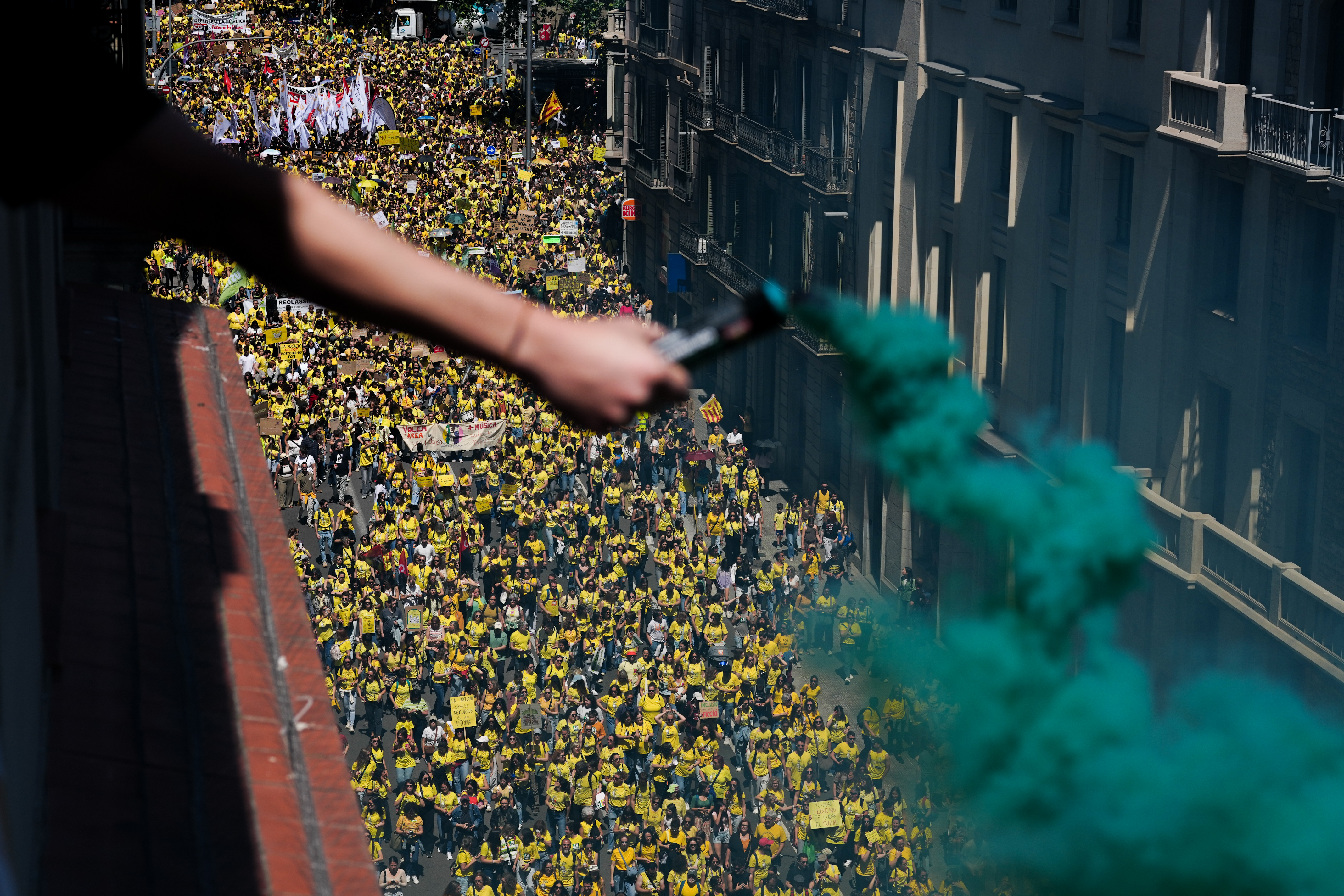
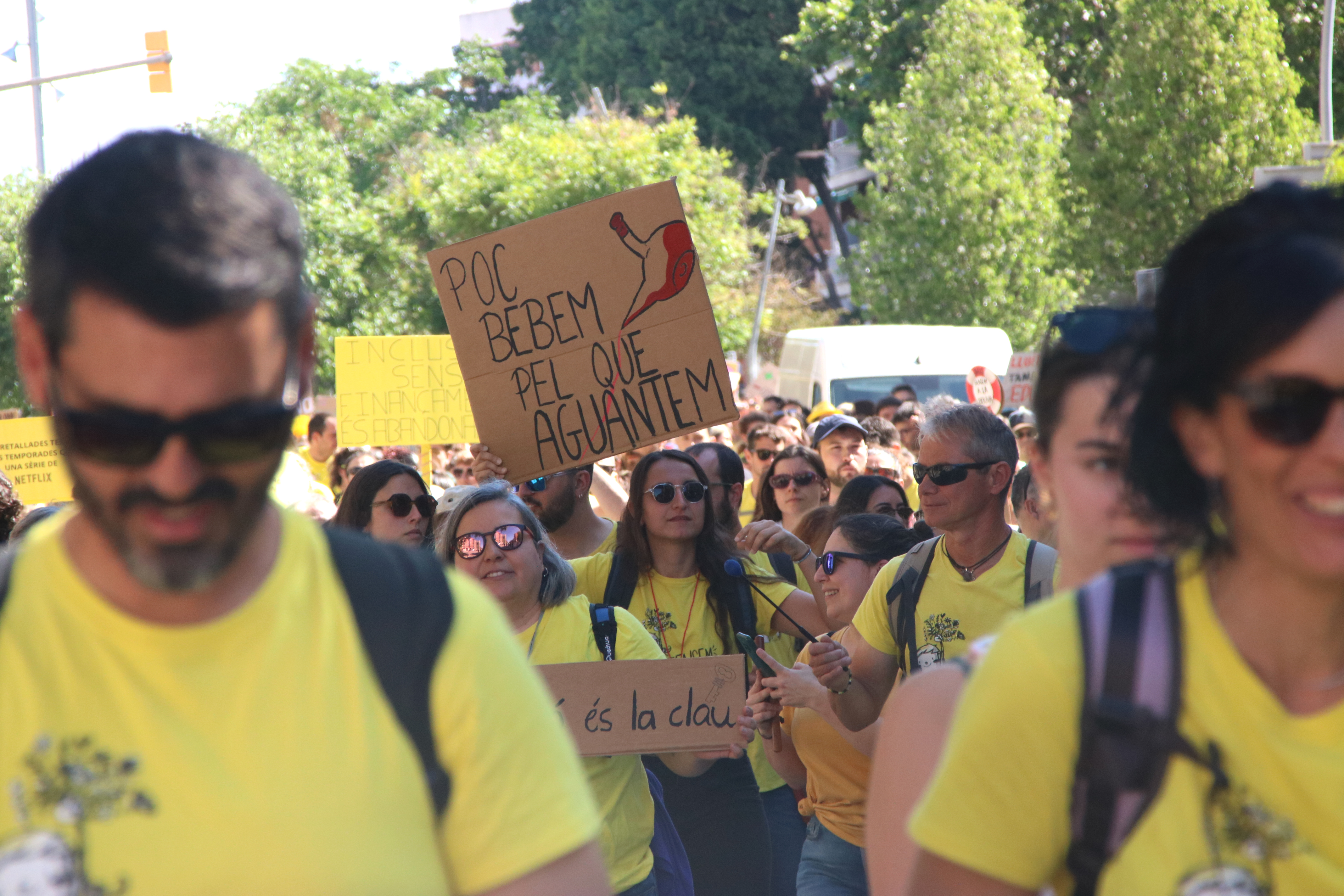
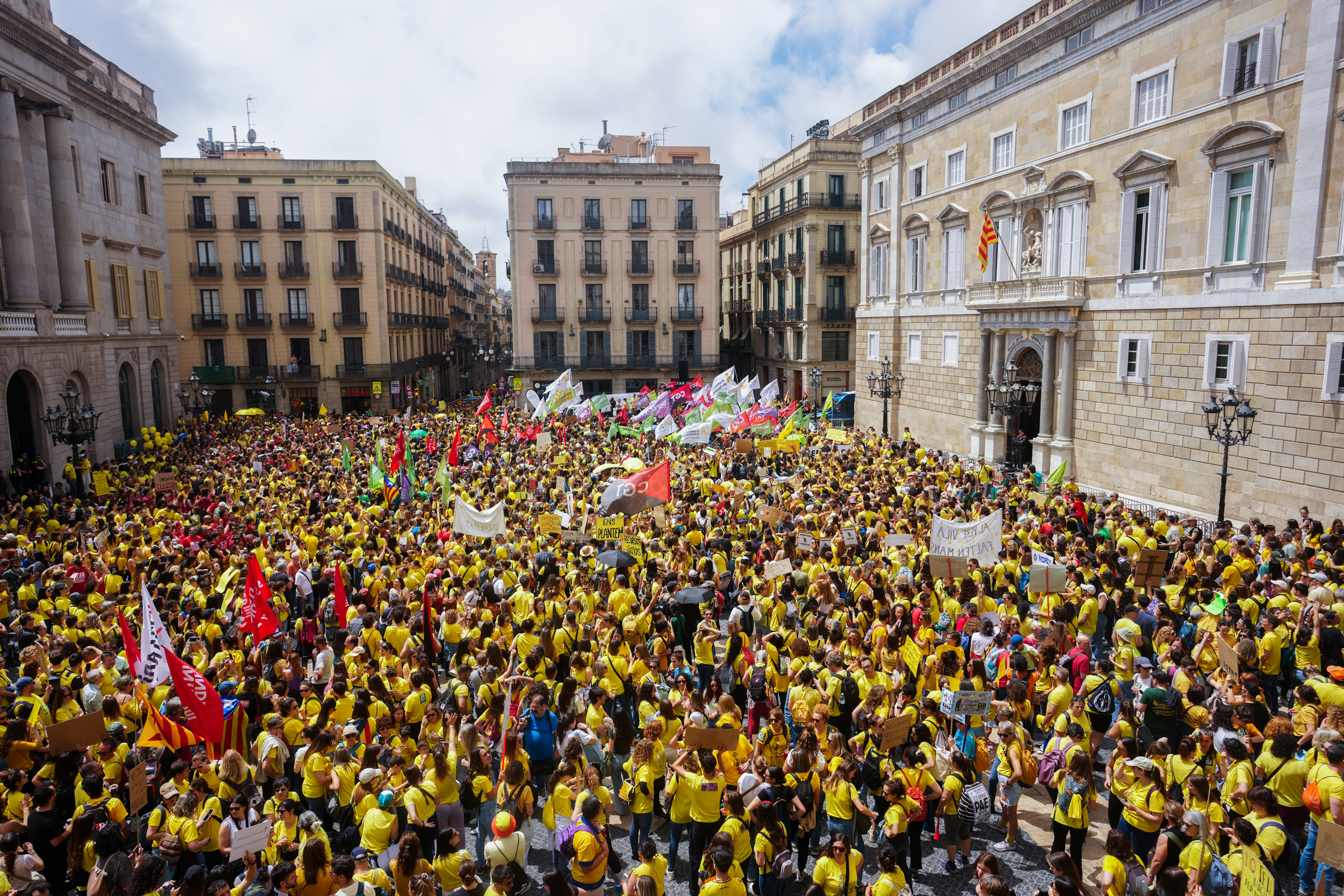
Thousands of teachers took to the streets of central Barcelona on Tuesday in another day of strike action across Catalonia, called by the USTEC, Secondary School Teachers, CGT and Intersindical unions.
Police estimated turnout at 26,000, while organisers put the figure at 80,000.
The march began at Plaça Urquinaona at 12:30pm, with the government headquarters at Plaça Sant Jaume the destination.
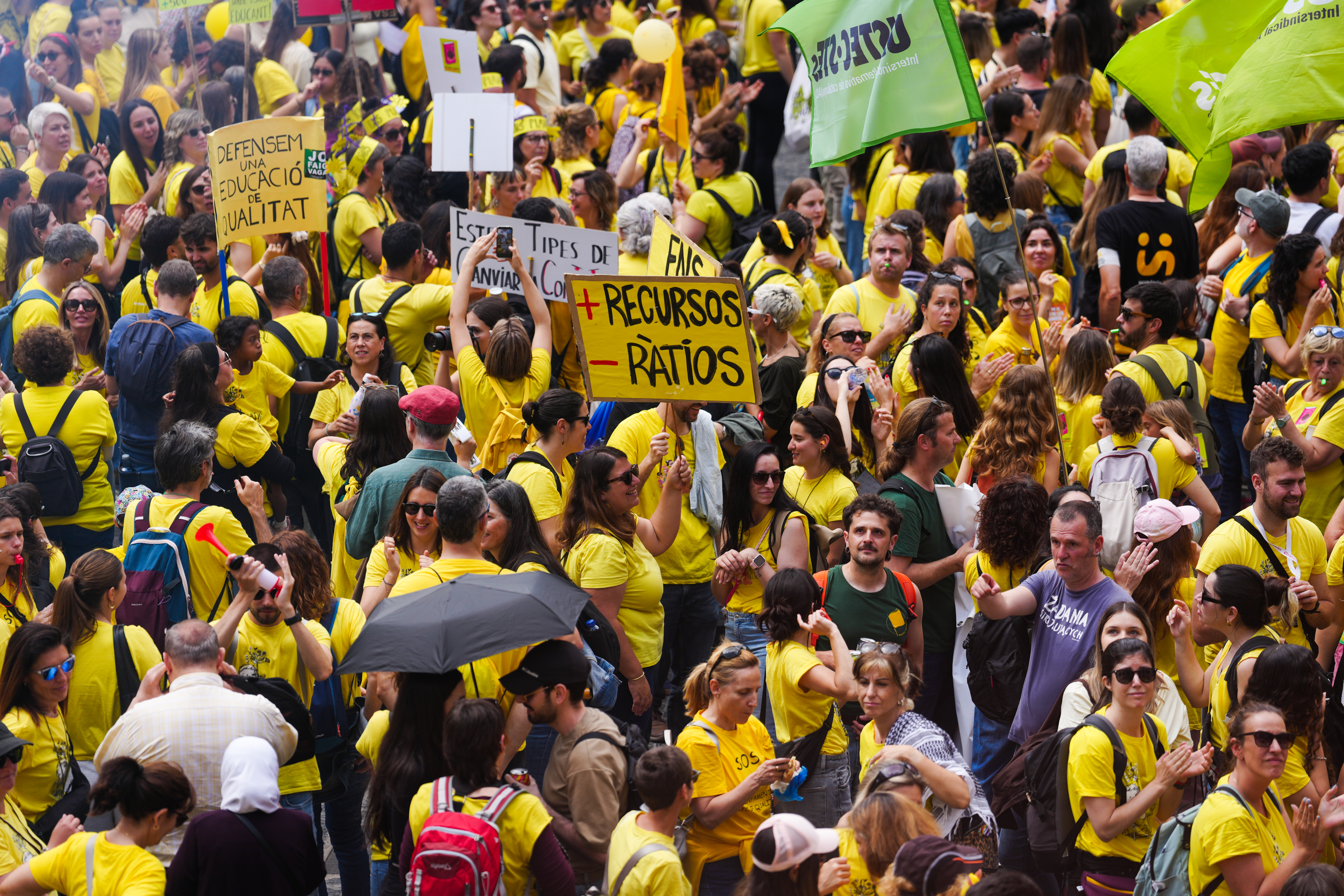
Protesters are demanding more resources for student support, particularly for pupils with greater needs, lower class sizes, and higher pay increases beyond those the education department agreed with the CCOO and UGT unions.
USTEC spokesperson Iolanda Segura called for the resignation of Catalan education minister Esther Niubó if she does not bring a "firm proposal" and willingness to negotiate at Thursday's meeting of the education sector.
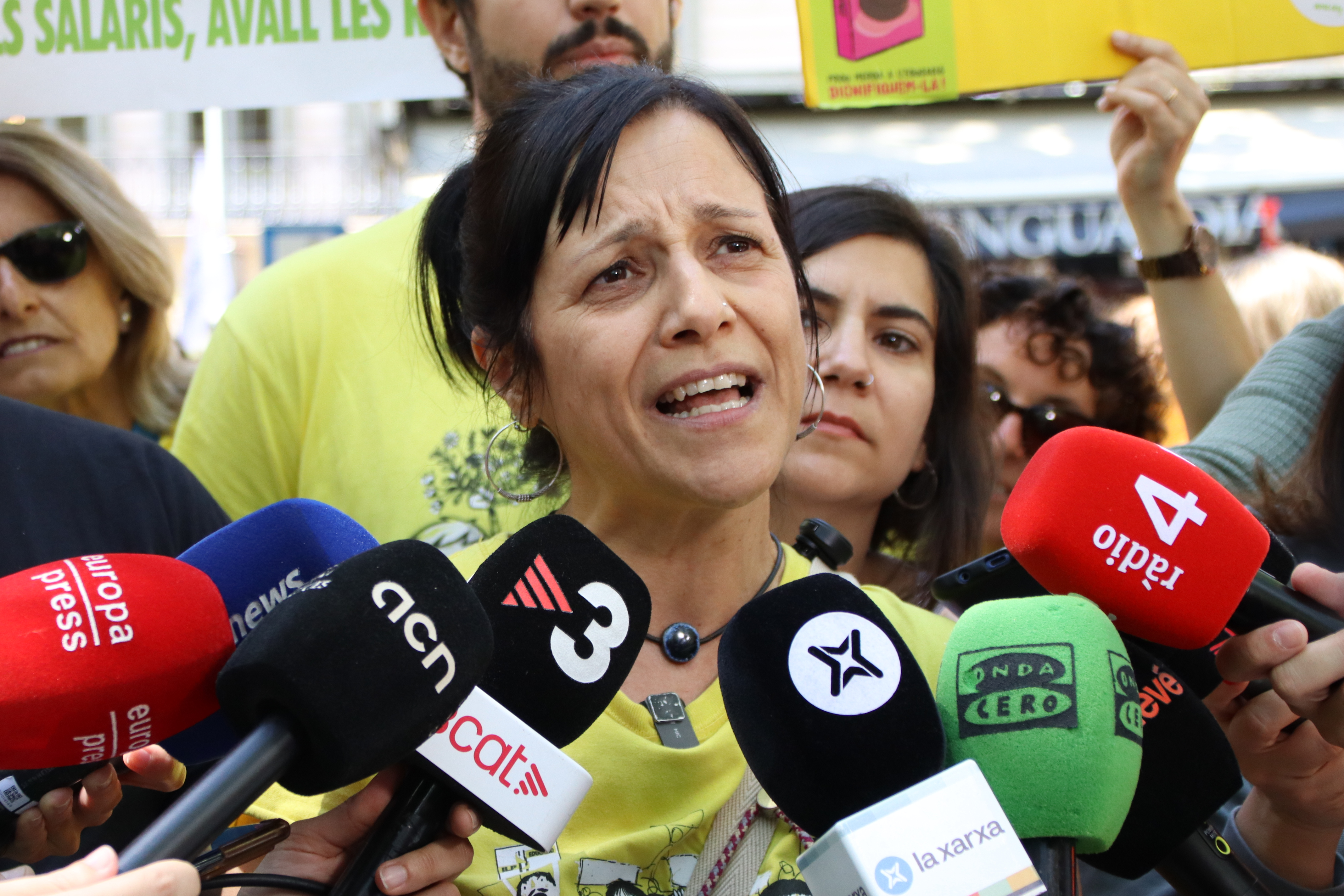
Segura criticised what she described as a lack of willingness to negotiate from the minister and the government, accusing them of "entrenchment" and of defending an agreement that, she said, "has been rejected by 95% of the sector."
She also called for the resignation of interior minister Núria Parlon and police director general Josep Lluís Trapero over allegations of police infiltration of teacher union assemblies.
Government: "Resources are what they are"
Catalan government spokesperson Sílvia Paneque has urged teachers' unions to show a "sense of reality" and warned that "resources are what they are," as tensions continue over an ongoing education strike.
Speaking after the weekly cabinet meeting on Tuesday, Paneque defended the agreement signed with the CCOO and UGT unions, describing it as an unprecedented €2 billion investment following a decade of underfunding.
She said the government was aware of teachers' dissatisfaction but insisted Thursday's meeting of the sectoral committee is intended as a space to explain the agreement, outline its implementation, and listen to concerns.
"From one day to the next we cannot fix an issue that has deteriorated over the last ten years," she said.
In her view, the agreement addresses key demands from the education community, including reduced bureaucracy, lower class sizes, increased support for inclusive education, improved teacher pay, and higher investment in school maintenance.
She noted that Catalonia's total education budget stands at €8 billion.
Roads blocked
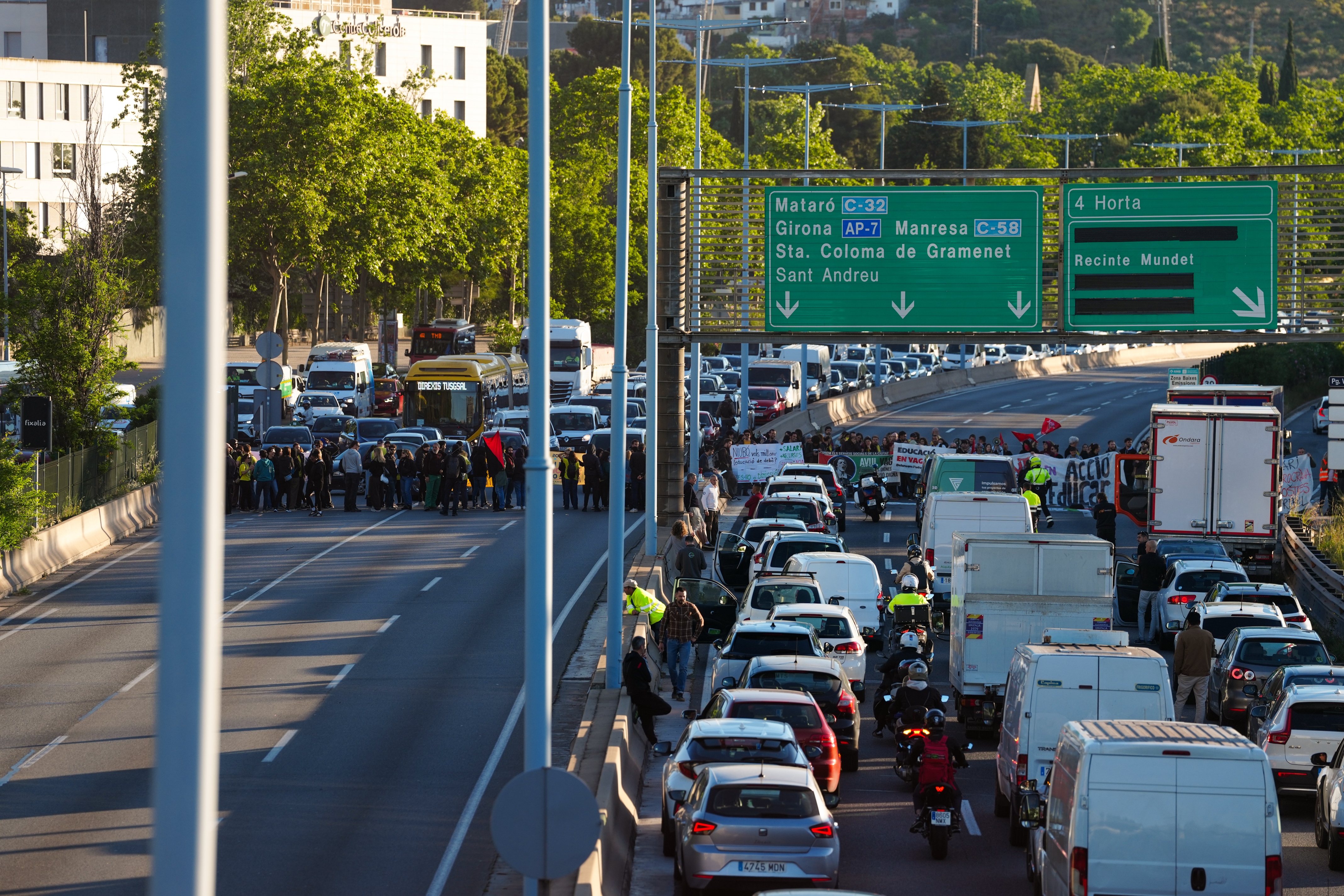
Teachers blocked several major roads and access routes into Barcelona on Tuesday morning, causing widespread traffic disruption during rush hour.
Protesters disrupted traffic on the B-20 in Santa Coloma and Mundet, the C-32 in Mataró, the AP-7 in Montornès and between Cerdanyola and Sant Cugat del Vallès, the C-17 in Malla, and the C-55 from Manresa towards Barcelona, according to the Catalan Traffic Service.
The roadblocks were gradually lifted throughout the morning.
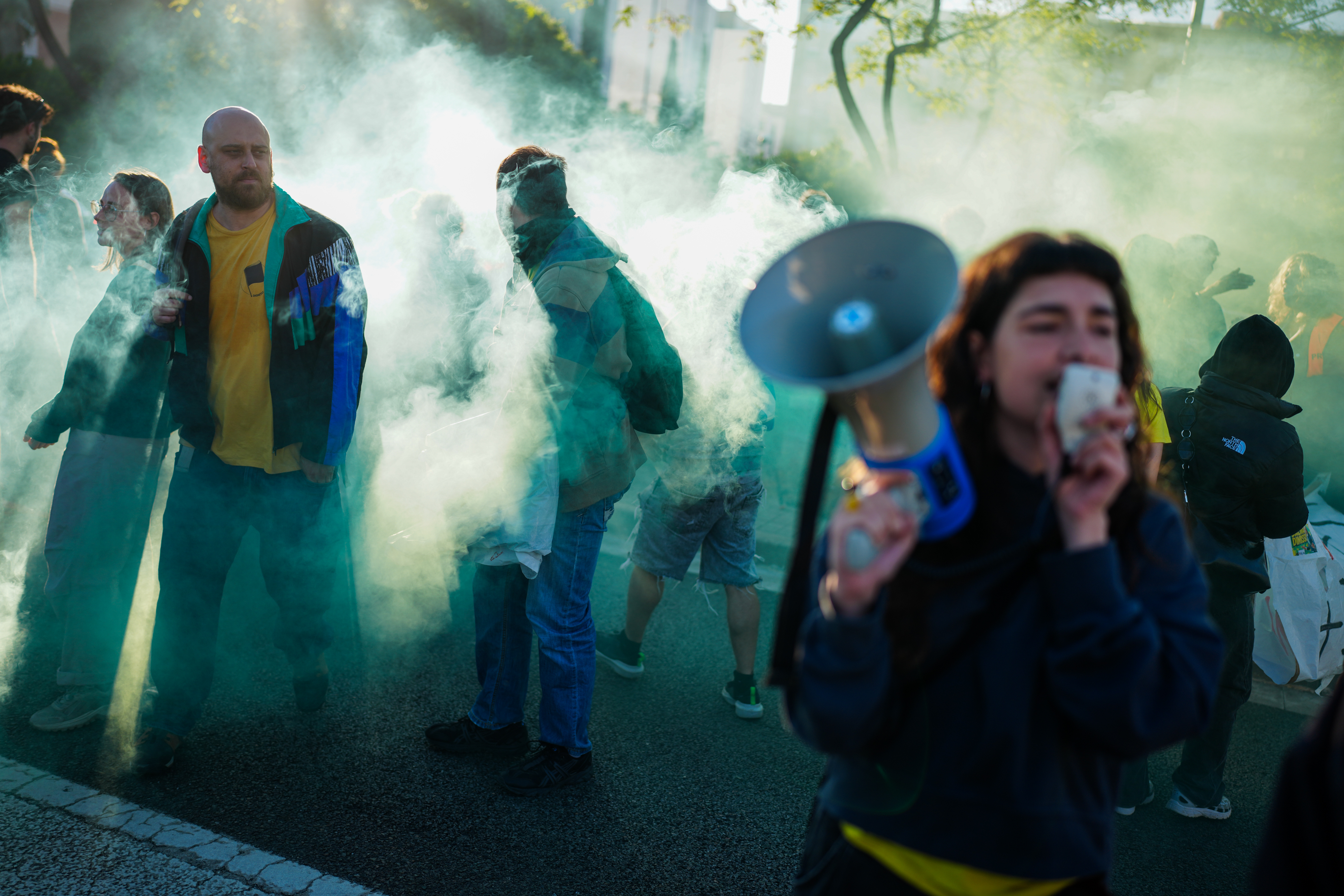
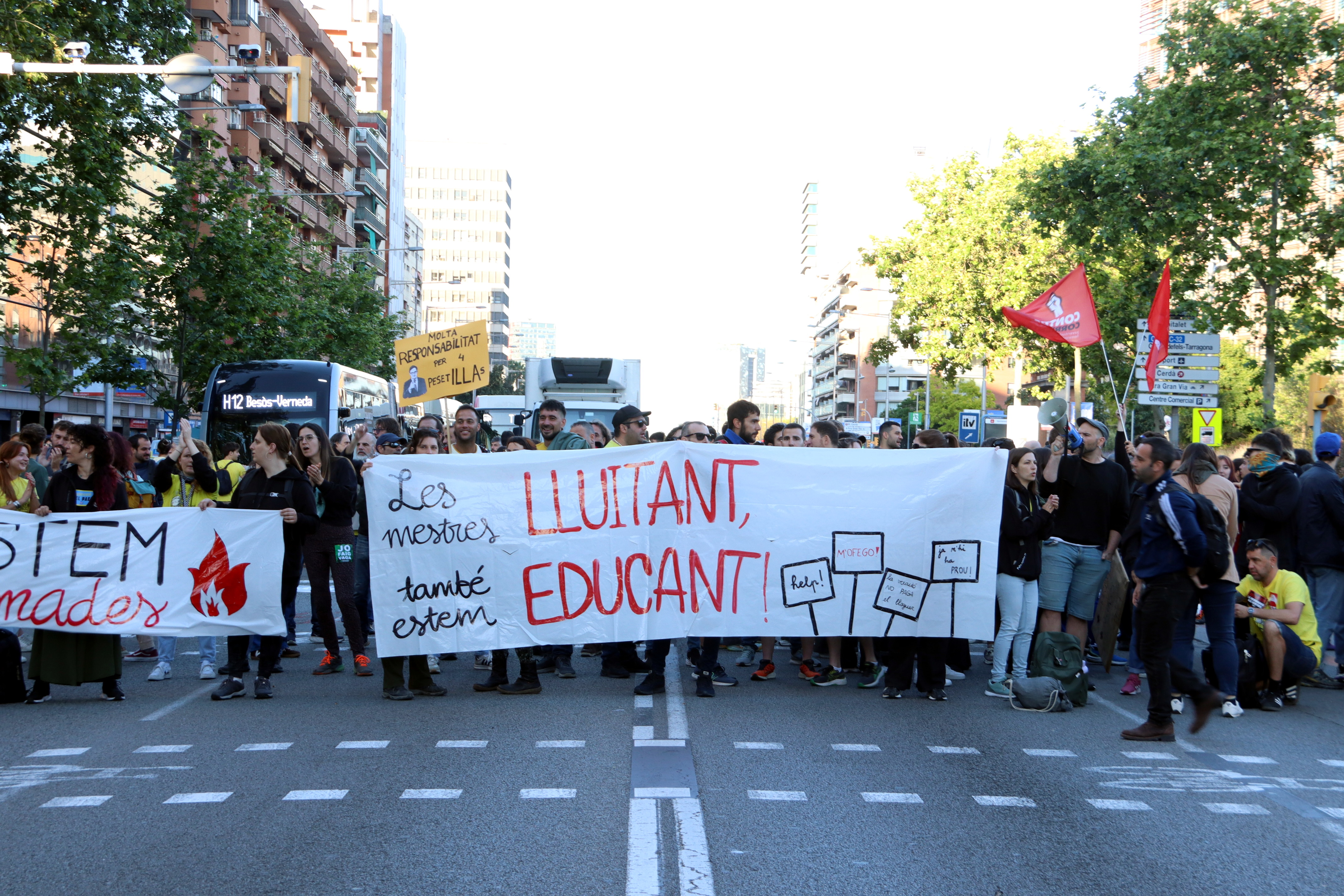
In Barcelona, around 100 teachers also blocked Gran Via near Can Batlló.
The arrival of a Mossos d'Esquadra patrol prompted chants of "Less police, more education," while protesters ironically announced over loudspeaker that "two staffroom colleagues" had arrived – a reference to recent tensions between the education community and the Catalan government after two undercover police officers allegedly infiltrated a teachers' assembly.
Education minister defends government
Catalonia's education minister Esther Niubó described union demands for a monthly pay rise of around €400 as "maximalist," saying such positions "do not help bring sides closer together."
Speaking to Catalunya Ràdio on Tuesday, Niubó was responding to comments by USTEC spokesperson Iolanda Segura, who told the newspaper Ara that the salary increase would be needed to end the protests.
Niubó said the Catalan government had already moved on salaries by approving a 30% increase in the specific supplementary pay component for teachers, equivalent to roughly €200 more per month over four years.
She added that teachers' demands go beyond pay and include calls for greater educational resources, particularly for inclusive education, and said this was where "paths to consensus" and room for negotiation could be found.
The minister urged unions to attend a sector-wide meeting scheduled for Thursday.
Niubó defended the government's handling of the dispute, saying it was making an "unprecedented effort" to respond to teachers’ demands and describing the agreement already reached with the CCOO and UGT unions as "beginning to lay the foundations" for improving the education system.
Union proposal
USTEC spokesperson Iolanda Segura said on Tuesday that the teachers' union could consider ending its protest campaign if the Catalan education department proposed a monthly salary increase of between €400 and €500 gross.
"It is a proposal that could be put on the table and we could see whether the sector considers it acceptable, because with that we would reverse a situation of salary injustice," Segura told the newspaper Ara.
She added that any deal would need a timetable for implementation, suggesting that €200 could be introduced in the first year, with the remainder phased in over the following two or three years.
"That would allow us to finish negotiating," she said, while warning that the union would not sign any agreement without approval from members.
In any case, she said the €200 monthly increase included in the current agreement was "unacceptable."
"We cannot cope"
Àurea Calsapeu, a teacher from Mataró who took part in the C-32 blockade, said classrooms were "overcrowded" and that public education was "falling apart."
"We need resources for inclusion. We have a lot of diversity and we cannot cope with everything," she said.
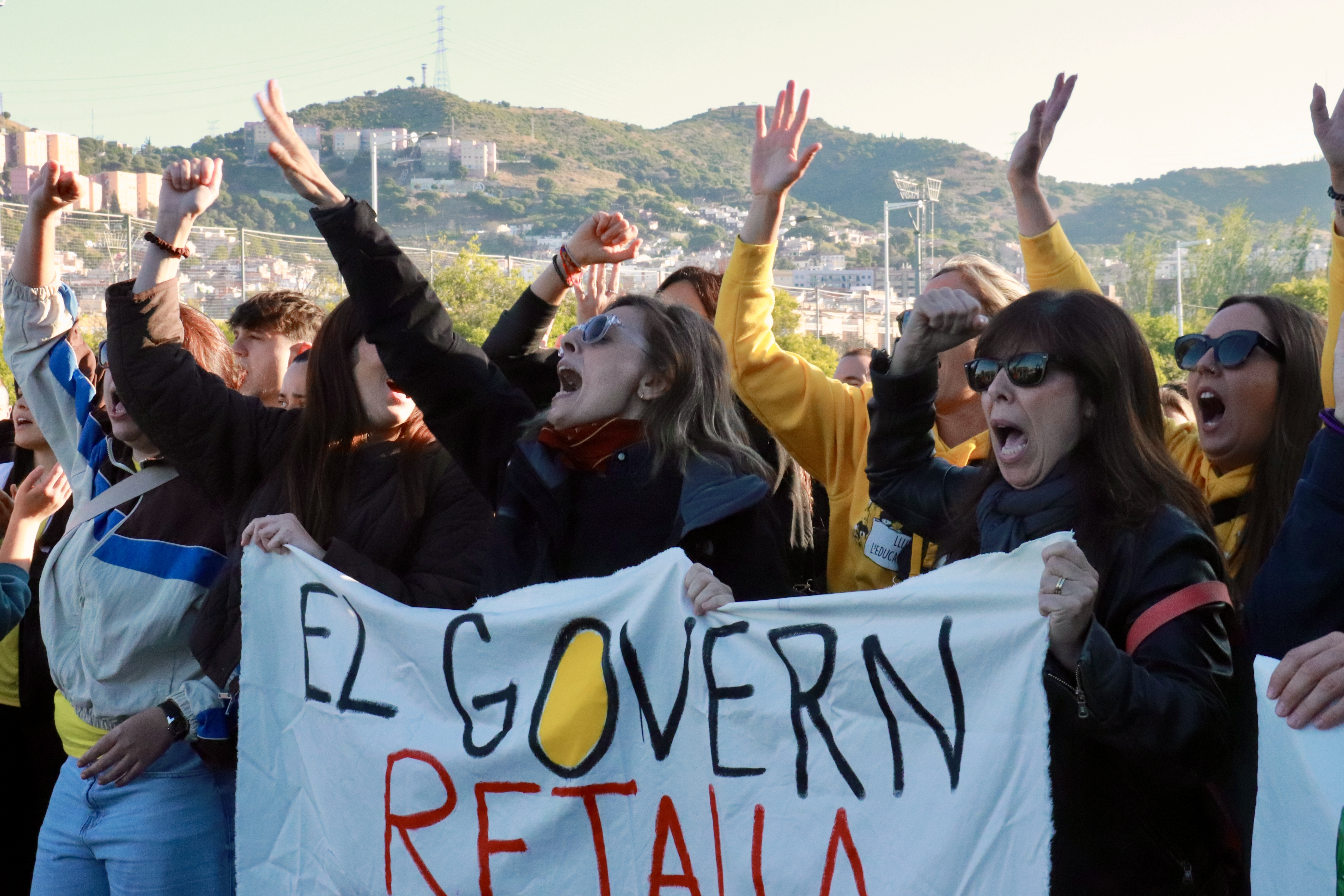
Òscar Simon Bueno, a USTEC union representative in Vallès Oriental who participated in the AP-7 blockade in Montornès, criticised the lack of resources for inclusive education and the loss of purchasing power among teachers.
He said the roadblocks were intended to pressure the government into making a "substantive" proposal capable of convincing the sector.
"The will of education staff is to work, to teach and to be in schools," he said.
Strike participation
Catalonia's education department said that 31.97% of staff had joined the strike by 1pm, based on data from 85.17% of schools.
Meanwhile, the USTEC union said participation had reached 70% across Catalonia, based on figures it collected up to 11am.
More strikes planned
Tuesday’s walkout is the first of three Catalonia-wide strike days scheduled in the third term, with the next planned for June 5.
Additional regional strike days are also scheduled, and a further walkout in nursery schools has been called for May 20.