Over 350 LGBTI-phobia incidents reported in Catalonia in 2025
Expression and glorification of hatred most common form of discrimination for first time, as observatory warns of normalization of hate speech
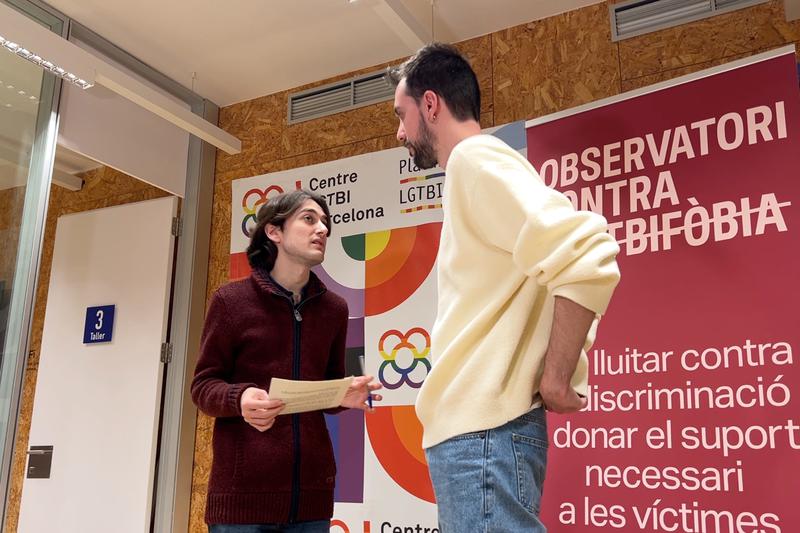

The Observatory Against LGBTI-phobia recorded 353 incidents in Catalonia in 2025, the highest figure since data collection began.
This represents an 11% increase compared with 2024, when 318 cases were registered, and a 16.5% rise compared with 2023 with 303 incidents. It is the third consecutive year in which more than 300 incidents have been documented.
For the first time, the most frequent type of discrimination was hate speech and glorification of hatred, accounting for 24.9% of cases. These incidents occur both online, mainly on social media, and through acts of vandalism in public spaces.
The observatory has pointed to a direct link between this increase and the normalisation of hate speech.
Physical assaults, some of them carried out by groups, were the second most common form of discrimination at 21.2%, followed by harassment in the workplace, educational settings and neighborhoods, which accounted for 17.8%.
More reporting, but a worrying upward trend
The observatory expressed concern over the upward trend but stressed the importance of reporting mechanisms and support services. More than half of the incidents were formally reported through criminal, administrative or labour channels.
Albert Carrasco, a legal expert at the observatory, said the rise in hate speech largely reflects publicly expressed hate in digital media, traditional media and social networks.
He added that it also includes vandalism and campaigns targeting the LGBTI community, especially trans people.
Physical assaults mostly occur in public spaces such as streets, squares and public transport with a growing number involving group assaults.
Hate speech and the rise of the far right
Cristian Carrer, the observatory's technical coordinator, associated the increase in incidents with the normalisation of hate discourse, mainly from right-wing and far-right sectors. But also, at times, even from progressive quarters, especially toward the trans community.
He called for stronger educational and transformative policies to combat stereotypes and disinformation.
While acknowledging that stronger laws and sanctions can have a major effect, Carrer stressed that LGBTI-phobia cannot be eradicated "through court rulings alone."
Gay men and trans people are the main targets
According to the observatory, the most frequently recorded discriminatory motivation in 2025 was homophobia (50.7%), followed by transphobia (30.6%).
Most transphobic cases target women, although incidents involving trans men and non-binary people have increased.
Toward a Catalonia-wide response
Barcelona province accounted for 75.4% of all incidents, followed by Tarragona, Girona, and Lleida.
The observatory explains Barcelona's high figures by the effective implementation of a protocol for responding to LGBTI-phobia-related discrimination in the city.
The protocol is coordinated by the Office for Non-Discrimination and the Barcelona LGBTI Center.
Carrer called for a similar protocol to be expanded across Catalonia through coordination between government institutions, integrated care services and specialised civil organisations.