Learning Catalan to make friends, discover culture, and speak to a dog
Authories have boosted Catalan language classes in recent years with thousands of new places
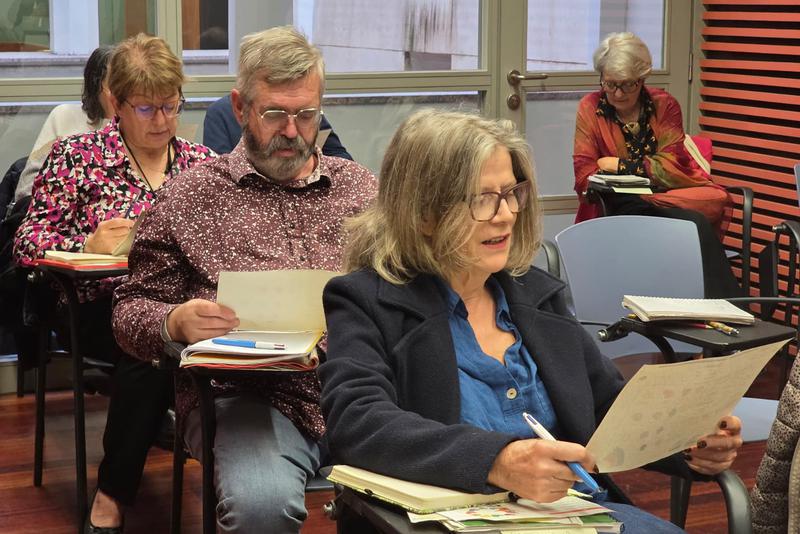

Over the past couple of years, Catalonia has been on a mission to boost Catalan language courses, responding to the rapidly growing demand that had clearly outpaced offer.
Barcelona’s population is increasing each year, mainly thanks to the arrival of immigrants from all over the world, and many of these newcomers were interested in learning the local tongue to help them better assimilate.
However, with thousands of waiting lists for the courses offered by the Consortium for Linguistic Normalization (CPNL, as it’s known by its Catalan-language initials), authorities have dedicated more resources into hiring more teachers and offering more places for students to learn the language.
One teacher working with the Consortium is Mafalda Palà, who says that the increased investment is “very promising.” In an interview with Catalan News, she explains that authorities are offering incentives with new teachers and an increase in places in classes, because “there’s huge demand to learn the language and now it seems that things are going quite well.”
In her classes, Mafalda says that she doesn’t see just one specific profile of student, but rather a wide variety, though she nuances this point with an explanation that “it also depends on the area where you’re giving the classes, perhaps the profile changes a bit depending on whether it’s in a more central area or more on the periphery.”
The teacher even finds that more and more elderly Catalan people are taking the courses too. “Because Catalan was banned here for a period, there are many older people who are lacking in their Catalan ability in parts,” she says. “I have had quite a few students who are from here who don't know how to write in the language.”
But of those who have come from abroad, Mafalada is seeing more and more Argentine students in her classes.
The teacher always asks her students their reasons for wanting to learn the language. Some feel that the language will open doors for them in professional lives, others are encouraged to learn by partners or friends, while others simply feel that it will help them integrate into the society they’ve moved to.
However, Mafalda has had one past pupil that she had with a particularly curious reason for learning Catalan. “One student told me that he was learning Catalan because his dog only understood Catalan,” she says. “It was very funny because his brother-in-law was Catalan and spoke to the dog in Catalan.”
The student told her, ‘I tell him to eat in Spanish and he doesn't understand, I tell him to eat in Catalan and he eats. In Catalan, he gives me his paw.’
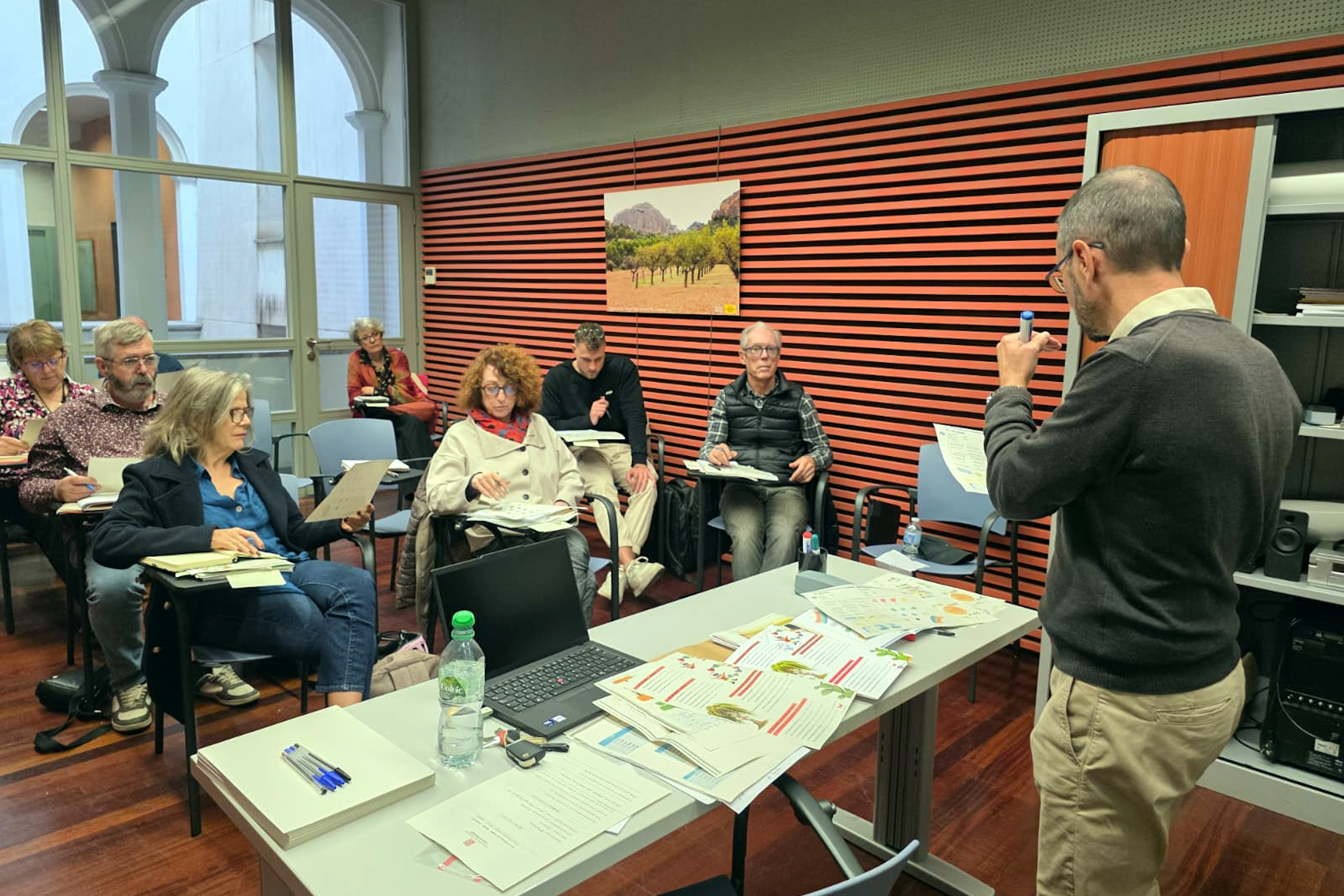
One of Mafalda’s students, Alejandro Merayo, has more mainstream reasons for learning Catalan: “For me, it's to connect with people, with local people, native people here. To connect with my friends, my partner, and to get to know them, to integrate. To get to know the culture.”
Alejandro moved to Barcelona nine years ago to live a new life for himself, and learned the basics of Catalan almost immediately after arriving, before taking a pause in his Catalan journey. “After a couple of months I was in the basics classes, but then, of course, I didn't practice and I quit. And now two years ago I started again.”
“When you first arrive, maybe your friends are from your country, or it takes a while to make local friends or get to know people from here,” he adds.
In his case, Alejandro was able to make local friends who then gave him extra motivation to learn their native language. “Those friendships started in Spanish, and then they start to say, ‘hey you have to speak Catalan,’ they encourage you.
Alejandro believes programs like those offered by the Consorci are very important. “I think there is a new awareness, right? Especially from local people, to promote Catalan, not only with resources and from Spain, but also to create an awareness that it is important to defend and to use Catalan as much as possible, and to encourage foreigners to also learn Catalan, not only Spanish.”
The Argentine concludes with the point that being able to speak another language will always mean a victory for culture. “For me, learning a language is like traveling, it's getting to know another world, connecting with more music, more people, more activities, a different way of seeing the world.”
“And I love Catalan music, I love it... And you win in so many ways. The culture here, the people, it’s absolutely amazing.”