Incident in PISA tests mean Catalan results not comparable with other territories or years
Education department opens proceedings to clarify why percentage of excluded students exceeded OECD recommendation
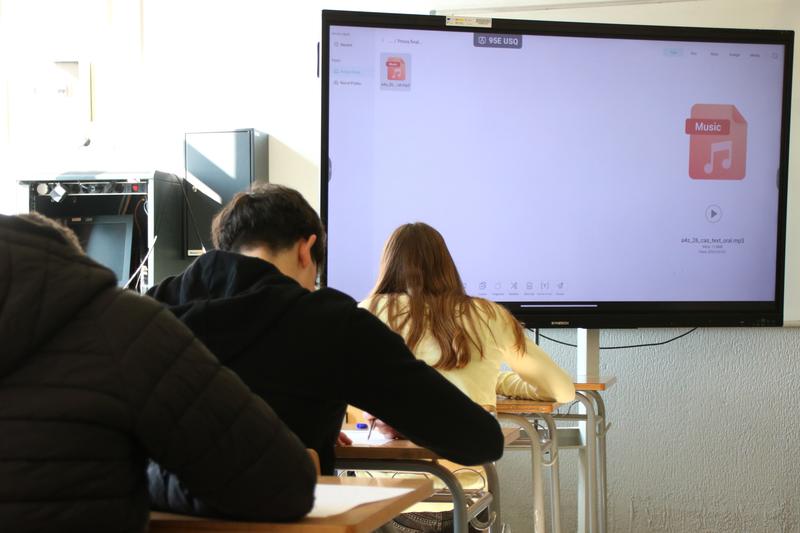

The Department of Education has reported that a "technical incident" in the 2025 PISA tests means the results will be incomparable with other territories or with the Catalan series.
The Programme for International Student Assessment (PISA) tests assess the mathematics, science, and reading comprehension skills of hundreds of thousands of teenage students in more than 80 countries around the world.
The sample of tests taken between March 31 and May 16, 2025, had an exemption rate (rate of students who are left out for various reasons) of 23.2% on average, above the maximum of 5% recommended by the Organization for Economic Cooperation and Development (OECD), the body that organizes the tests.
In total figures, 591 students were exempted. Of these, six were due to physical disability, 493 due to cognitive, behavioral, or emotional disability, and 92 due to insufficient command of the language.
The department of education has opened proceedings to clarify why this happened.
Authorities wanted to make clear that this will not mean that Catalonia will not appear in the state PISA report, but it will do so with a technical distinction with respect to the rest of the territories.
That being said, Catalonia will not appear will be in the annex to the OECD report, summarizing results throughout the regions of Spain.
Spain's Education Ministry was alerted to the incident in March and the Evaluation and Prospective Agency was notified.
According to sources from both administrations, the Spanish department is responsible for sending the list of centres with students born in 2009 that the autonomous communities have previously sent, but leaving out those with exemptions.
A company contracted by the OECD is responsible for making a random sample selection and determining which schools must take the tests in Spain. This information is returned to the autonomous communities and they are the ones who inform the educational centres that have been selected. In Catalonia, 51 schools were selected.
Once these have been chosen, the selection of students is made. In this case, the centers communicate to the Ministry the list of students born in 2009, indicating whether they have special educational needs. The state administration sends the entire national census and the OECD works with another company and makes the random sample of students.
Subsequently, it is at the time of the application of the tests that the centres decide, applying the OECD criteria and with the knowledge they have of the students, which students are excluded from the test. Thus, in Catalonia it was determined that the census of students that had to take the tests was 2,545, but the centres excluded 591 students.
At this point, sources from both administrations have indicated that there was no prior validation of the exemptions that had been applied, which caused the rate to reach 23.2% on average and not comply with the OECD recommendation.