Drug survey highlights concerning trends in social media use
Heavy drinking among students declines, gambling rises, while nearly one in four show compulsive internet use


The latest edition of the survey on drug use in secondary education in Catalonia, with data from 2025, has been released.
Conducted every two years as part of Spain’s National Drug Plan, the report questioned 2,690 students aged 14-18 and provides an overview of substance use and addictive behaviors among adolescents.
For the first time, the survey analyzed social media use. Results showed 'problematic use' affects 15.7% of students overall, with girls spending more time than boys – 40% of girls and 30% of boys spend over six hours daily on platforms.
Compulsive internet use, with symptoms such as sleeping less or spending less time with others, affects 23% of students, with girls showing higher rates than boys (26.5%, compared with 19.6%).
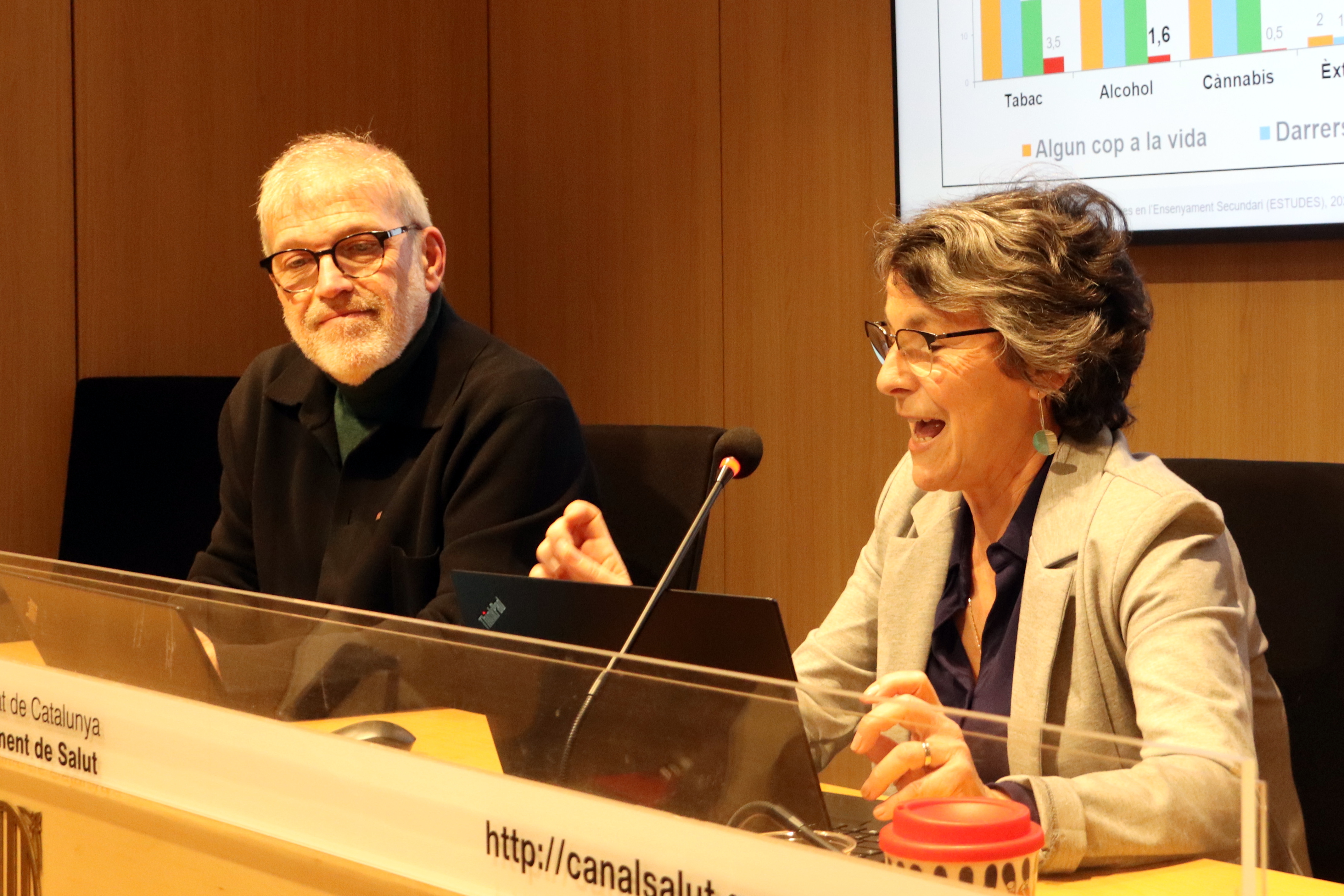
The Deputy Director-General for Addictions, Luisa Conejos, emphasized the need for action and welcomed the government's plan to ban social media for minors under 16, stating: "We believe this regulation will help us in promoting a much more reasonable use of social media. We have to live with them, but it is not the same to use social media at 15 as it is at 20."
Alcohol use
Alcohol remains the most widely used substance among adolescents, though prevalence rates have stabilized.
Half of students (51%) reported drinking in the past month, with 17% having gotten drunk. While these rates are the lowest since 2000, public health officials highlight the need for stronger social oversight and inspections, which they say remain scarce.
Conejos noted that cultural and commercial factors, along with adult behavior, strongly influence youth substance use, advocating for understanding rather than criminalizing adolescents.
Tobacco and cannabis
Tobacco use has declined, with 21% of students smoking in the past year, and daily use is 3.5%, down from 39.8% and 15.8% in 2006.
E-cigarette use remains high, with 24.5% of students reporting use in the past month.
Cannabis use has also decreased significantly, with 16.2% of adolescents using it in the past year, down from 39% in 2006.

Sleeping pills and sedatives
Use of sleeping pills and sedatives decreased slightly after peaking in 2023.
In 2025, some 6.4% of girls and 3.2% of boys used them daily, with over-the-counter use reported at 2.9% for girls and 1% for boys.
Gambling
Gambling continues to rise, especially among boys. 17% of students participated in in-person gambling in the past year (24.5% boys, 10.2% girls).
Problem gambling affects 5.3% of students, mostly boys (9.4% vs. 1.2% of girls).
Deputy Director-General of Gambling, Rosa Maria Garcia, noted that police conduct over 800 inspections annually, and minors rarely gain access to establishments.
Pornography
Pornography viewing has decreased from 43.9% in 2023 to 35.8% in 2025, with a big gender gap – 56.4% of boys versus 15.1% of girls.
Potentially problematic use, measured for the first time, affects 8% of boys and 1.2% of girls, with symptoms such as distress when unable to view it or considering it central to daily life.