Courier work causes chronic stress, anxiety, and harms well-being, according to study
Analysis concludes that employees are "caught in an invisible cycle" of precariousness
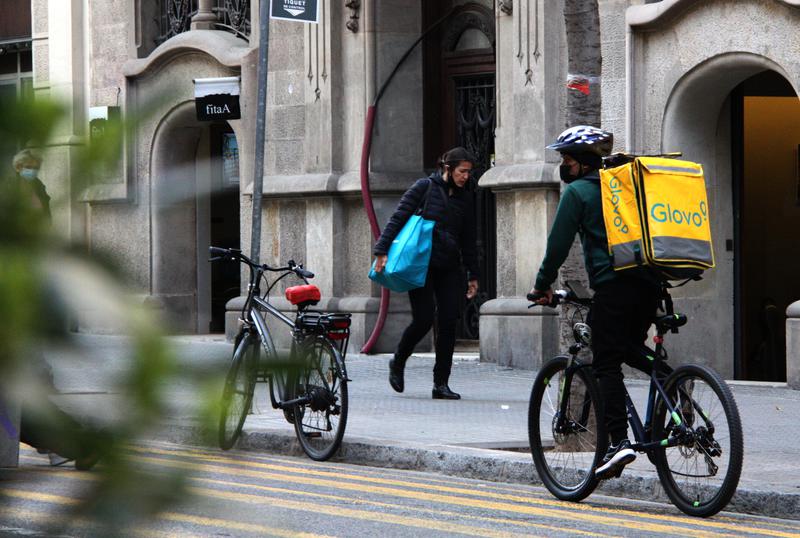

Working as a delivery courier on digital platforms generates chronic stress, anxiety, fatigue, emotional exhaustion, and difficulty disconnecting, according to a new study carried out by Pompeu Fabra University (UPF) and the Hospital del Mar Research Institute (HMRIB).
The analysis concludes that this type of work affects health and well-being as workers are "caught in an invisible cycle" in which "every effort to improve the situation reinforces the cycle of precariousness."
"The majority of platform workers experience a restricted autonomy, characterized by contractual insecurity, income variability and algorithmic control," the research indicates.
Algorithms designed to optimize the efficiency of production processes end up creating "new forms of digital subordination," it adds. The assignment of tasks, the measurement of performance and the penalization of inactivity, among others, create a system in which "dependence is disguised as entrepreneurship and uncertainty is normalized as the price of apparent freedom."
This entire structure, the study concludes, has "profound consequences" on the health and well-being of workers. "The constant exposure to control, the unpredictability of income and competition generate chronic stress, anxiety and fatigue. The risk is not only physical (accidents, musculoskeletal disorders or exposure to toxins), but also psychosocial: loss of boundaries between work and personal life, feeling of isolation, emotional exhaustion, constant insecurity, difficulty in disconnecting and inability to plan for the future," they state.
The study is part of the international research project looking into new challenges for occupational safety and health in times of digital transformation in Europe.
In total, nine research centres from seven European countries are participating.
The research for the project was carried out by combining quantitative and qualitative analyses. Surveys were conducted among almost 4,000 workers in the seven countries analyzed. In Spain, 575 people participated in the first wave, of whom 186 performed face-to-face tasks and 388 worked remotely.