Catalan industry looks towards defense: 'Tank and car maintenance are not that different'
Companies see "opportunity" to keep jobs in sectors "threatened" by relocation

In a global context of increasing military spending across the world, Catalan industry is looking towards transitioning to the defense sector.
Several companies on theses shores view "very real opportunities" in the sector, which they say can help guarantee jobs in industries "threatened" by relocation.
In the automobile industry, there are already more than a hundred companies interested in some project, according to figures from the Automotive Industry Cluster of Catalonia (CIAC).
The president of the CIAC business association, Josep Maria Vall, says that defense is an "unexplored" and "unknown" industry in Catalonia, but recent months has seen activity in this sector rise due to heightening geopolitical tensions.
Vall says that a "perfect storm" has brought the automotive sector to look towards defense.
The automotive industry "already has" the technology needed to work in defense, such as cameras, sensors, and robotics. "There is a similarity of criteria and technologies that can be taken advantage of," Vall explains.
Catalan "expertise"
Six months ago, with the aim of promoting these to move into into defense, the former director of the Mossos d'Esquadra, Pere Ferrer, and the former Catalan parliament speaker, Roger Torrent, founded the consulting firm Dualys.
"The field of defense is unknown, but right now there are many opportunities," Ferrer says.
European investment planned until 2030 will bring spending on defense up to €800 billion, as part of the 'Rearm Europe' plan.
The co-founder of Dualys insists that Catalonia has "expertise in many world-renowned areas," such as the pharmaceutical or automotive sectors, which can now be made "available" for military and security-related uses.
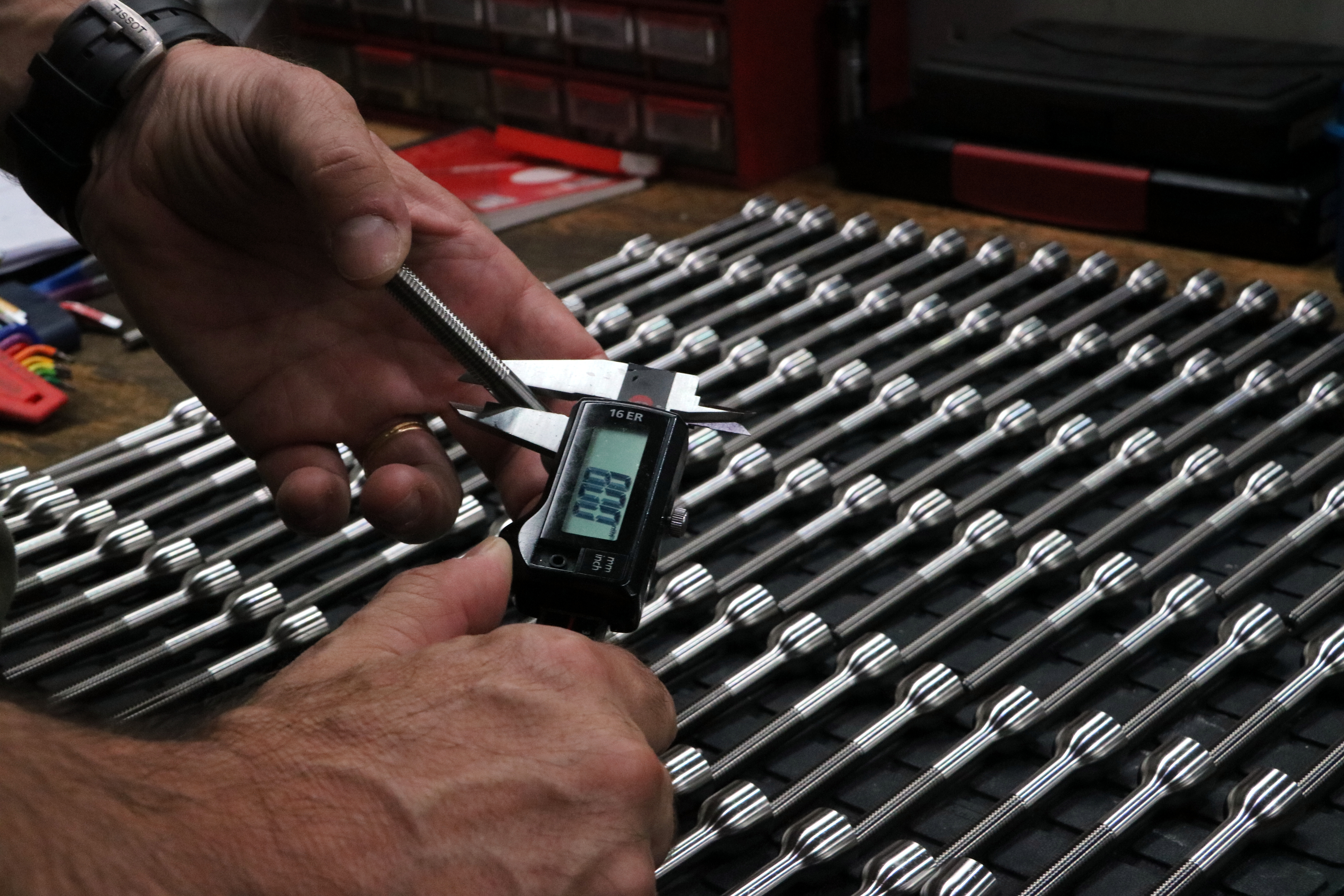
"Those who make gears for a gearboxes for heavy civilian vehicles, whether tractors or excavators, are industrialists who are very well prepared to enter the defense sector. They have the expertise, they have the capabilities, they have accumulated knowledge over many years, and they should hardly be asked to reconfigure," says Ferrer.
Whereas car manufacturers could make between 1,000-1,500 vehicles per day, in the military context, this would be reduced to 1 or 2 per week. "The automotive and defense sectors must learn how they can go hand in hand," says Vall.
According to Ferrer, the "main difficulty" in currently the "lack of knowledge."
Innovae training simulators
Innovae are a company specializing in virtual training simulators, and they have started the transition towards the defense sector.
In 2025 they collaborated with Airbus and the army, allowing students to do helicopter maintenance internships.
Its marketing and channel director, Xavier Riba, explains that "the company specializes in technology and knows how to channel it into different areas." According to him, "there is increasingly more demand" for projects in this sector.
"Maintanence on a tank and a car are not that different. There are engines, wheels, and parts that are not that different," he says.
Simulators allow you to practice in "realistic and crisis" situations, Riba says. "Military training is complex and intense. Here technology gives you this answer," he explains.
"The geopolitical environment has changed a lot and what our clients need is to be able to have these tools to have people fully prepared," he adds.