Catalan government rules out reopening Collserola until 2027
New task force will coordinate gradual lifting of African swine fever restrictions


The Catalan government has set up a task force to coordinate the gradual lifting of restrictions imposed to contain African swine fever (ASF), one year after the first case was detected.
Agriculture minister Òscar Ordeig said the task force would submit an initial proposal before the end of the year to review access to natural areas in low-risk zones and in high-risk areas outside the cordoned-off perimeter.
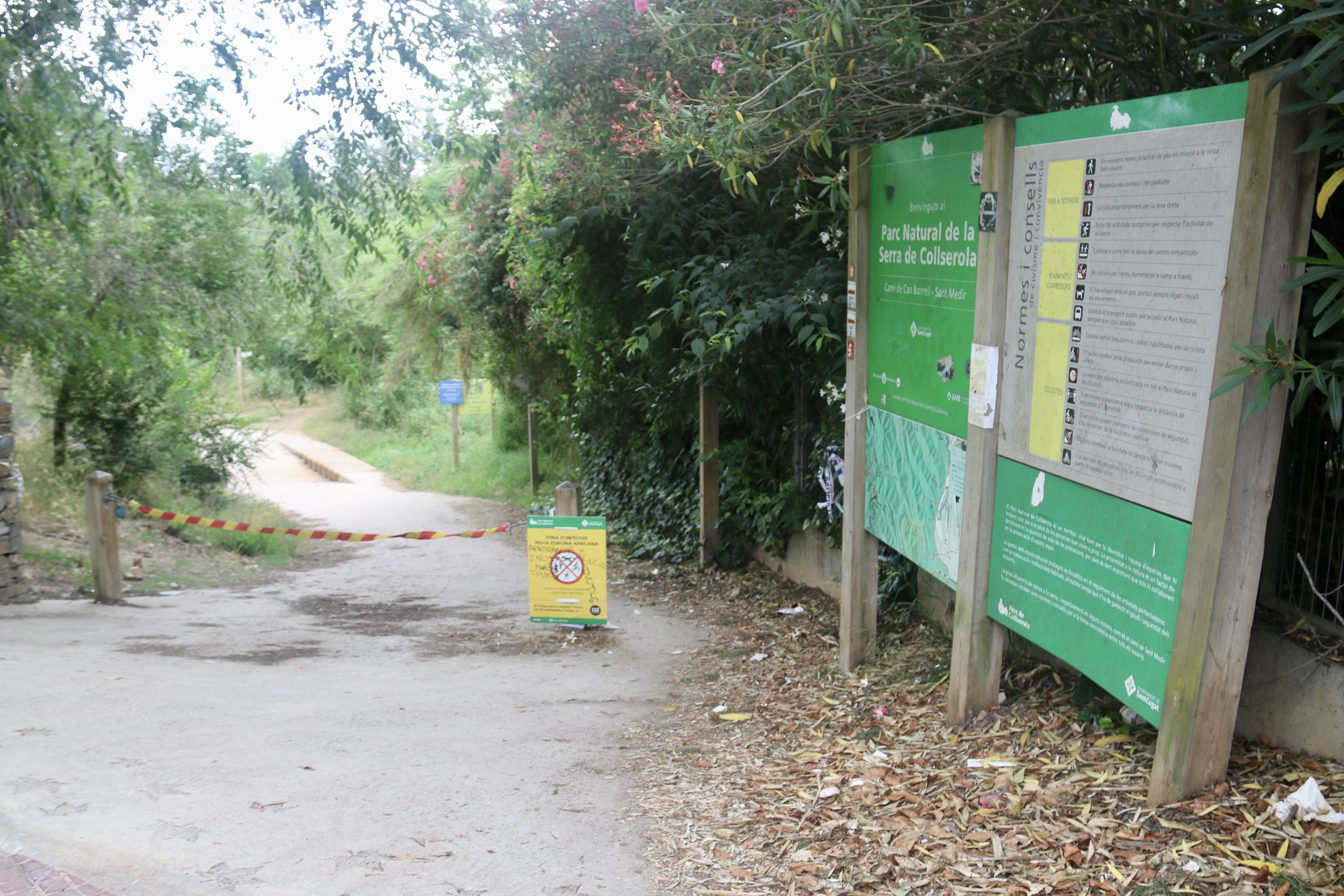
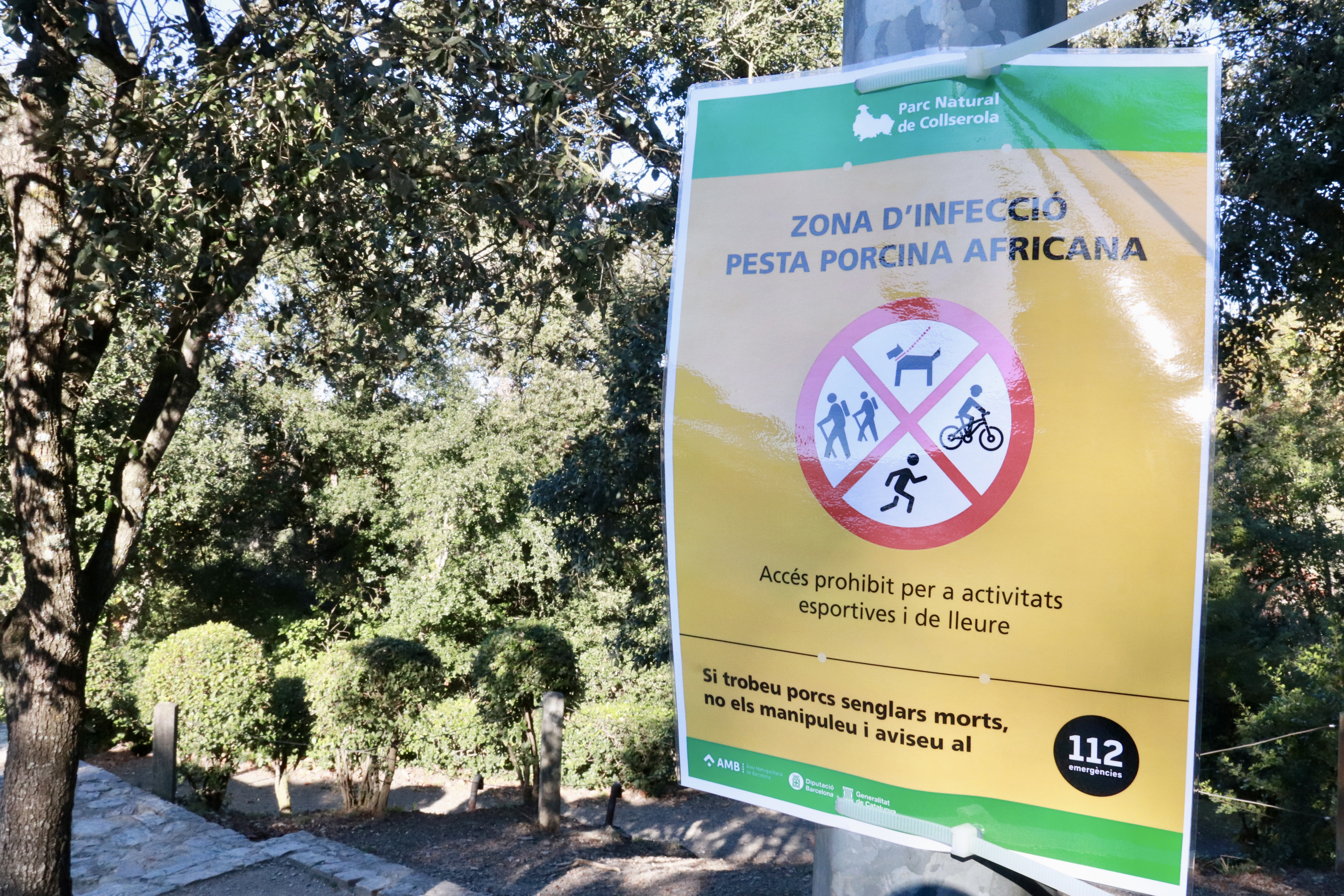
A second proposal, expected early next year, will consider easing access restrictions in the high-risk zone, which includes Collserola Natural Park, on the outskirts of Barcelona.
The aim is to restore normal access gradually, provided the epidemiological situation allows it, while maintaining vigilance.
Over the past year, more than 15,000 wild boar have been captured and 448 cases of the disease detected.
The crisis began on November 28, 2025, when a wild boar tested positive for ASF in Cerdanyola del Vallès, prompting the establishment of a high-risk zone and restrictions on access to natural areas.
One year on, the government believes developments on the epidemiological front allow it to move into a new phase of easing restrictions.
At a press conference on Tuesday, Ordeig announced that the task force would bring together scientists and representatives from local councils.
Its remit will be to assess possible adjustments to the measures in place and draw up a roadmap for a gradual return to normality.
The government does not intend to lift restrictions across entire municipalities.
Instead, it is considering reopening specific paths and trails, without necessarily allowing unrestricted access to all natural areas within those municipalities.
Collserola, meanwhile, is being treated as a separate unit, and its reopening is not being considered until early next year at the earliest.
"Crisis not over"
"The health crisis is not over – a slip-up or a poorly managed reopening could take us back to square one," Ordeig said.
He added that the government did not want Catalonia to end up like Poland or Romania, where the disease has been present for more than 10 years and has already spread to farms.
The agriculture minister also said the government hoped to receive positive news in the coming months about the reopening of the Japanese and Mexican markets.
He added that there had been no new developments regarding the origin of the outbreak.
One wild boar per square kilometre
The first-year assessment of the response records more than 15,700 samples analysed since operations began, including 448 positive and 15,283 negative results.
Ordeig said wild boar density in the restricted zone now stood at one animal per square kilometre, representing a substantial reduction.
As for culling operations, the Rural Agents and associated teams have carried out 11,384 captures and removals, while hunters have accounted for a further 3,679 in risk areas.
This brings the total number of wild boar captured in the infected zone to 15,063.
Nearly 1,000 personnel deployed each week
The response to the crisis has involved an average of nearly 1,000 personnel a week.
The Rural Agents have led the operation, supported by the Mossos d'Esquadra police, the Civil Guard, local police forces, Civil Protection, Tragsa and specialist units.