2,000-year-old Roman forum unearthed beneath Barcelona hotel
Old pavement forces archaeologists to rethink the city's ancient layout
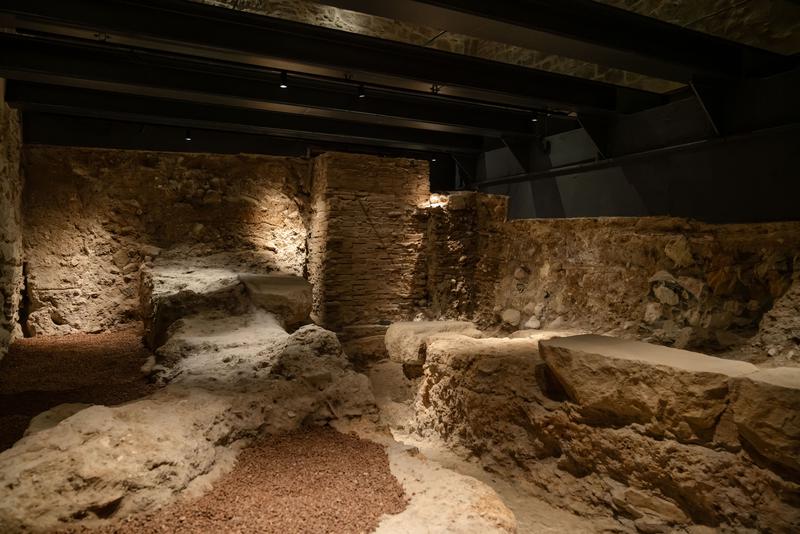

Construction work at the Gran Hotel Barcino in downtown Barcelona has uncovered what archaeologists are calling one of the most significant Roman-era discoveries in decades.
The monumental section of the ancient forum of Barcino rewrites the city's urban history.
The find was made during expansion work at the Gran Hotel Barcino, inside the basement of Casa Requesens.
What began in July 2023 as a routine elevator installation evolved into a three-year archaeological intervention that has now transformed scholars' understanding of how Roman Barcelona was laid out.

At the heart of the discovery is a 42m2 pavement made of Montjuïc stone slabs, dating between 15 and 10 BC, the founding years of the Roman colony.
The pavement's scale, craftsmanship, and preservation state have surprised experts.
"This is a unique find in Barcelona, both for its age and its function," said Xavier Maese of the Barcelona Archaeology Service.
A 90-degree turn in history
Like most Roman cities, ancient Barcino was organized around two main axes: the cardo (north–south) and the decumanus (east–west).
Until now, historians believed that the city's forum, the civic and administrative heart of Roman life, was aligned with the cardo.
Archaeologists now say the forum was aligned parallel to the decumanus, running from sea to mountain.
"For years, we thought the Roman forum ran through the area of the Palau de la Generalitat," Maese explained. "Now we see that it turns 90 degrees from being parallel to the sea to being perpendicular."
Both the Catalan government and Barcelona City Council have accepted the revised interpretation and plan to update the city's museum displays accordingly.
Monumental engineering
The stone slabs, some measuring up to nearly 149 cm long and almost 118 cm wide, are between 18 and 35 centimeters thick.
Laid with precision, they created a stable, monumental surface over uneven terrain, typical of major Roman public works.
Experts say no pavement of this size or quality has previously been found in Barcelona.
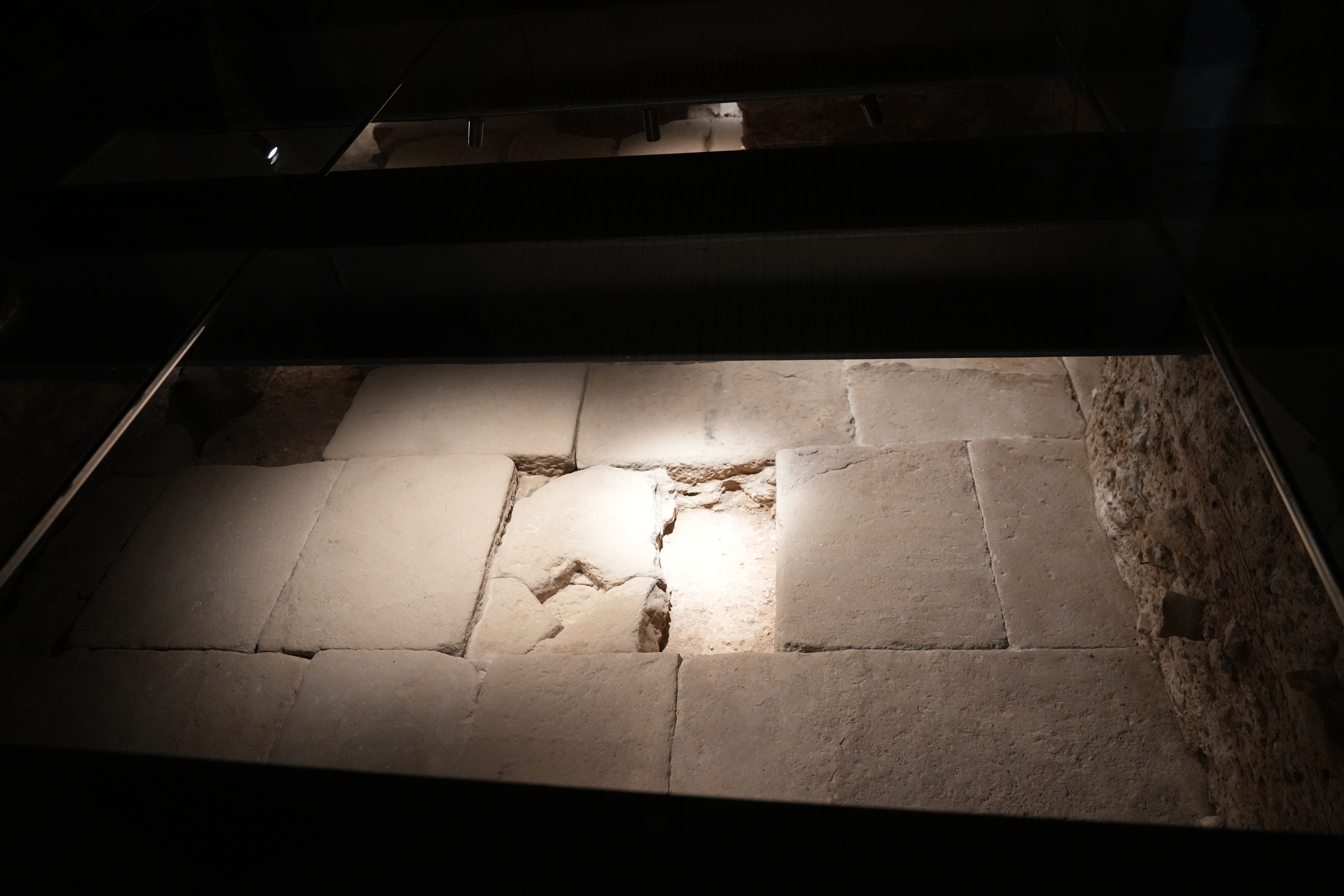
The slabs' orientation is parallel to the decumanus and perpendicular to the cardo.
It matches the original founding grid of Barcino and strengthens the argument that this space formed part of the colony's central civic plaza.
Public-private cooperation
City officials highlighted the unusual collaboration that made the discovery possible.
The archaeological intervention was authorized and supervised by municipal and regional cultural authorities, but the entire excavation was financed by the hotel.
Barcelona's Culture Councilor Xavier Marcé praised what he described as a rare alignment between private development and heritage preservation.
After the remains were detected, the hotel adapted its renovation plans to protect the site.
The space will remain inside the privately owned hotel and will not be permanently open to the public.
The area will be incorporated into the hotel's breakfast room.
However, periodic guided tours will be offered in coordination with the City Council.