Thousands protest across Catalonia as Ceuta border crisis deepens
PM Sánchez says it's "absurd to think the executive was warned and did nothing"
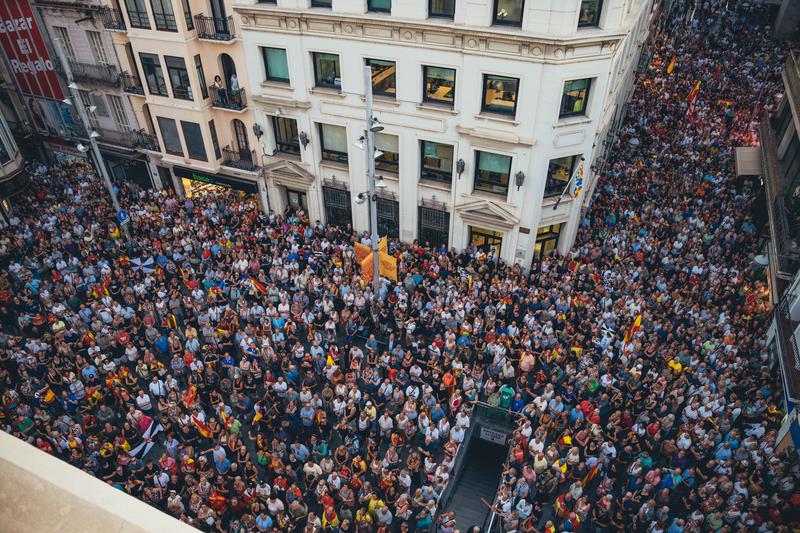

Wednesday evening saw protests break out across Catalonia and Spain related to the Ceuta border crisis, when around 72,000 migrants entered the Spanish territory from Morocco on July 30 and 31.
More than 90% were returned to Morocco within 48 hours, according to the Spanish government. Dozens of people died during the crossings, with Ceuta President Juan Jesús Vivas putting the death toll at around 100.
The protests were originally called by the Federation of Municipalities and Provinces, currently led by the conservative People's Party (PP), to show support to the autonomous city enclave bordering Morocco, but quickly became platforms for criticism of the Socialist Spanish government's management of the situation.
Falling on the Day of Ceuta, September 2, the protests gathered under the heading 'Ceuta is not for sale, Ceuta is to be defended.'
The demonstrations were called by the right-wing blocs of the People's Party and far-right Vox, while the Socialist Party distanced itself from the gatherings, saying they were "instrumentalized and partisan" events.
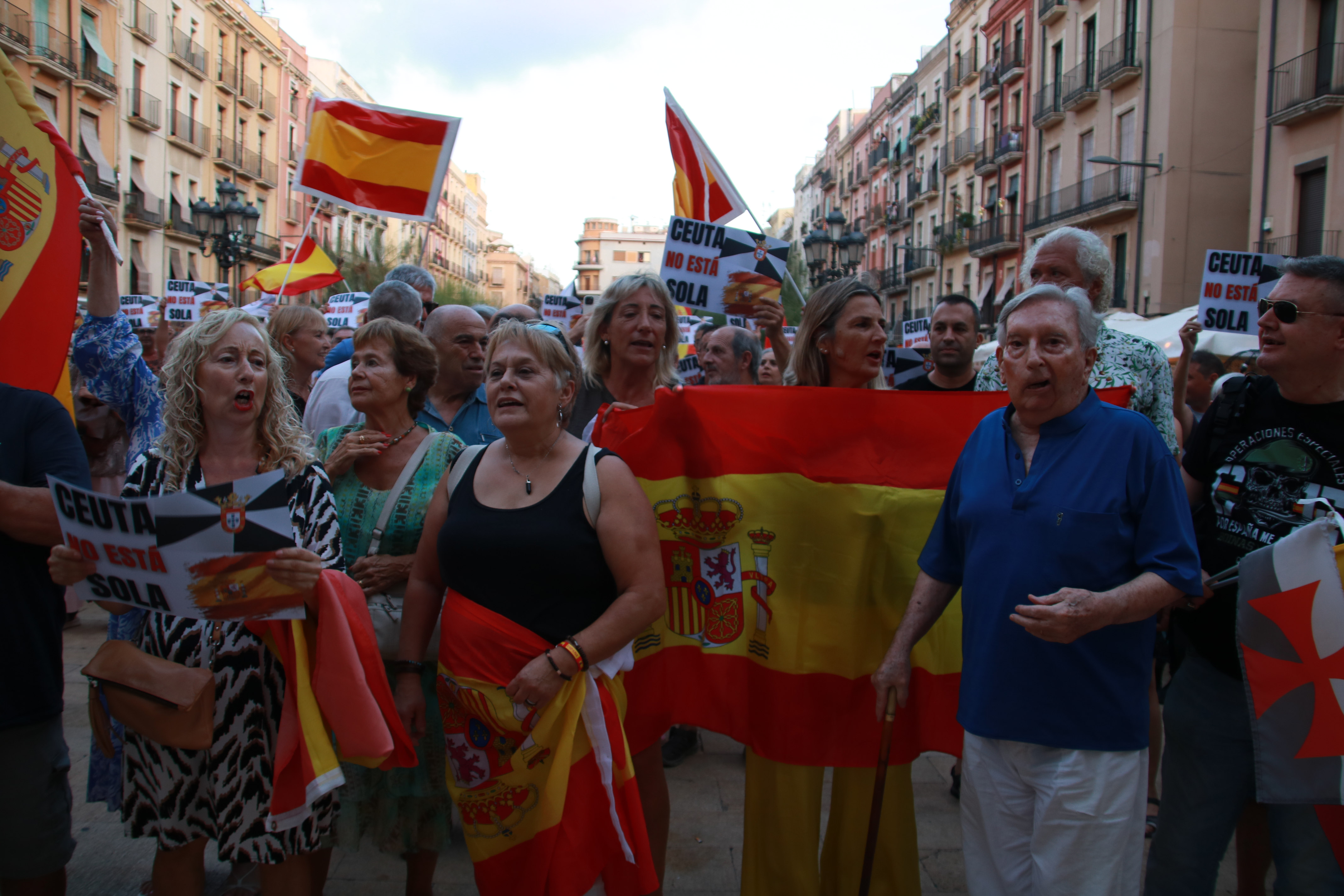
The protests took a strong anti-Socialist tone, with lots of insults against PM Pedro Sánchez, and labelling the migratory crisis "an invasion."
Videos published on social media throughout the evening also showed many journalists reporting from the protests being harassed and prevented from doing their work.
In many cities, anti-racist counter demonstrations were also organized.
An estimated 10,000 people gathered in Badalona to show their support for Ceuta, according to the mayor of Badalona, PP's Xavier García Albiol, citing the local police as the source.
During the gathering, crowds chanted in favour of Spain and shouted insults towards Prime Minister Pedro Sánchez.
In Tarragona, there was some tension seen among opposing sides. A 35-year-old woman on the anti-fascist side of the demonstration was arrested over the confrontation. Earlier, the Catalan police were seen pushing and, in some cases, using batons against counter‑demonstrators.
With Spanish flags and posters with the slogan 'Ceuta is not alone', around 1,000 people shouted slogans and insults against Sánchez and called for his resignation.
Ten Mossos d'Esquadra riot vans positioned themselves in rows to divide the two gatherings in Barcelona's Plaça Sant Jaume square.
Far-right Vox politicians displayed Ceuta flags printed on A4 pages from the city hall balcony, and there were some moments of confrontation between both sides gathered.
The anti-racist side chanted slogans such as "no person is illegal," "fascists out of our neighborhoods," and "they shall not pass."
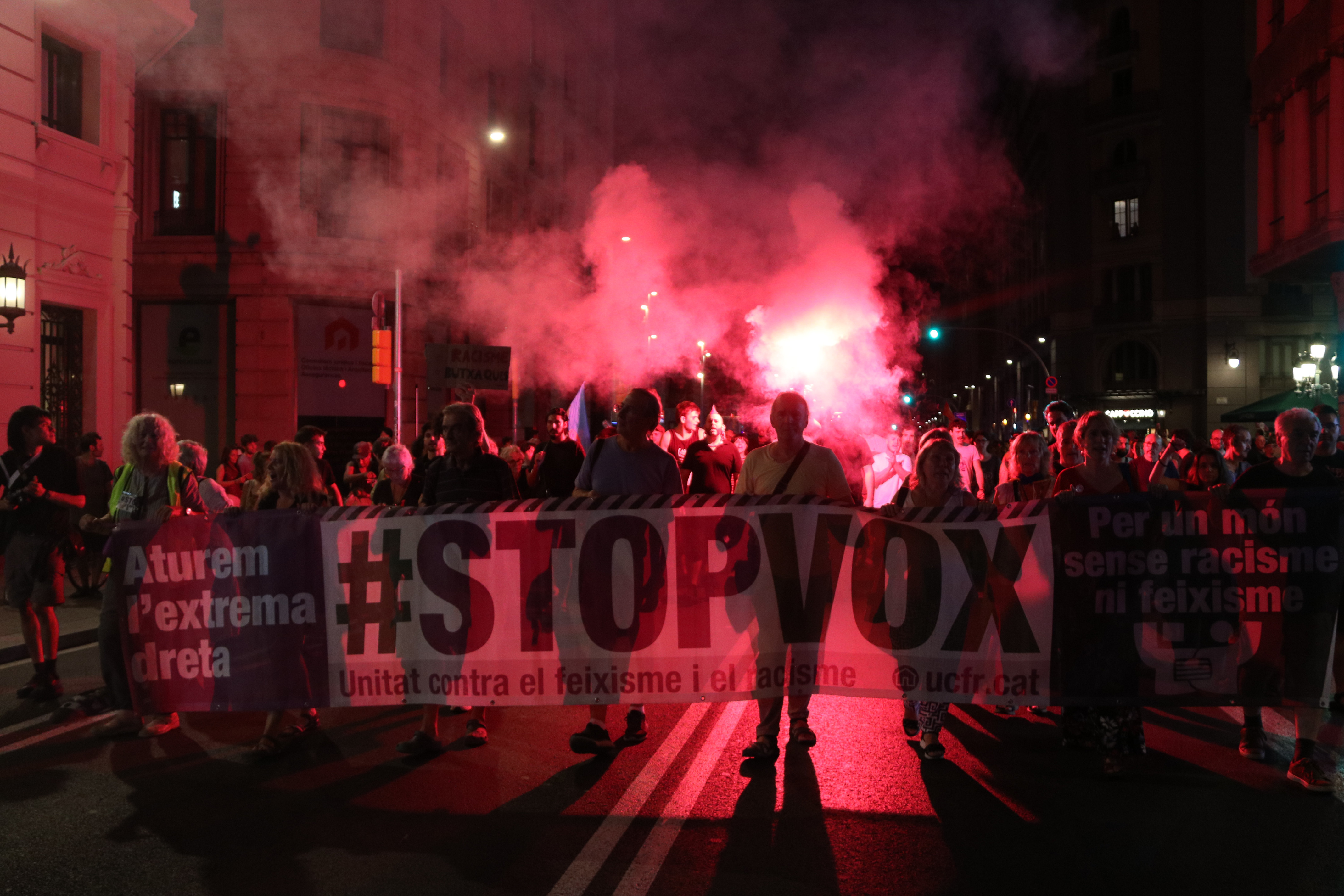
According to the local police, 1,500 people gathered in support of Ceuta, while 700 people joined the counter-demonstration.
Girona's Plaça del Vi was also divided in two on Wednesday evening, separated by a police cordon.
Around 600 people gathered to support Ceuta and criticize the Socialists' management of the migratory crisis, while 400 people turned up for the anti-racist counter demonstration.
One of the members of the Girona Acull organization calling for the counter-demonstration, Ivan Salavedra, said the gathering was to prevent "normalizing hate speech and violence."
"In Girona we do not accept this fascist call that has been made all over Spain and we are peacefully telling them that there is no space," assured Salavedra.
Meanwhile, the largest demonstration in the country was seen in Madrid, where 50,000, according to the Spanish government delegation in Madrid, gathered in Plaza de Cibeles.
Four people were arrested for disorderly conduct and assault on authority as the gatherings descended into riots.
Police report
On Wednesday, the Director General of the National Police, Francisco Pardo, informed Spain's Interior Minister, Fernando Grande-Marlaska, that “there is no police report” that attributes the planning or execution of the mass entry of migrants into Ceuta to the Moroccan security forces.
However, an investigating National Court judge has ordered the police to submit a report on the topic, which instead attributes active participation of the Moroccan security forces in the mass entry of migrants into Ceuta. The judge later instructed police not to share that specific report with the Interior Ministry while the investigation was under judicial secrecy.
The Catalan News Agency has had access to the report submitted by the National Police's National Immigration and Borders Center (CENIF) to the National Court.
Among other elements, the document points out "the scarce presence" of Moroccan troops and "the active guidance of the mass towards the crossing points" by these security forces, in addition to the presence of "non-uniformed" agents. The report concludes that there was "prior planning" and that the operation had objectives "different from those of the migrants", but admits that it cannot specify who was at the "highest level of responsibility."
The document maintains that "migratory intent is not the main guiding element of the mass entry" on July 30 and 31 and explains that the avalanche at the border occurred in several phases.
According to the report, a first phase sought to "obtain the maximum impact on border management until its collapse." This first wave, according to the report, was led by "young men with a high percentage of minors" and sought to "saturate the means of containment to force the opening of accesses."
Then, a second wave contained many more families, with "a high presence of women and young children," and sought, according to the report, "to eliminate the physical response capacity of the security forces". CENIF considers that this composition made it difficult to use coercive means and facilitated the saturation of the response system.
The report states that Moroccan uniformed officers "give instructions to immigrants to enter Spain" and "manage the flow of people to certain predetermined areas for entry." It also claims that some non-uniformed individuals "drive and direct the mass" towards the Tarajal breakwater.
The report includes several photographs of these alleged non-uniformed agents and describes them as men between approximately 30 and 50 years old, of strong or athletic build and short hair.
Sánchez speaks
On Thursday morning, Pedro Sánchez appeared in the Spanish Congress to assess the Ceuta situation.
Sánchez stated that "to date, no one has provided evidence that would allow us to conclude that the mass entry into Ceuta was designed or carried out by the Moroccan authorities."
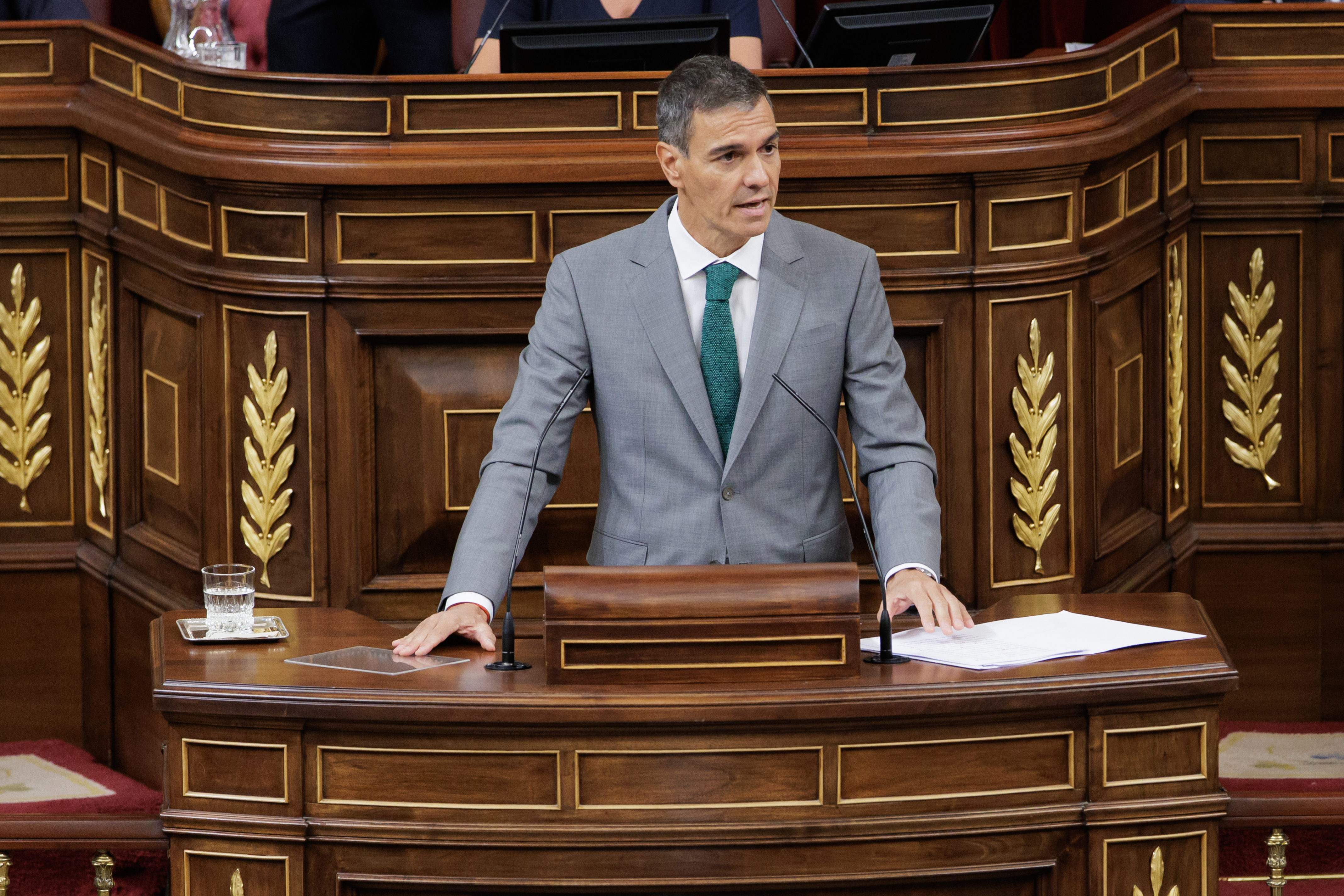
No Spanish or international body, he said, has presented any "solid evidence" in this direction, and if that were the case, his government "would act accordingly," because "it is not afraid to confront foreign powers when the situation requires it."
He also pointed out that there was "no report" that anticipated or foresaw "neither the scale nor the possibility of the assault on Ceuta." To prove this, he announced the publication of a dossier with all the documents.
"It is absurd to think that the executive was warned and did nothing specifically," he said.
Sánchez insisted on the "close collaboration" of the Moroccan authorities to return 90% of those who had crossed the border.
He stated that his government had acted with "transparency" and insisted that it had no prior information about the avalanche of July 30 and 31.
Now, according to Sánchez, the crisis has become "humanitarian and one of management within the city," with hundreds of people sleeping rough, and difficulties in recovering normality.
He defended the actions of his executive and said that immediate returns over the border are not so simple. "You cannot grab a human being by the arm and throw him across the border as if he were a sack of dirt," Sánchez stated.
Sánchez also addressed the police report that points to the participation of Moroccan security agents in organizing the border crossing. According to the PM, the police made two notes pointing to the possibility of "a gradual increase" in attempts to access through the breakwaters.
At this point, he asked why the police did not send the Spanish government the information note of July 29, or the report commissioned by the National Court "with potential implications for the security of the state."
He has announced his government would publish "a dossier with all the reports, all of them, so that the media and the public can examine them for themselves," in a show of "absolute transparency" so that "the truth is known."