Spanish Supreme Court questions migrant regularisation on final day of applications
NGOs call for more resources as Barcelona reports assisting nearly 87,000 applicants and Spanish government unveils €500m integration plan


Spain's Supreme Court has opened the door to a possible legal challenge before the Court of Justice of the European Union (CJEU) over the government's extraordinary migrant regularisation scheme.
Applications for the scheme close on Tuesday after more than two months.
The court has given the parties five days to state whether it should seek a preliminary ruling from the CJEU, following legal challenges brought by the conservative-led regional governments of Aragon and Valencia.
In an order issued on Tuesday, the judges questioned whether the decree underpinning the regularisation process could conflict with EU law, including the bloc's Pact on Migration and Asylum and the Return Directive.
The Supreme Court also raised concerns over the potential impact of the scheme on the Schengen Area and noted that it could affect between 900,000 and 1.65 million people.
The court has not suspended the regularisation process. It will first decide whether to seek guidance from the CJEU before ruling on the legal challenges brought.
Extraordinary regularisation programme
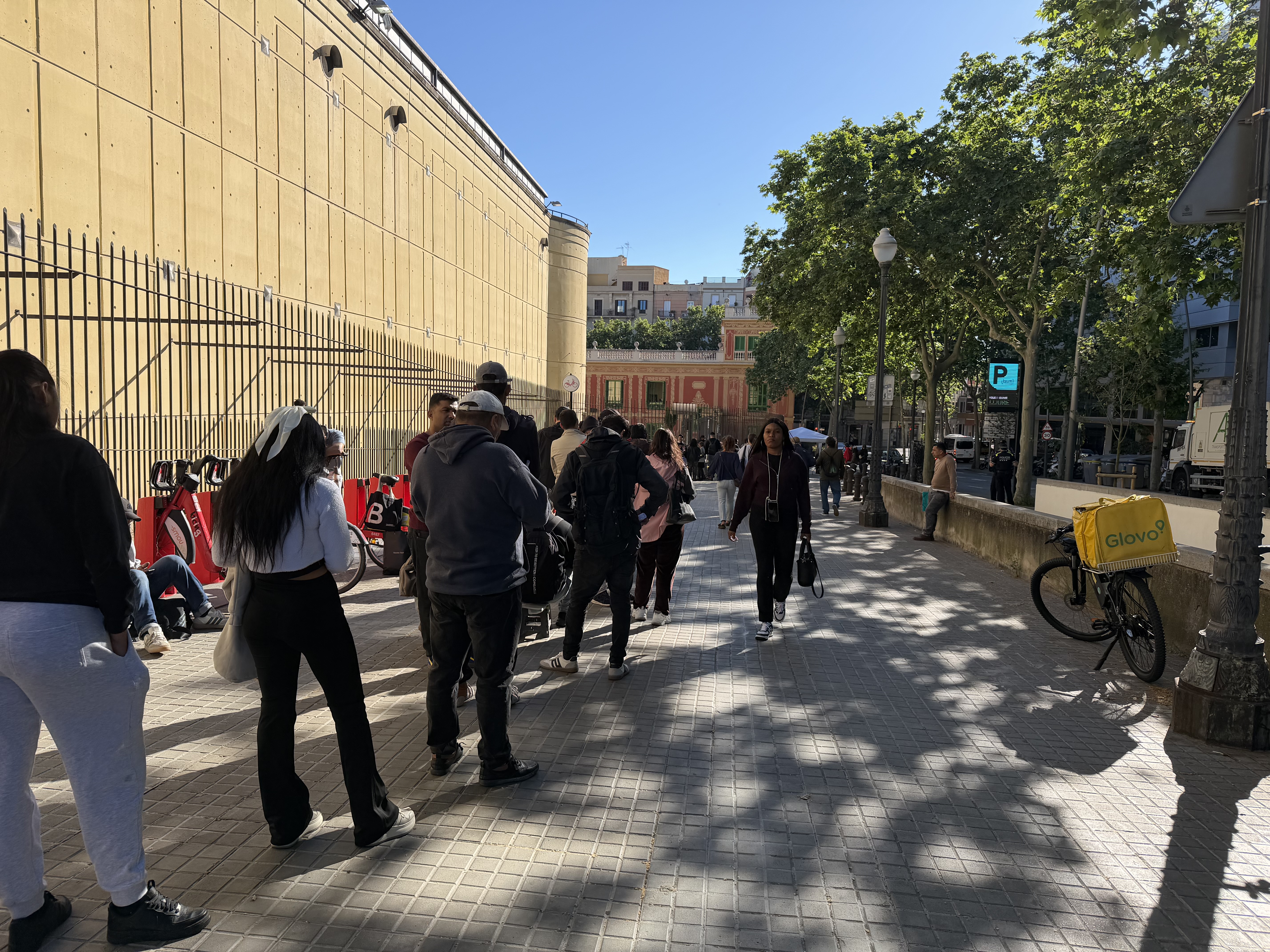
Tuesday marked the final day for undocumented migrants to submit applications under the extraordinary regularisation programme, with social organisations working until the deadline to help applicants complete the process.
Campaign groups Obrim Fronteres and the Third Sector Platform said they were working to ensure "no one is left out" of the scheme, while criticising what they described as insufficient support from public authorities.

Maria Creixells, from the Obrim Fronteres coordinating group, told the Catalan News Agency (ACN) that community organisations had carried much of the workload and criticised what she called a lack of "real political will" by Barcelona City Council, the Catalan government and the Spanish government to provide the necessary resources.
The organisations also warned that some applicants had struggled to obtain criminal record certificates from their countries of origin before the deadline and expressed concern that police could require proof of municipal registration (el padró) when migrants later apply for a Foreigner Identity Card (TIE), despite municipal registration not being required to qualify for the regularisation scheme itself.
€500 million integration plan
On Tuesday Spanish Prime Minister Pedro Sánchez unveiled a €500 million Integration and Citizenship Plan, describing integration as essential to Spain's social cohesion and economic future.

The package includes the creation of a new Human Mobility Agency to coordinate residence procedures, nearly €30 million for Spanish and co-official language programmes, expanded vocational training, and measures to support migrants' access to employment and public services.
Sánchez said the "more than one million applications submitted" under the regularisation programme showed "just how necessary this process was" and argued that "there can be no integration without regular status."
He also argued that, without immigration, Spain would lose 19% of its gross domestic product by 2050 and 29% by 2075.
Barcelona
Barcelona City Council, meanwhile, said it had assisted nearly 87,000 people through its municipal services since the regularisation process began on April 16.
According to Deputy Mayor Raquel Gil, the city issued 34,576 vulnerability certificates and 378,293 residency registration documents during the period. Barcelona will keep its Service for Immigrants, Emigrants and Refugees (SAIER) office open as a reference point to advise applicants during the next phase of the process, when authorities begin assessing applications and requesting any additional documentation.
Speaking to reporters, Gil said the city council had been "up to the task" in responding to the demand generated by the regularisation programme.
Podcast
Watch the podcast below to learn more about Spain's extraordinary migrant regularisation scheme.