Housing decree aims to ban speculative purchases by vulture funds
Spanish government expected to present "ambitious" decree with ten measures on Tuesday
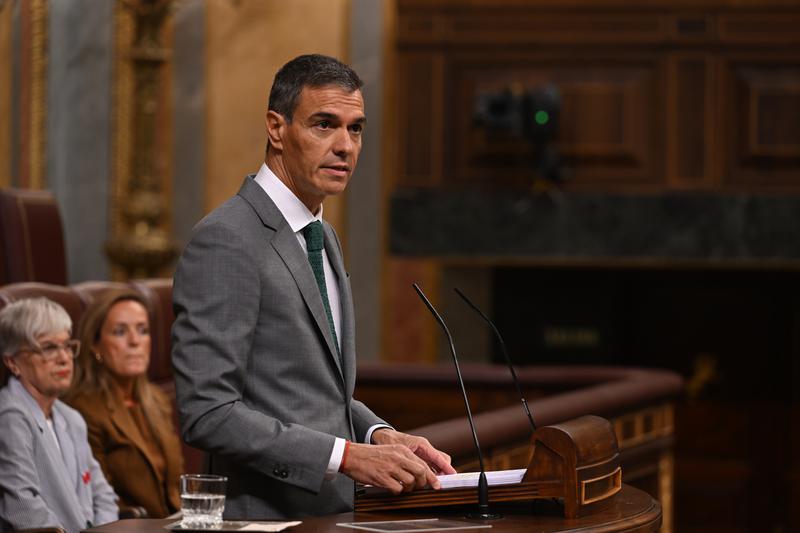

The Spanish government is negotiating a housing decree with parliamentary groups that aims to offer more protection against evictions and ban speculative housing purchases by vulture funds.
The Ministry for Housing is working on a package of ten measures that also includes tax breaks for tenants and for landlords who lower prices, new regulations for short-term seasonal rentals, and tax measures targeting tourist apartments.
The ministry says they are working on an "ambitious and cross-cutting" decree-law which is expected to be presented on Tuesday.
The text proposes banning speculative housing purchases by vulture funds and promoting the "stabilization of rental contracts" to "protect people living in regions where the housing law does not apply against abusive rent hikes, as well as the general population against issues arising from lease renewals."
The package also plans to regulate seasonal rentals to put an end to fraud involving short-term contracts and to apply VAT to tourist rental apartments "so that they are taxed as what they are, a business."
The Ministry notes that it has identified 110,000 illegal tourist flats and is processing a VAT increase to 21% for such accommodation.
Authorities are also proposing two types of tax relief. The first is aimed at tenants, with the goal of immediately easing the financial burden of housing costs. The second targets landlords who lower their rental prices, serving as an incentive for such reductions.
The government also intends to introduce new forms of assistance for first-time buyers, specifically targeting those who wish to purchase a home but lack sufficient savings.
The final two measures involve safeguarding the public housing stock and reducing the VAT applicable to the construction of permanently designated affordable housing.
The specific details of these measures are still being negotiated with parliamentary groups. The government, sources maintain, aims to forge an agreement "that responds to the public outcry."
Shortfall of 500,000 homes
In a document released on Monday, the ministry argues that measures to curb speculation must be accompanied by an increase in supply.
According to its data, the country faces a shortage of approximately 500,000 homes.
To address this, it highlights the construction of over 25,000 apartments using European funds, the allocation of €7 billion to the autonomous communities, and the addition of 40,000 homes and 2,400 land plots from Sareb to the public housing stock.
It also plans to mobilize more than €11 billion for renovation and €1.3 billion to industrialize the construction process.
It also points out that it is working on European-level measures against speculative purchasing, as well as new regulations for seasonal and room rentals to prevent fraudulent practices.
Protests
There have been nationwide housing protests in the build-up to this decree law being presented.
Monday morning saw roadblocks around Barcelona as housing activists added pressure on executive to release as strong a decree as possible.
In Madrid, an encampment at Puerta del Sol has grown to 350 tents.
With the Council of Ministers meeting on Tuesday, protesters are demanding a halt to evictions where no alternative housing is provided and a freeze on rents.
These negotiations coincide with a new day of nationwide protests. Demonstrations have been organized in Barcelona, Seville, Zaragoza, Murcia, and Asturias.
In Barcelona, the Tenants' Union has called for a rally at 7pm outside the Catalan Congress Hall (Palau de Congressos de Catalunya), where Pedro Sánchez will be visiting on Monday evening.
In Madrid, Sumar, Podemos, ERC, EH Bildu, and the BNG have called a press conference outside the hospital, where Maricarmen, an 87-year-old wheelchair user was evicted last Wednesday, remains hospitalized.
Maricarmen's family is set to meet with the city council this Monday.