General strike over wages and housing causes widespread disruption across Catalonia
Pickets block industrial estates and roads as public transport services are suspended
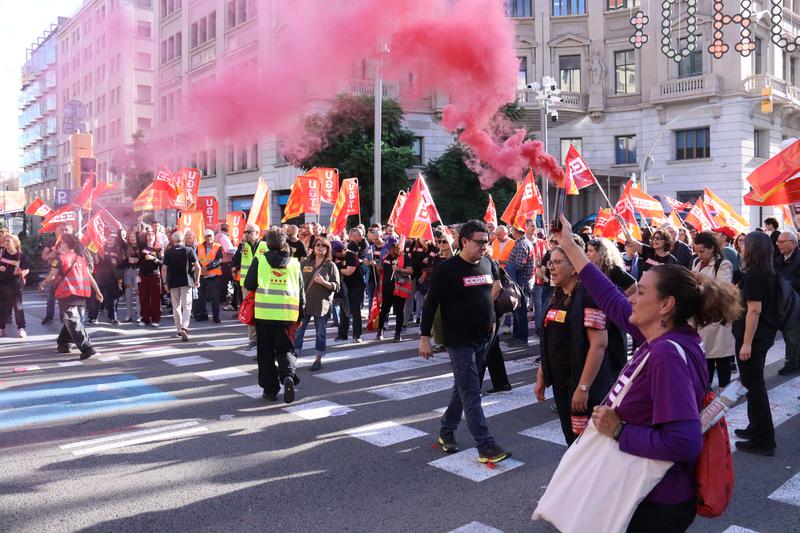

Catalonia faced widespread disruption on Wednesday morning as a 24-hour general strike over wages and housing brought industrial activity to a halt at several major workplaces and disrupted road and rail transport across the country.
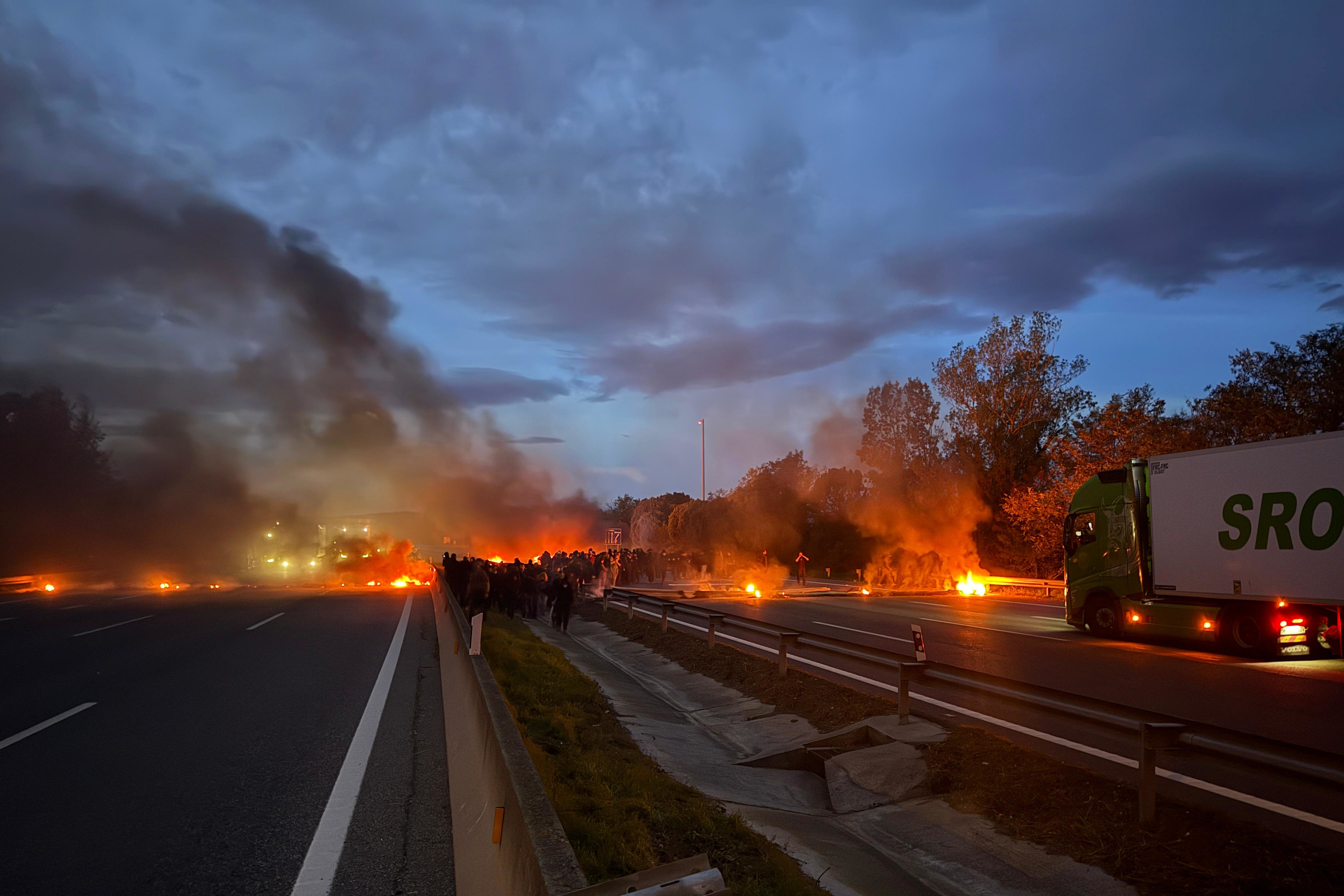
Pickets blocked access to industrial estates and around 50 roads, including sections of the AP-7 and A-2.
Barcelona's metro operated at 25% of its usual service during the morning rush hour, before halting completely.

Unions CCOO and UGT described the strike's opening hours as highly successful, reporting shutdowns at major companies including Seat, Ebro, Ficosa and Grífols, as well as at Mercabarna, Barcelona's main wholesale food market.
CCOO put overall participation in the strike at 84% in Catalonia, based on its initial figures covering night and morning shifts and excluding minimum services.
Barcelona-El Prat airport has also been affected, with 85 of more than 700 scheduled flights cancelled and delays reported throughout the morning.
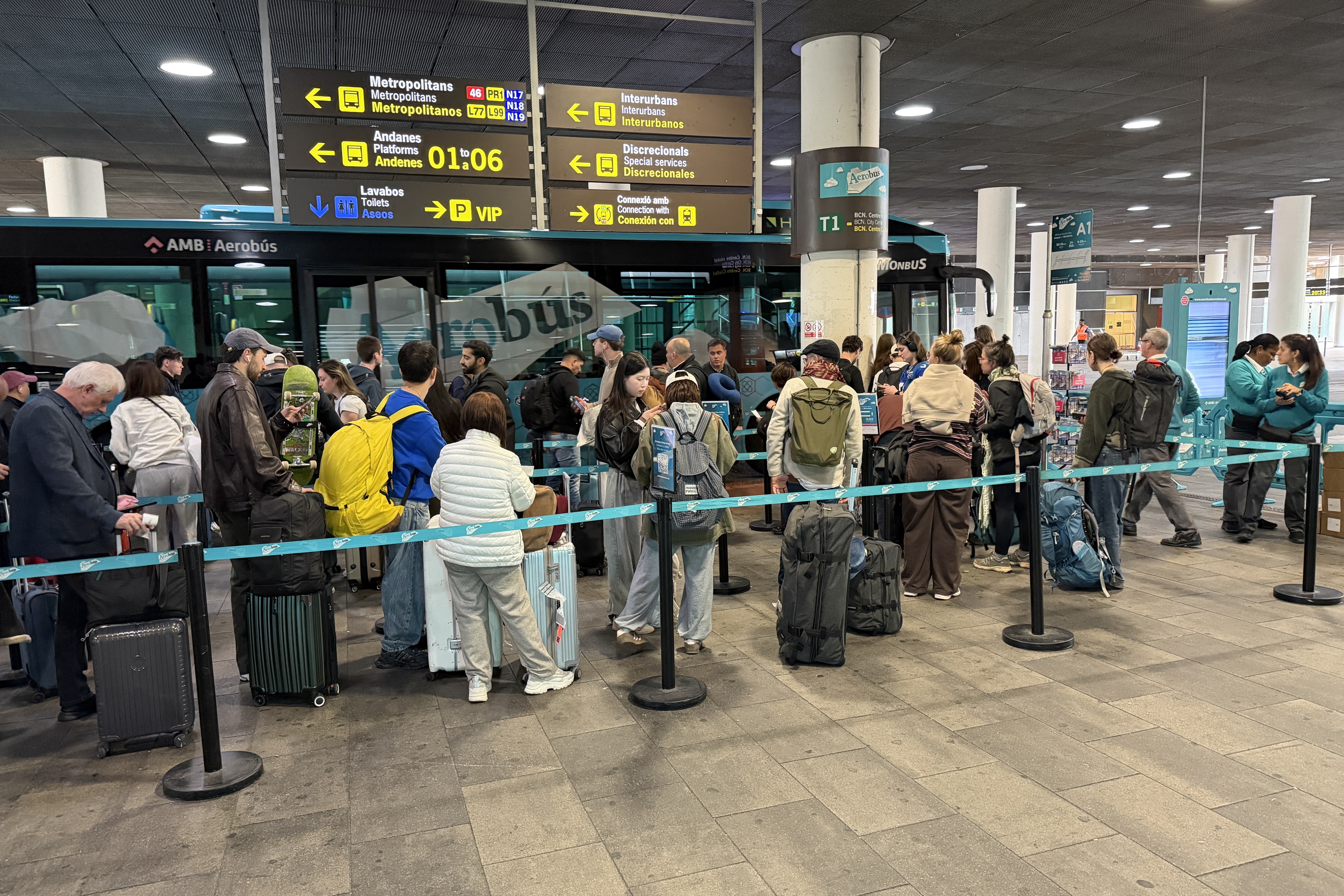
The Aerobús airport shuttle has experienced longer waiting times, with services running approximately every 30 minutes instead of the usual 10.
The Catalan government said minimum services were generally being maintained and described the strike's initial hours as peaceful, with no serious incidents reported.
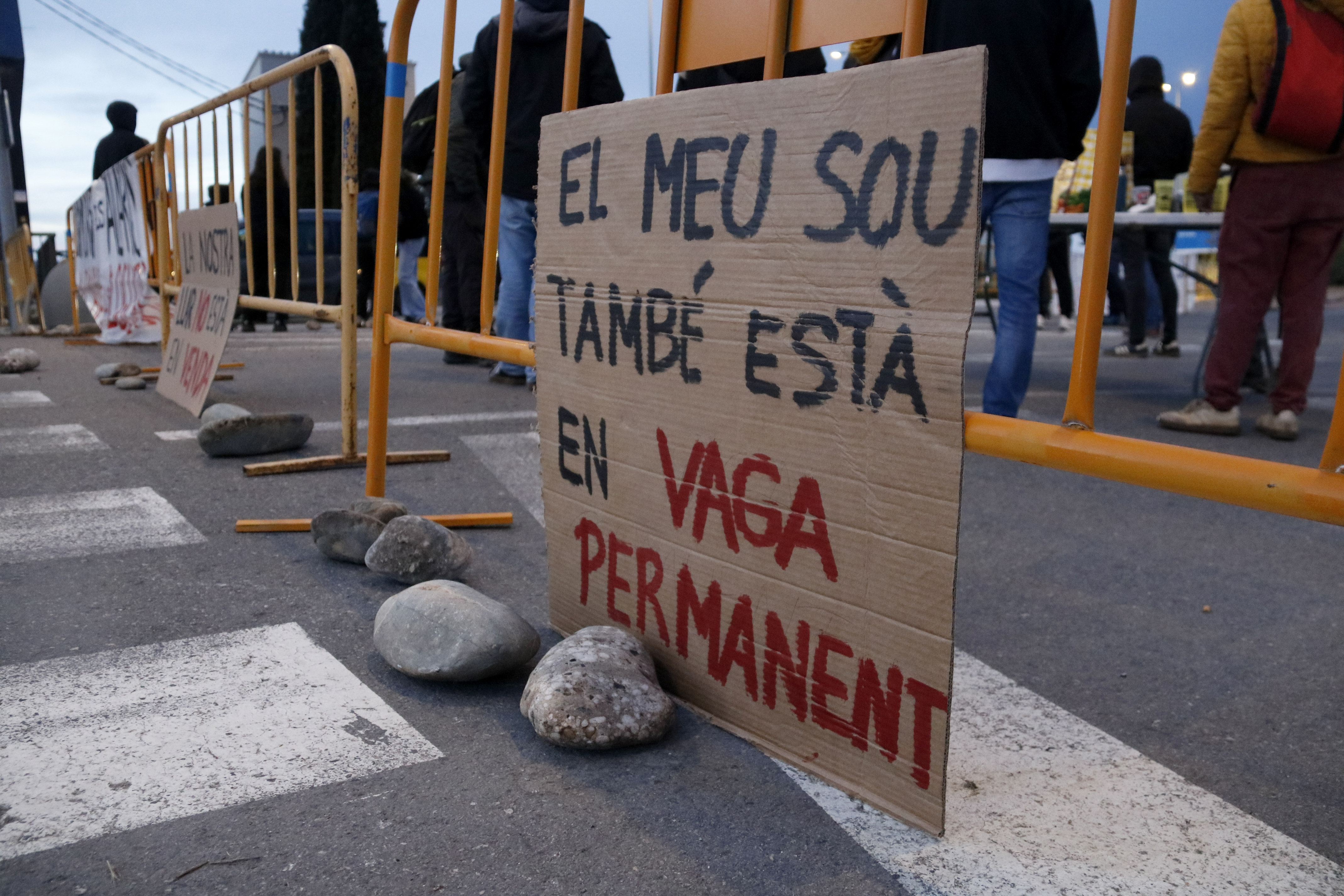
The general strike has been called to demand higher wages and better access to affordable housing, with unions arguing that rising living costs and stagnant salaries are putting increasing pressure on workers and households.
Roads closed
The strike began during the early hours of Wednesday, with pickets gathering at industrial estates and major transport links throughout Catalonia.
By 10 am, around 50 roads had been affected by blockades, including the AP-7, A-2, C-25, C-13, C-14, C-16, C-17, C-31 and C-32.
In the Barcelona metropolitan area, protesters blocked access to industrial estates including the CIM Vallès logistics centre in Santa Perpètua de Mogoda.
Further west, roads around Lleida were affected, with blockades on the LL-11 and access routes connecting the city to industrial areas.
In the Girona area, pickets blocked access to the Maçanet de la Selva industrial estate and the CIM La Selva logistics centre near Girona Airport.
At the southern entrance to Girona, UGT protesters also blocked the Barcelona road, where tyres and a tree were burned in the middle of the carriageway.
In central Catalonia, protesters blocked both the C-25 and C-16 in the Bages area.
In Terres de l'Ebre, pickets gathered at the main industrial estates in Campredó, Tortosa and l'Aldea, as well as outside the Padesa company in Amposta.
Unions report major industrial shutdowns
CCOO general secretary Belén López described the first hours of the strike as a success and said it was shaping up to be a "historic" day.
Speaking during a demonstration in Barcelona, López said activity had stopped at major companies including Ficosa, Grífols, Seat and Mercabarna. She said workers were increasingly frustrated with their employment conditions and the difficulties of accessing housing.

UGT Catalonia general secretary Camil Ros also predicted a significant shutdown, arguing that the strike aimed to put wages and housing at the centre of political debate ahead of the Spanish general election on November 29.
The unions reported significant participation at industrial estates across Catalonia, including the Zona Franca in Barcelona, Rubí, Terrassa, Badalona and several industrial areas in Tarragona, Girona and Lleida.
Public transport and airport affected
Barcelona's metro operated at 25% of its usual service during the morning minimum-service period, which ran from 6.30 am to 9.30 am.
Trains were running less frequently and some were more crowded than usual.
Several connecting corridors between lines were also closed, requiring passengers to make some transfers outside the stations.
Bus services were also affected by disruptions on the roads.
Rodalies commuter rail, Ferrocarrils de la Generalitat de Catalunya (FGC), the metro, intercity buses and Barcelona city buses were suspended at 9:30 am and will not resume until 4:30 pm, in line with the minimum service levels set for public transport.
At Barcelona-Sants railway station, passenger numbers were lower than usual and several train cancellations appeared on information screens.
Protesters blocked the station's external entrances for more than an hour from around 6 am, leaving passengers unable to enter through those doors.
The Catalan government said the minimum Rodalies commuter train services, set at 25%, had been maintained.
At Barcelona Airport, 85 of more than 700 scheduled flights in the morning were cancelled.
Schools adapt
Schools across Catalonia also adjusted their activities to comply with the minimum services established for the strike.
Education union USTEC put participation among education workers at 45% by 9.30 am, based on provisional figures.
The minimum-service requirements provide for one teacher for every six classrooms in most circumstances.
Afternoon rally
In the afternoon, demonstrations are planned across Catalonia, including a central march in Barcelona scheduled to begin at 5.30 pm at Jardinets de Gràcia.