Embattled PM admits mistakes as Socialists rocked with sexual harassment and corruption cases
Pedro Sánchez vows to “give our best” in second half of legislature amid onslaught of criticism from opposition
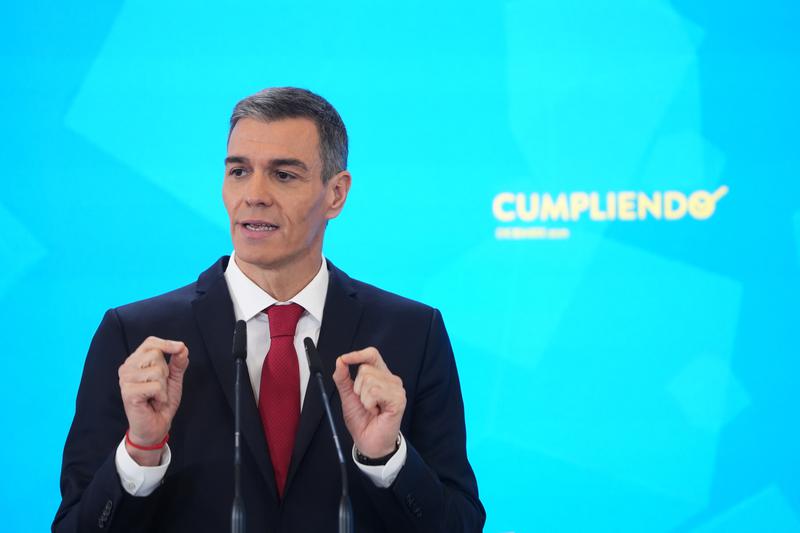

Spanish Prime Minister Pedro Sánchez spoke publicly on Monday to take stock of the past year in politics, and to assume responsibility for the slew of scandals that his Socialist Party have been hit with.
Sánchez has admitted "errors," particularly in the areas of feminism and corruption, but insisted that he and his cabinet have the energy to “give our best” in the second half of the legislature.
The ruling Socialists are facing an onslaught of criticism from opposition parties, not only for the various cases but also for the party’s response to and handling of them.
Last week, Sánchez dismissed government advisor Antonio Hernández after he allegedly protected Francisco Salazar, a former high-ranking official in the Spanish Presidency department, who resigned in the summer after he was accused of making inappropriate sexual comments by women within the Socialist Party.
It has since come to light that internal complaints filed by various women were ignored for months, but the party denied any cover-up of the allegations. Socialist officials, meanwhile, apologized to the women over the lack of response and admitted that they had not been "up to par."
The head of the government defended the progress his administration has made in feminism, and said he will accept "zero lessons" from the right and the far-right in this field, and assured his mandate’s commitment to feminism is “absolute.”
He defended that his party act on such cases of sexism and harassment, and Sánchez said this was a major difference between his and opposition parties on the right. “We have made mistakes, like everyone else, but all the advances in equality have been achieved under progressive governments,” he said.
Sánchez insisted too that the Socialists acted with "total transparency" in the face of corruption cases that have rocked the party in recent months.
Also last week, former Socialist Party member Leire Díez, and the former president of the State Industrial Participations Company (SEPI), Vicente Fernández, were arrested for irregularities in public contracts. Meanwhile, in November, the Supreme Court ordered former transport minister José Luis Ábalos and his former adviser, Koldo García Izaguirre, into pre-trial detention without bail. Ábalos, who was a key political ally of Pedro Sánchez, is accused, along with Koldo García, of involvement in a corruption scheme related to public contracts for medical supplies during the pandemic.
“In the face of corruption, the government and the Socialist Party have acted with total force and transparency, and not with coexistence and opacity.” According to Sánchez, “systemic corruption, which affected the entire democratic system of the country, ended with the People’s Party's exit from the Spanish government in 2018.”
The Socialist chief insisted that he will see out the current legislature and not call early elections. “Despite the noise we have been facing since 2018, let's not forget who we serve and who we are, and what we have achieved for women and the country.”
During his address, Sánchez also spoke about the amnesty law for Catalan independence leaders. "Despite some calling it illegal," the amnesty law has been "approved by the Venice Commission, the European Commission, the Constitutional Court and the Advocate General of the CJEU."
"It is constitutional, it is legitimate, and it is giving results,” Sánchez said, as "it is applied within a framework of reconciliation in Catalan society."