Declassified documents reveal that 6 intelligence agents were involved in 1981 coup attempt
Leader of coup, Antonio Tejero, dies the day the documents are released, aged 93
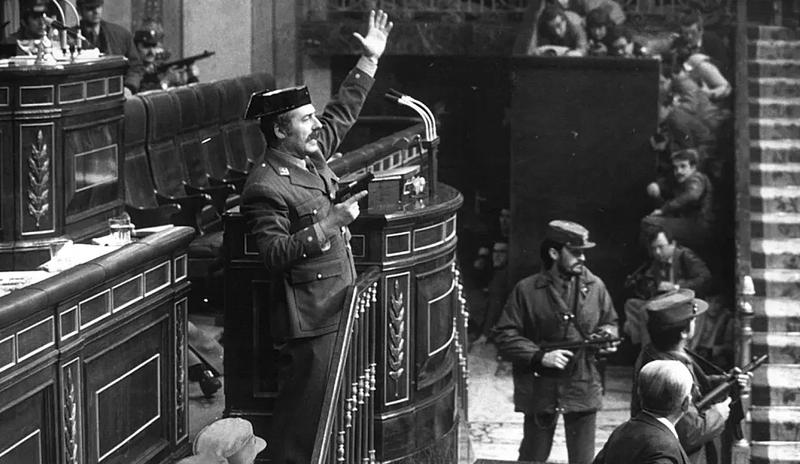

The Spanish government released declassified documents relating to the February 23, 1981, coup d'état attempt on Wednesday.
The 23-F documents revealed that six agents from the Superior Center for Defense Information (CESID), the Spanish intelligence service that operated in 1980, participated in the coup attempt led by Lieutenant Colonel of the Civil Guard, Antonio Tejero.
An internal CESID report released on Wednesday indicates that some of its agents had prior knowledge of the operation, and that others provided operational support or participated in subsequent cover-up tasks.
Later in the afternoon of Wednesday, coup leader Tejero passed away at the age of 93.
"This must end"
One of the unknowns that has persisted over the years about the coup is the role played by Juan Carlos de Borbón, the then-King of Spain.
One of the declassified documents today reveals that the monarch ordered Lieutenant General Jaime Milans del Bosch, also involved in the coup, to stop the attempt to establish a new military state.
"This must end once and for all," is the phrase recorded in the documents, said by the then-King to the military leader at 4 am on February 24, 1981.
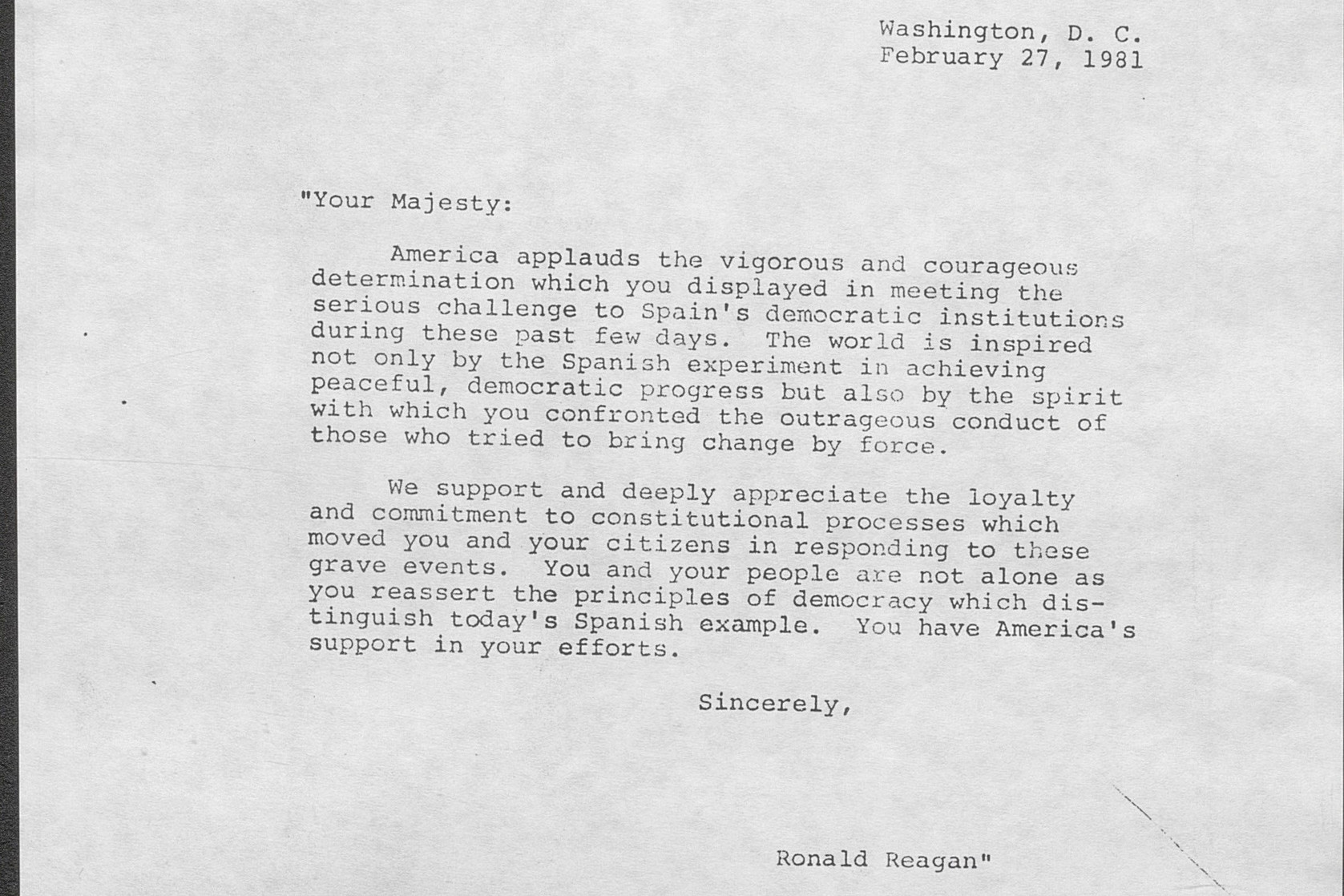
Shortly before, Juan Carlos had already warned Milans del Bosch by telephone that "any coup d'état could not be backed by the king because it would be against the king."
At 6 am on the 24th, Milans del Bosch issued a statement in which he stated that his intention was to serve Spain and the law "under the supreme command of the king".
A document including an internal CESID note dated 5 February 1982 also revealed possible meetings of the royal family with military personnel involved in the attempted coup before the trial that took place against them days later.
"Thrown under the bus"
The most prominent leader of the coup, Antonio Tejero, told his family that all military captains, Jaime Milans del Bosch, Alfonso Armada, and even the then-king, Juan Carlos I, were "behind" the attempt to overthrow democracy.
This was explained by the wife and daughter of Tejero in telephone conversations intercepted by the Civil Guard that day, which were also declassified on Wednesday.
In these calls, they insisted that all parties involved had "thrown him under the bus" after they had backed down.
Tejero's wife, Carmen Díez, refers to her husband on a dozen occasions as "stupid" and "a disgrace." She also reveals that they were offered an "honorable exit" during the course of the day, but does not clarify by whom.
Second uprising planned
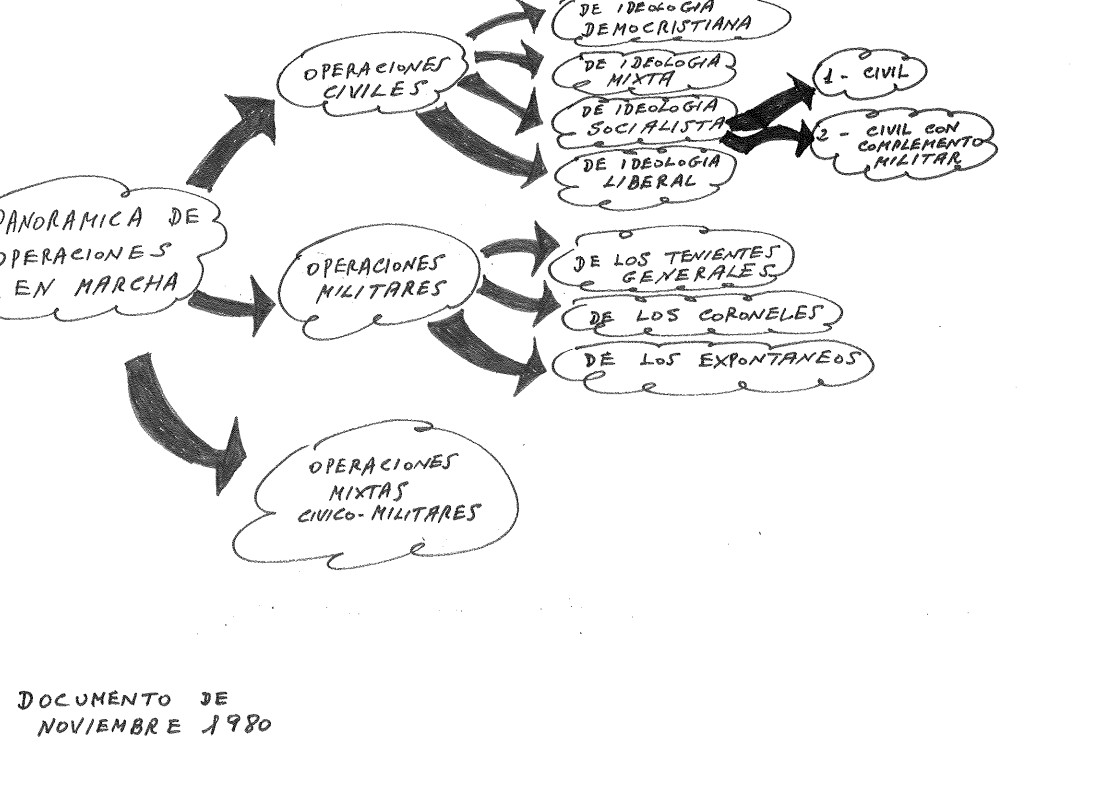
Another document without clear authorship detailed plans to carry out a second uprising on 24 June 1981, which would supposedly be led by Lieutenant General Jesús González del Yerro.
The document reveals several scenarios and operations, such as organizing a new National Movement, neutralizing communications, and occupying strategic locations.
In addition, it gives instructions to the coup plotters on "what to do after 23-F", and proposes that they either react, or they will have to "resign to the gradual demolition from above."
Another document reveals that coup leaders described the decision to leave Juan Carlos I "free" during the rebellion as a mistake.
They believed that the then-monarch "will continue in his suicidal attempt to have a government with the Socialists."
Danger of independence declaration in Catalonia
The social unrest after 23-F is also reflected in another CESID document dated March 9, 1981, that warned of the "internal threat" in Spain.
The document, which was sent to the president of the Joint Chiefs of Staff, spoke of the possibility that a unilateral declaration of independence in Catalonia or the Basque Country would provoke the intervention of the Armed Forces.
According to the report, in March 1981 in Catalonia "violent separatism" did not present "a serious worry," but the conflict could come from "non-revolutionary Catalan nationalism" with actions "from the autonomous institutions themselves, or consented to by them" that could "darken relations between the state and the autonomous community."