Work on Sagrada Família 'should never end', say artisan crafts workers
Designers and technicians develop new techniques to adapt to Gaudí's vision and geometry
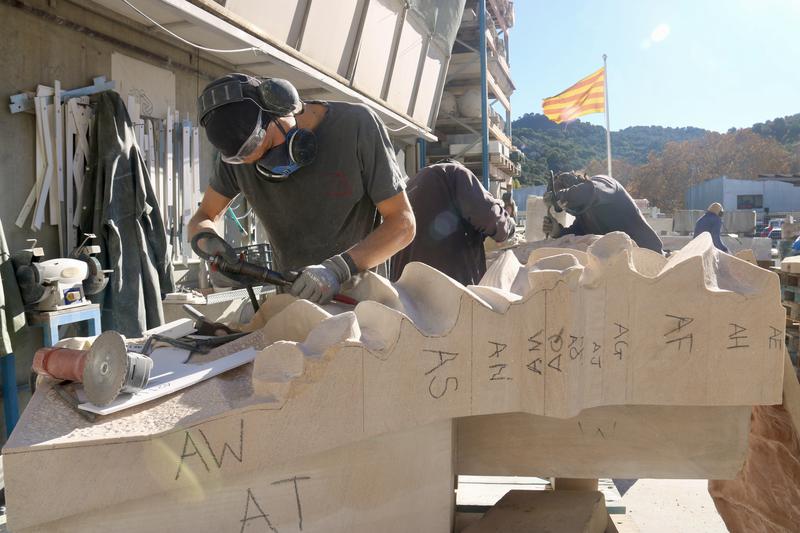

Crafts workers are nearing completion of the ornamentation of the Sagrada Família’s tallest tower, that dedicated to Jesus Christ.
Sculptors, ceramics workers, and glaziers, with more than a century of experience, are all working on the details of what will be the most iconic part of the world’s tallest basilica.
The temple will have a shining cross with prismatic light passing through it, which will also act as a viewpoint for visitors.
The artisanal workers are being pushed to new limits to bring Gaudí’s imagination to life. The twisted shapes, chromatic contrasts, and combinations of different pieces all bring different materials and techniques together, which have all evolved over the more than 100 years since construction on the basilica first started.
The craftspeople are of the opinion that work on the Sagrada Família "should never end," given that during all this time, their skills and knowledge have evolved greatly to adapt to Gaudí's vision and geometry, with new processes developed from technological advances.
Dressing the exterior of the cross
Ceràmica Cumella is a family business that has been working on ceramics for five generations, all beginning in 1880. Now, Toni and Guillem Cumella, father and son, are still at the helm of the business that focuses on high-temperature ceramics.
High-temperature ceramics and stoneware allow the artisans to place the pieces in both very cold and very warm locations.
The company have no recurring production, but rather, only work on commission pieces. In recent decades, they have taken part in restoration processes of Park Güell, Hospital de Sant Pau in Barcelona, Casa Batlló, the Palau de la Música, and others. Now, however, working on the Sagrada Família is expected to have the biggest impact on universal architecture.
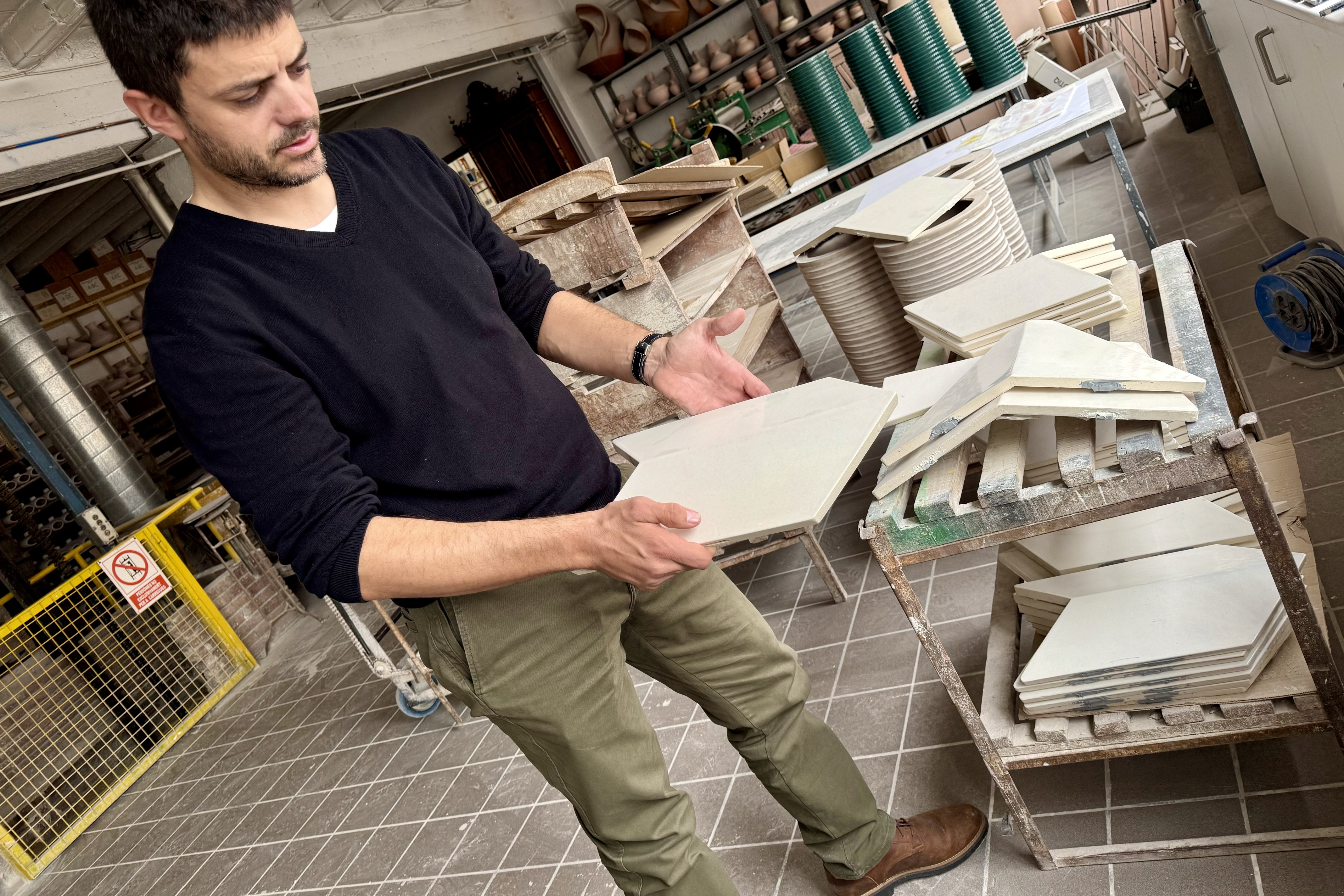
"Day to day, you don't see what it really is, but bringing pieces together and going to meetings at the Sagrada Família, you get to see the people there and stop for a moment, you feel happy and proud to be crowning the tallest religious building in the world," Guillem Cumella explains.
They created the outer covering of the cross in their workshop in Granollers, which has some flat pieces and other volumetric ones.
As for the color, seven different types of bright white have been used because there is a passage in the Gospel that says that the apostles saw Jesus Christ wearing the whitest robe they had ever seen. "We tried to play as much as we could with all these whites and differentiate between them," Guillem adds.
In total, they have produced 15,000 pieces of around 500-600 different types, depending on their position on the cross. These were then sent to Germany for assembly. Once finished, it will be sent back to Barcelona, where it will be placed at the top of the Tower of Jesus.
Prismatic glass
Glass is another element that covers the cross of the Tower of Jesus. However, it is not just any glass, as the work attempts to be as truly faithful to Gaudí's vision as possible. This year, all the elements for the tower will be finished.
The glasswork was handled by Cricursa, a glazier company from Granollers, almost a century old and a specialist in curved glass, which has worked with the Sagrada Família almost since its foundation.
They forged the enclosures of the towers and interior railings of the basilica, as well as the glass of the star of the tower of the Virgin Mary. The project of the cross, however, has been the most important challenge that the company has taken on, without a doubt.
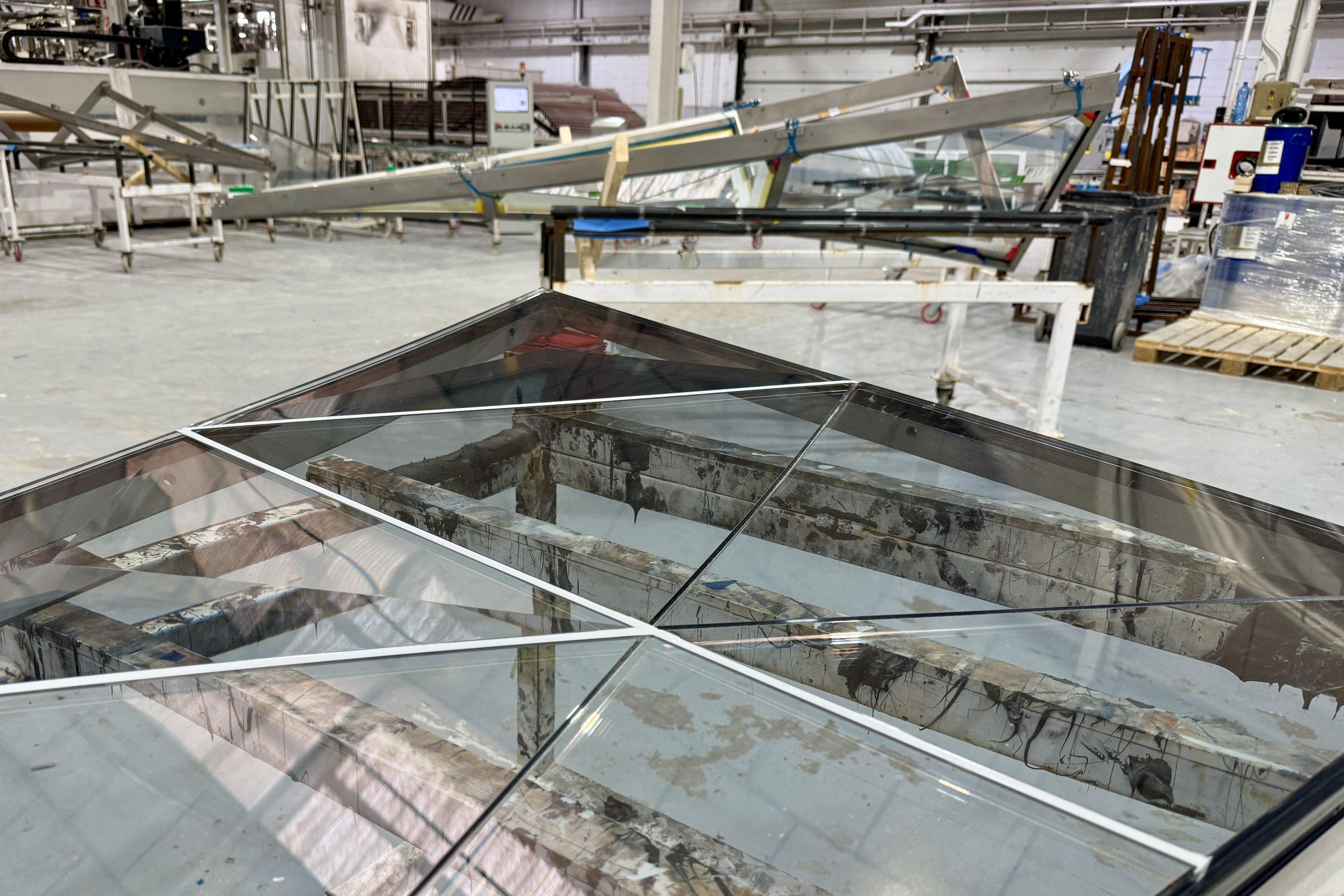
CEO of the group, Ferran Figuerola, told the Catalan News Agency that working on the cross has forced the company to develop its technology in ways “that did not exist until now," to achieve the construction of the "prismatic glasses" designed by Gaudí.
The design of the cross includes two types of glass that require different construction processes to achieve a mosaic of "small pyramids with diamond-shaped pieces of glass" that will make the light hit the structure and the vision "break down." They are pieces of glass "that had never been made before," according to Figuerola.
The CEO explains that, to fulfill the order, a "very important" research process has been necessary, which will leave a legacy within the company moving forward. "We have developed a skill that we did not have and that we can offer to other projects in different ways."
Figuerola explains that Cricursa was already used to receiving orders for "highly complex glasses" from architects who are looking for "different things" in their work. Never, however, ones like the ones that the Sagrada Família will soon have, featuring 144 "prismatic glass units" installed in the Tower of Jesus Christ.
Living stone
Another family business with over 130 years of experience that has joined the project is stonemasons Granits Barbany, from Llinars del Vallès, who create sculptures from marble and granite.
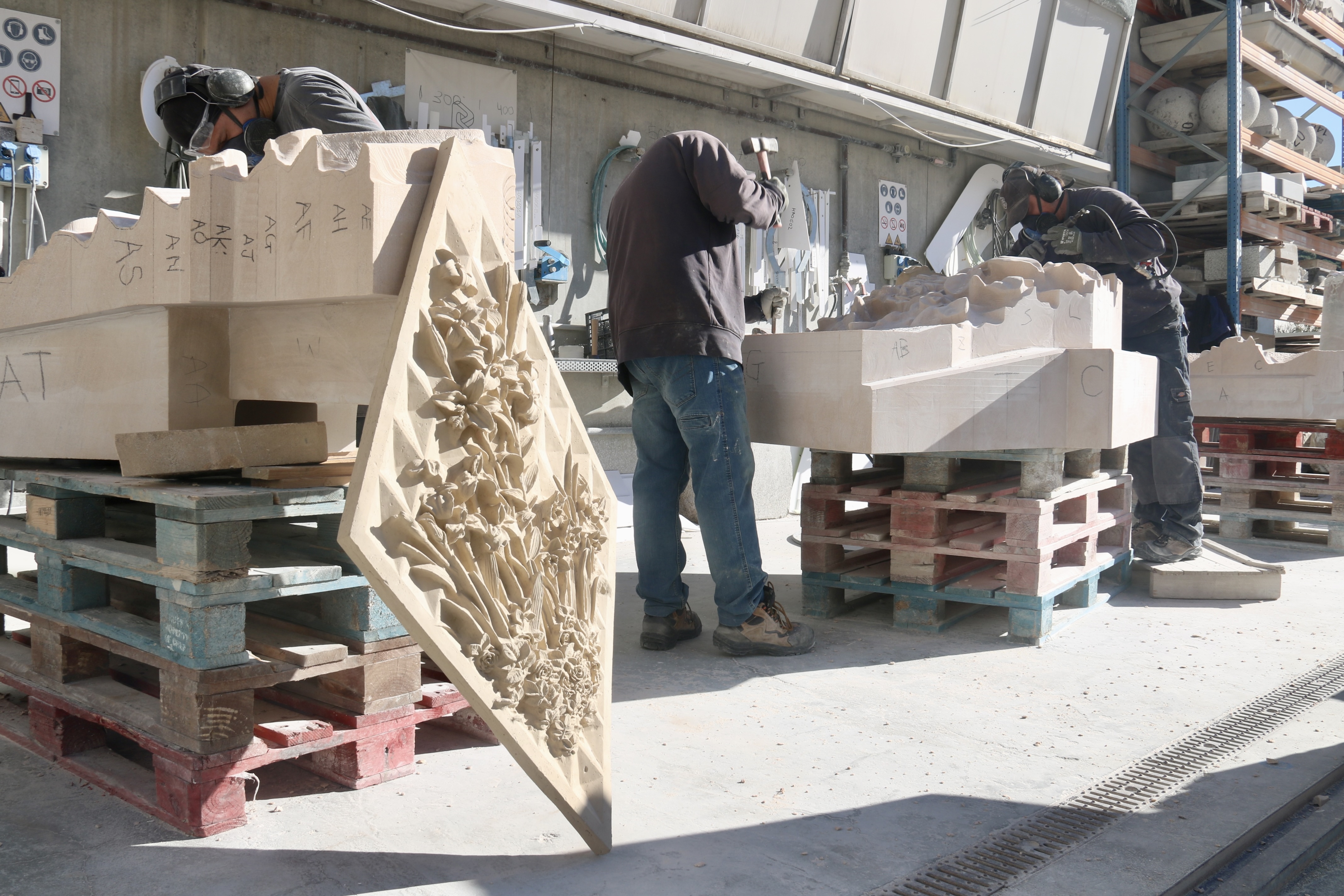
Jordi Barbany, CEO of the company, tells ACN that they had worked with the Sagrada Família in the past, and that they wanted to continue working with them but that they needed “technical improvements," too. This pushed the company to evolve.
"I am one of those who think it should never be finished,” Barbany says. “With Gaudí's mentality, it should be a work that should remain ongoing for a long time, because it has allowed us to be here, evolving as craftspeople.”
If not for the Sagrada Família works, “we would probably still be working with the tools that my grandfather had," the stonemason adds.
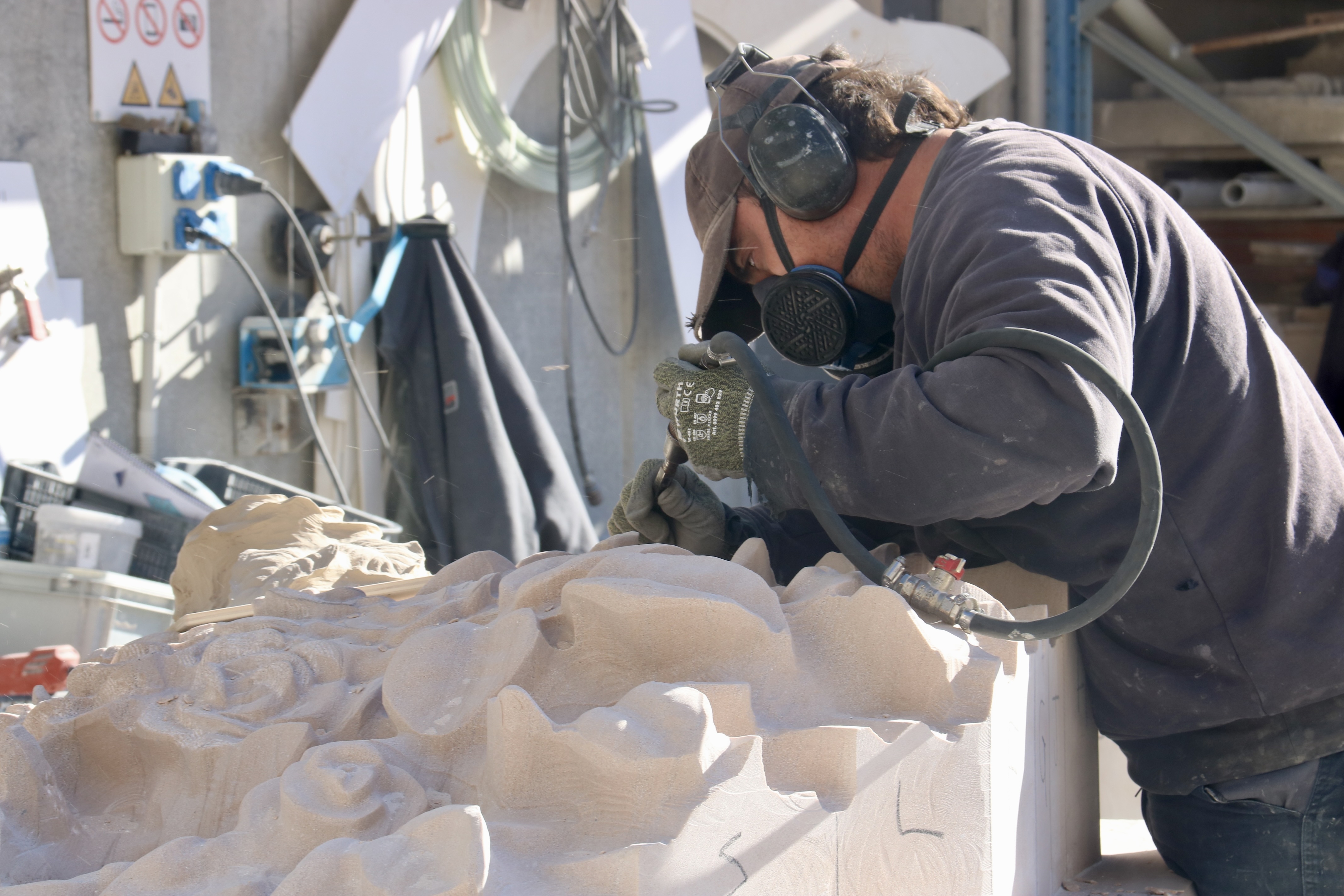
Their order for the Jesus tower focuses on the lining of the interior of the cross, where some 600 pieces have been made with white onyx. "It is very transparent, and inside, it will create a heavenly sensation," he adds.
The stoneworkers are creating a sculptural ensemble of the interior of the chapel of the Assumption of the basilica with Lleida sandstone, a material that allows for very remarkable details, especially in the facial expressions or scars of the martyr saints.