The eggs start to dance in one of Catalonia’s most curious traditions
400-year-old custom marks start of Corpus Christi across region
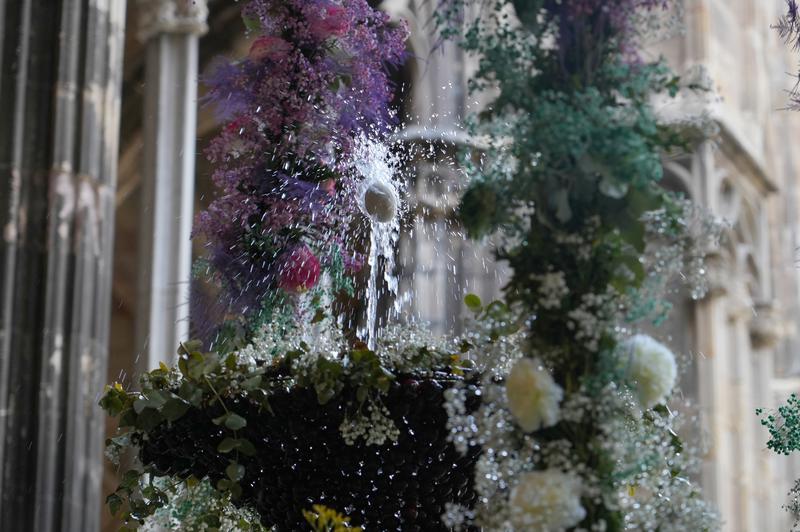

From June 4-7 around Catalonia, the 'l'ou com balla' tradition can be observed, with decoration, eggs and entertainment for all.
Translated to 'the dancing egg,' the celebration of Corpus Christi consists of an egg "dancing" on the water of a fountain. The tradition started, and continues, at the Cloister fountain within the Cathedral of Barcelona.
The festivities technically begin on June 3, though not available for the public, with the blessing of the egg that spins on the Cloister fountain starting on the fourth.
The egg 'dances' by turning, moving up and down, and balancing at the center of the vertical water stream, and it is never supposed to fall.
25 other locations around Barcelona also adorn their fountains with eggs to dance atop of for three days. The fountains are traditionally surrounded with flower petals, herbs, and raw material such as cherries, seeds or coffee grounds.
The tapestries function as a way to transform public space and create a perfume for when processions walk by.
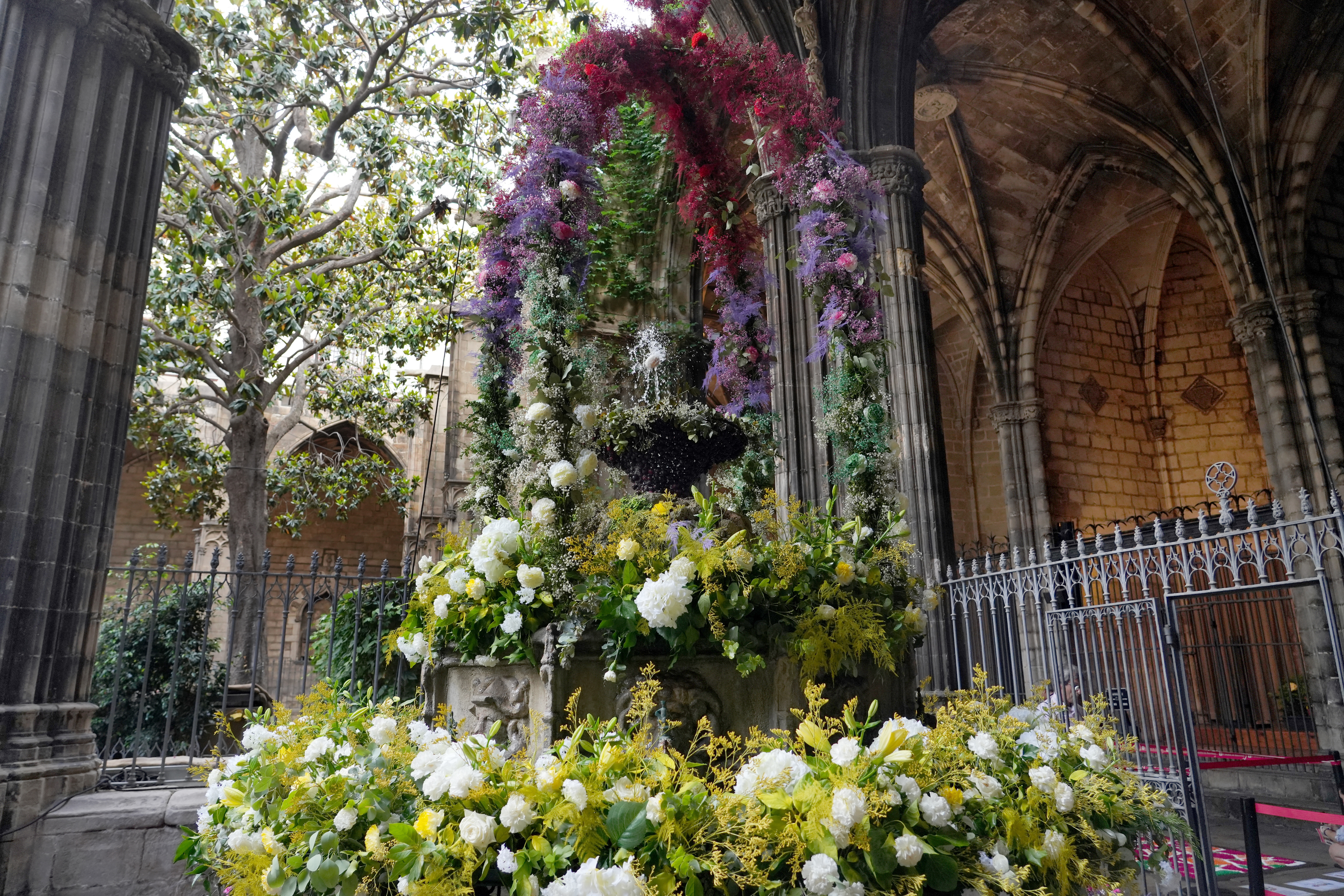
Dating back to at least 1636, the tradition remains the start of Corpus Christi, ending on Sunday with the Corpus Christi procession. The parade, which has been taking place throughout the city since 1320, marks the end of 'the dancing egg' for the year.
The centuries-old tradition's origins have been lost, but many have different ideas. Some say the 'dancing egg' is a representation of the exaltation of the Eucharist atop the holy chalice. Others claim it represents the Holy Forum within a sacred vessel adorned with stones.
Or some see it as simply a metaphor for the circle of life and a reference to time and perpetual motion. While still others believe it was simply an entertainment method for noblemen of Calle Montcada or children while they waited for the Corpus Christi Procession.
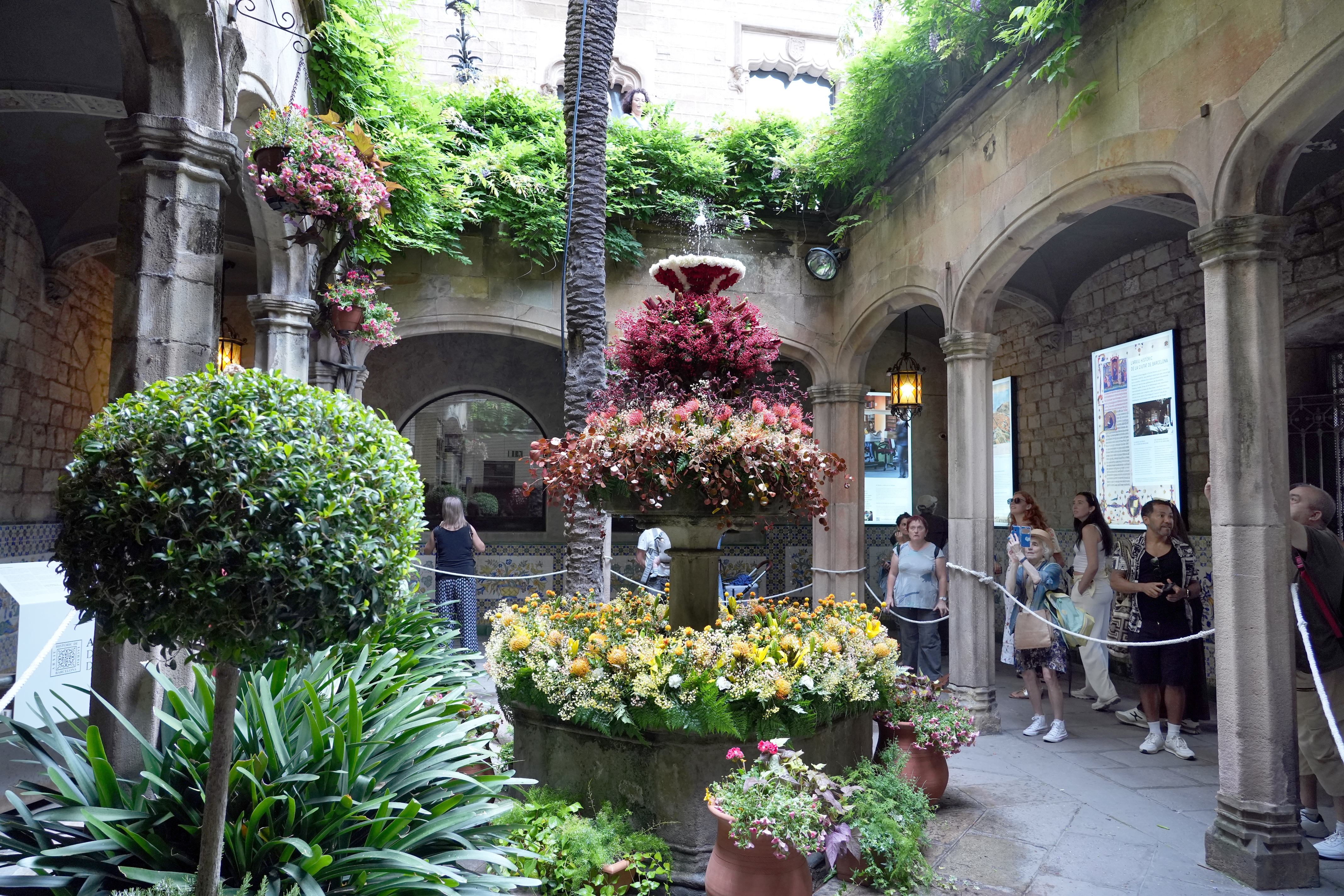
Whatever the reason, around Barcelona, spectators can view the dance at the Archive of the Crown of Aragon, Archdeacon's House, Ateneu Barcelonès, Capitania General, the Gardens of Rubió and Lluch, Barcelona Cathedral, Frederic Marès Museum, Maritime Museum, Palace of the Viceroy, Basilica of the Immaculate Conception, Escolàpies School of Llúria, Barcelona Conciliar Seminary, Sortidor Civic Centre, Parish of Sant Àngel Custodi, Can Deu Civic Centre, Real Monastery of Santa María de Pedralbes, Carrer de la Llibertat, Moral and Instructional Center of Gràcia, Albert Musons space, Oratory of Saint Philip Neri of Gracia, Sant Camil Workshop, Sagrera Tower, Ignasi Juliol Plaza, Parish of Santa Maria del Taulat, and Parish of Sant Martí del Clot.
There are other dancing eggs to visit around Catalonia as well, with some being at the Palace of Maricel in Sitges, the Tarragona Cathedral, the Cathedral of Sant Llorenç in Sant Feliu de Llobregat and the Pius XII Plaza in Igualada, among others.