Language pairing program encourages healthcare workers to speak Catalan
Puigvert Foundation aims to make patients feel more comfortable
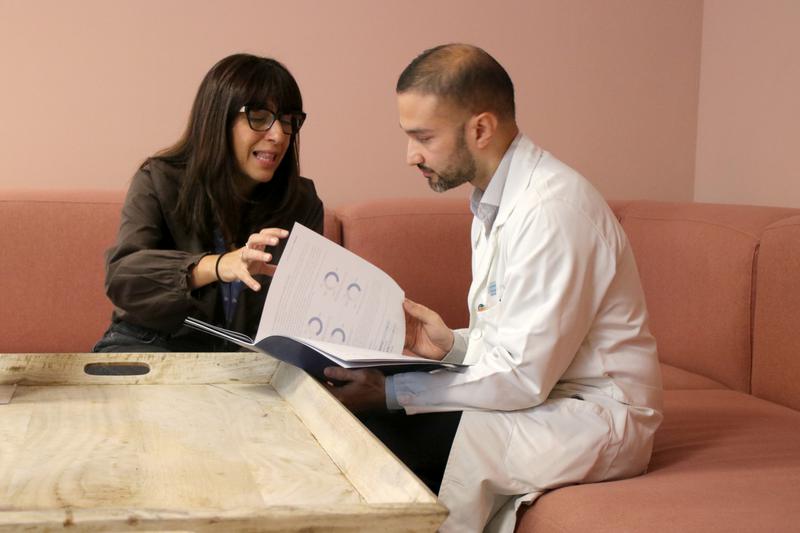

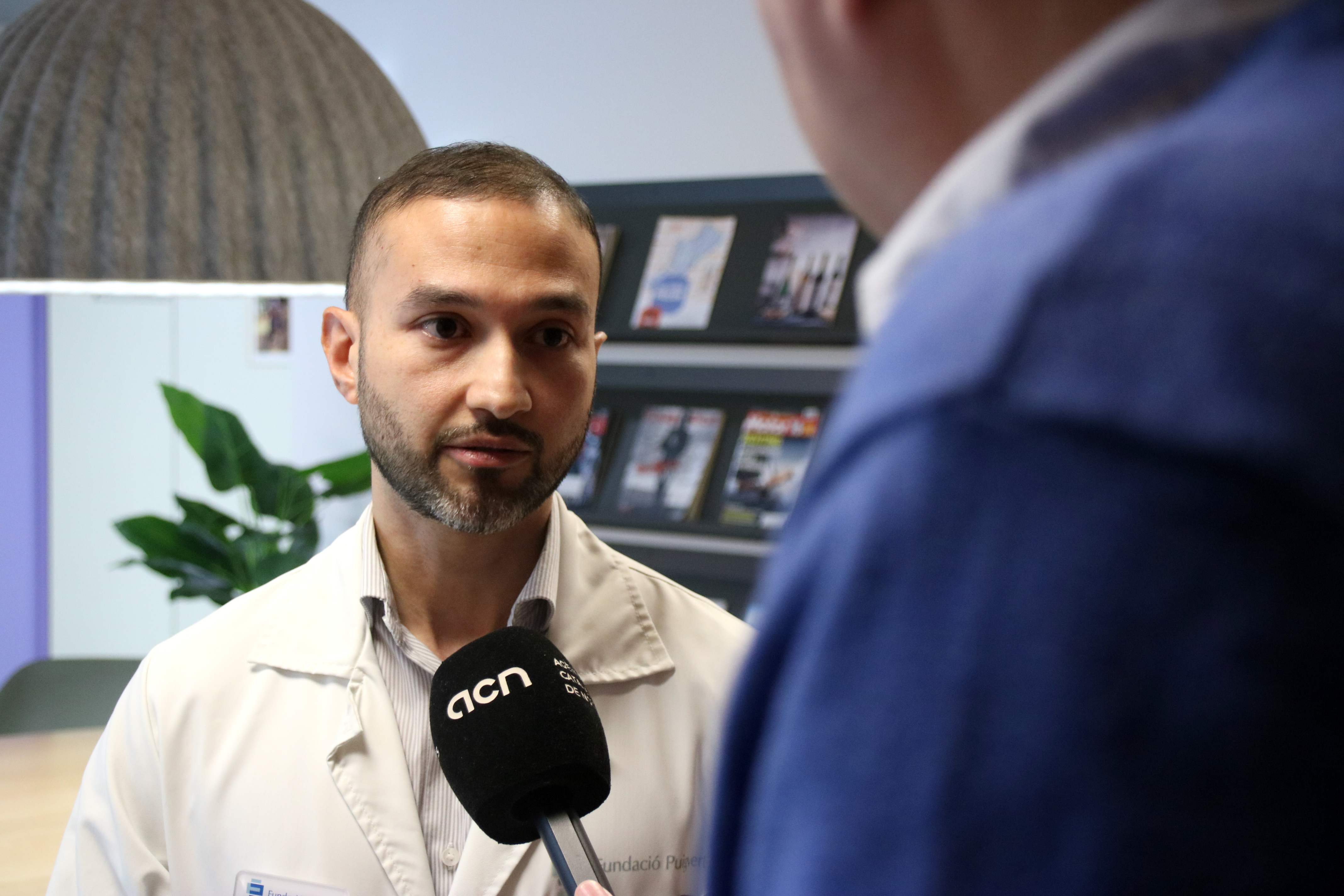
"Patients feel more comfortable now, especially the elderly," said Luís Malca, a urologist and andrologist born in Peru. He has gained the confidence to conduct consultations in Catalan thanks to a language pairing program at the Puigvert Foundation.
The Barcelona hospital promotes this program to help its healthcare professionals overcome any hesitation about speaking Catalan and to encourage them to use it more frequently with patients.
Currently, there are about eight or nine pairs who meet weekly for 30 minutes to an hour to converse and practice the language.
Launched in 2025, the program is open to all staff members and is part of a broader set of initiatives designed to foster the use of Catalan.
One of the program's participants is Luís Malca, a urologist and andrologist born in Peru who moved to Catalonia in 2013. Although he understood Catalan and had some basic knowledge of the language, he admits that he found it difficult to use it on a regular basis.
For about a year now, he has been meeting every Monday with Dolors Gruart, who heads the Foundation’s Academic and Institutional Management Office, to chat in Catalan over a coffee.
"It has been very important because it has given me the opportunity to speak Catalan more naturally, and with less self-consciousness, during all my consultations," says Malca.
The doctor notes that he now feels more confident and has observed a positive response from his patients, particularly the elderly.
"You can tell they feel more comfortable," he said, adding that being able to interact with them in their own language enriches the consultation.
The meetings do not follow a set agenda. Malca and Gruart talk about everyday matters, travel, personal experiences, or current events.
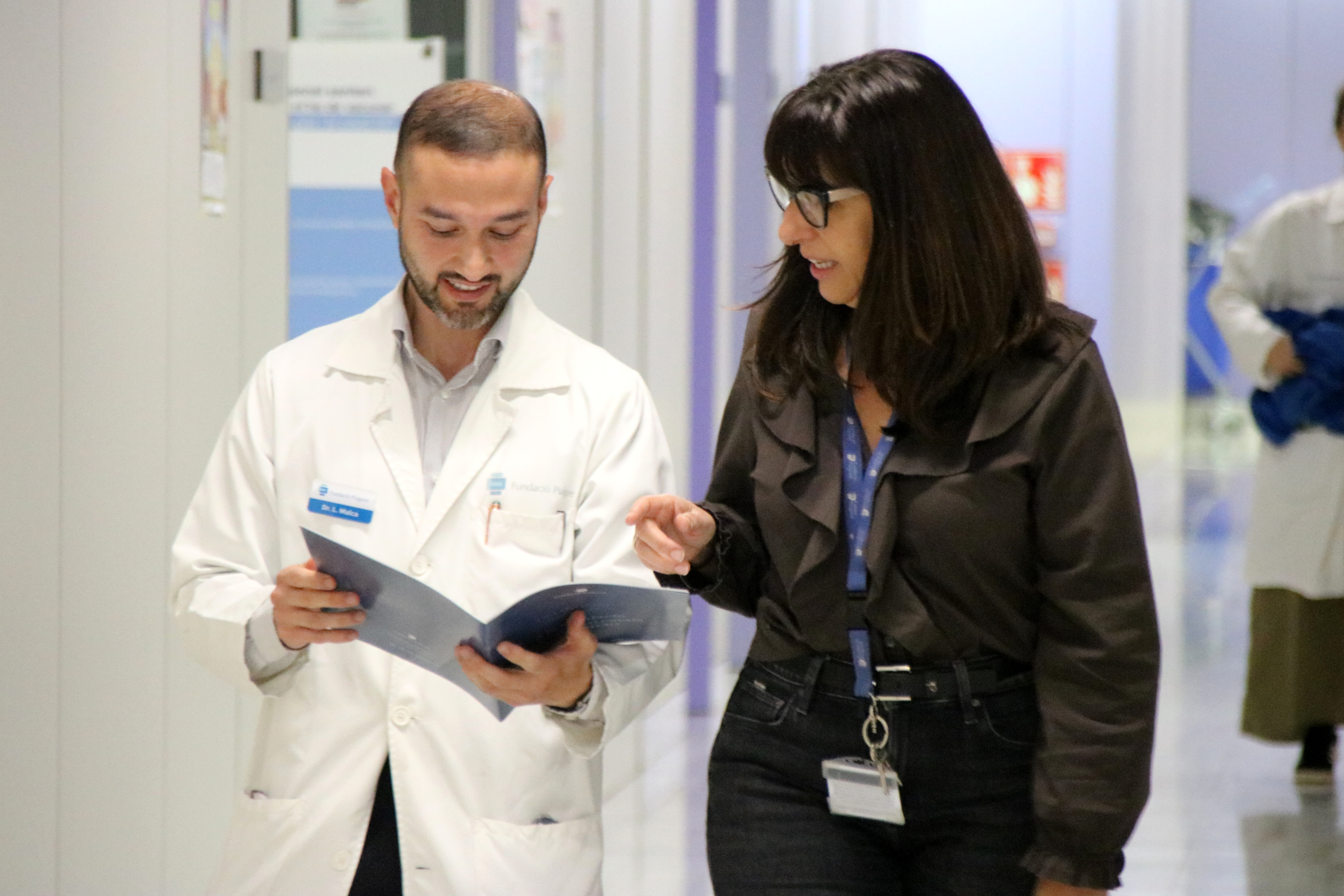
"We don't prepare a 'lesson,' we just go to talk, to chat," Gruart said, who has worked at the Puigvert Foundation for 33 years and is a member of the Language Council.
Gruart emphasizes that the goal is not for her partner to speak perfect Catalan, but rather for him to feel confident enough to use it.
"Once you get over the embarrassment, you practice more," she said. For this reason, she tries not to constantly correct the doctor's mistakes, prioritizing a fluid conversation instead.
"What I’m really pleased about is that he has lost his fear and embarrassment when he’s in front of a patient," she said.
Gruart also stresses how important it is for Catalan speakers to stick to the language when conversing with those who are learning it. She said that, during a recent medical appointment, she chose not to switch to Spanish, even though she noticed the doctor attending to her was struggling to express herself in Catalan.
"If you hold your ground and give people the chance to learn, we’ll succeed," she said.
Embarrassment and a lack of time: the main obstacles
Marta Lobato, the language coordinator at the Puigvert Foundation, explains that the program was launched in 2025 and currently involves professionals from various roles, including administrative staff.
The pairings vary throughout the year, as some staff members undertake short-term training placements or temporarily pause their participation due to work-related or personal reasons.
Since the initiative began in January 2025, a total of 23 pairs, involving 46 participants, have been formed. According to Lobato, one of the main obstacles to joining the program is the lack of time among healthcare professionals and the difficulty of coordinating schedules.
Lovato believes the initiative is yielding positive results, citing the case of Malca, who has begun using Catalan more regularly with both patients and colleagues.
"It’s not just about getting people to sign up for Catalan language courses or getting them to speak Catalan, it’s about ensuring they want to speak Catalan," Lobato said, summarizing the Foundation's objective.
The hospital, which employs professionals of nearly 50 different nationalities, found in a 2025 sociolinguistic assessment that knowledge of Catalan did not always translate into regular use.
Book carts and activities to promote the Catalan language
Language pairings are part of a broader set of initiatives designed to encourage the use of Catalan at the Puigvert Foundation.
These include language games, cultural activities tied to celebrations such as Sant Jordi, Sant Joan, or La Castanyada, read-aloud sessions and bookmarks featuring poems and phrases in Catalan.
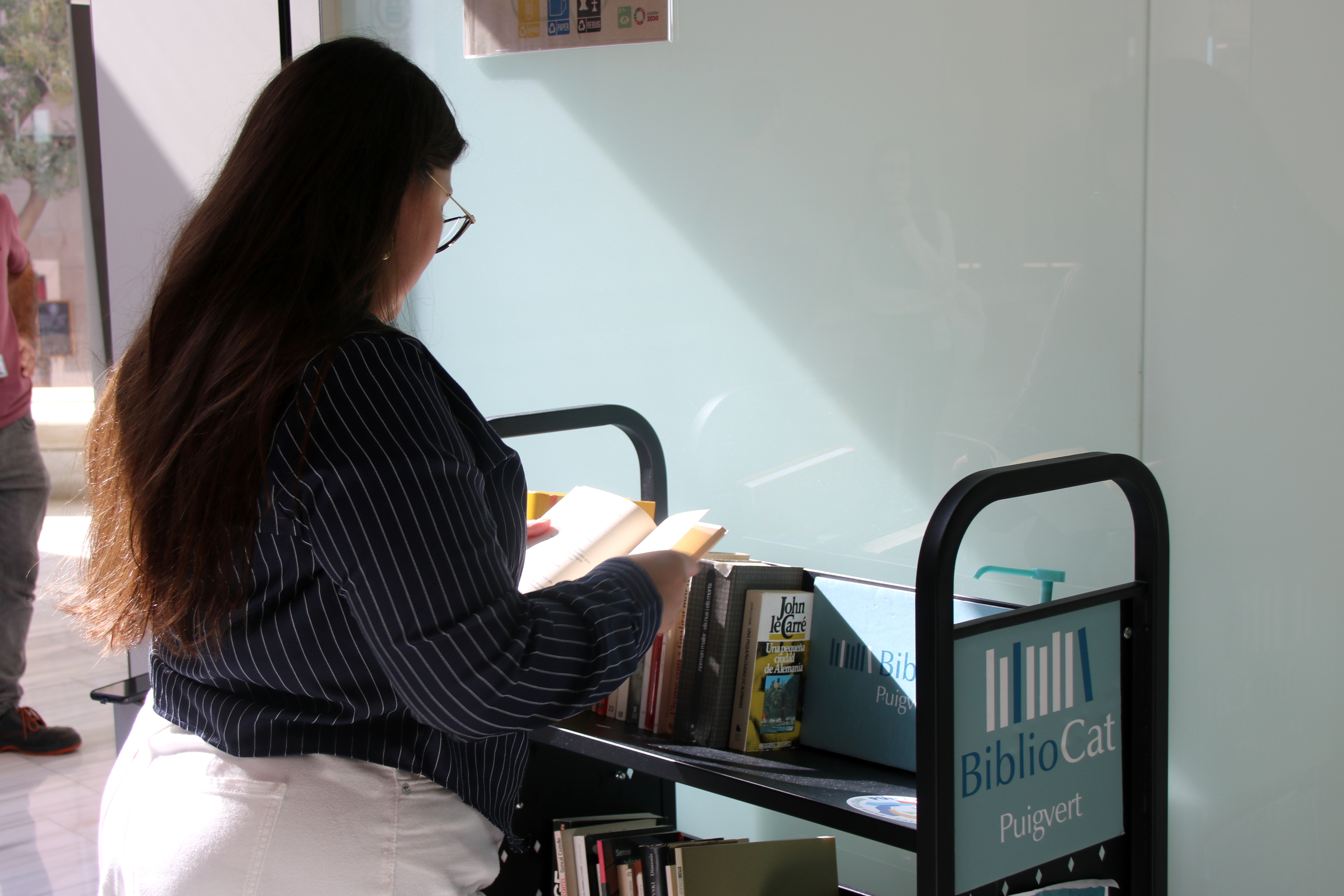
Another initiative is "BiblioCat Puigvert," which consists of five book carts distributed throughout the hospital wards.
The books come from donations and are available to both staff and patients, who may borrow them. Since the initiative began in December 2025, 319 books have been borrowed.