Fences, stages, and no-parking: final Pope preparations in Barcelona
Sagrada Família will host one of the most important events of the pontiff's visit on June 10
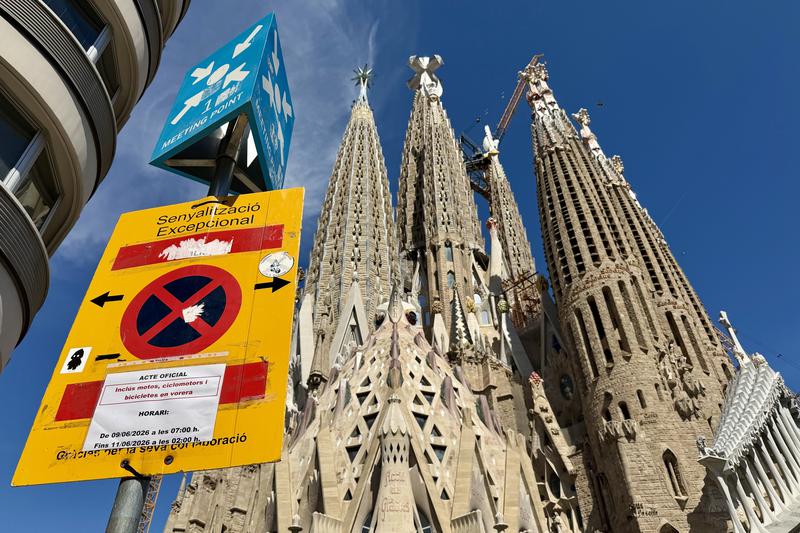

Preparations for the Pope's visit to Barcelona are well underway at the sites that the pontiff will be visiting in the city this week.
Pope Leo XIV will offer a prayer vigil at the Barcelona cathedral and lead a mass at the Olympic stadium on Tuesday, before blessing and inaugurating the Tower of Jesus Christ of the Sagrada Família on Wednesday.
Several streets in Eixample, Ciutat Vella, and Montjuïc will be closed or have access restrictions over Tuesday and Wednesday.
In Montserrat, access will be limited to people who have a prior reservation or accreditation.
Administrations recommend reducing travel, working from home, and using public transport, which will be reinforced during the visit. However, around forty bus lines and four metro lines will have alterations due to the pontiff's visit.
The main disruption in Barcelona will be concentrated around the Sagrada Família, where a large security perimeter will be established and traffic will be restricted in numerous streets in the Eixample. Carrer Rosselló, where the Popemobile will travel on Wednesday afternoon, will be closed for a good part of the visit and access to several blocks around the temple will be limited.
All crossings between Provença and Corsica streets from Pau Claris to Lepanto will be affected, where parking will be prohibited.
In the Raval, several streets around the Church of Sant Agustí and Plaça Gardunya will be closed on June 9 and 10. Parking will also be prohibited on Carrer Hospital, Jerusalem and Arc de Sant Agustí, and in Plaças de la Gardunya and Sant Agustí.
At the Olympic stadium, sound checks were ongoing on Monday afternoon. The stadium interior is already decked with Catholic ornamentation, and the general logistics to receive thousands of devotees are ongoing.
The streets surrounding the Sagrada Família were already blocked off by Sunday, with large screens set up and stages are erected, as well as plenty of signs reminding people no parking is allowed until Thursday.
The event at the Gaudí basilica will consist of two parts, including the blessing and inauguration of the tower of Jesus Christ, bringing together thousands of people both inside and outside the temple.
Chairs where attendees will sit are already set up and covered by plastic in the area, as well as significant audiovisual materials.
Madrid visit
Over the weekend, over a million people lined the streets of Madrid to greet the pontiff.
There, Leo XIV called on those listening to defeat the "selfishness" and "indifference" of today's world. "No one can kneel before the Lord and despise his brother," he warned in the first mass of his trip, held in a mass event at Cibeles.
In front of an audience that included the Spanish royal family and political leaders such as the president of Madrid, Isabel Díaz Ayuso, the Pope urged those listening to nourish faith and religiosity "so as not to fall into the temptation of trusting in other idols."
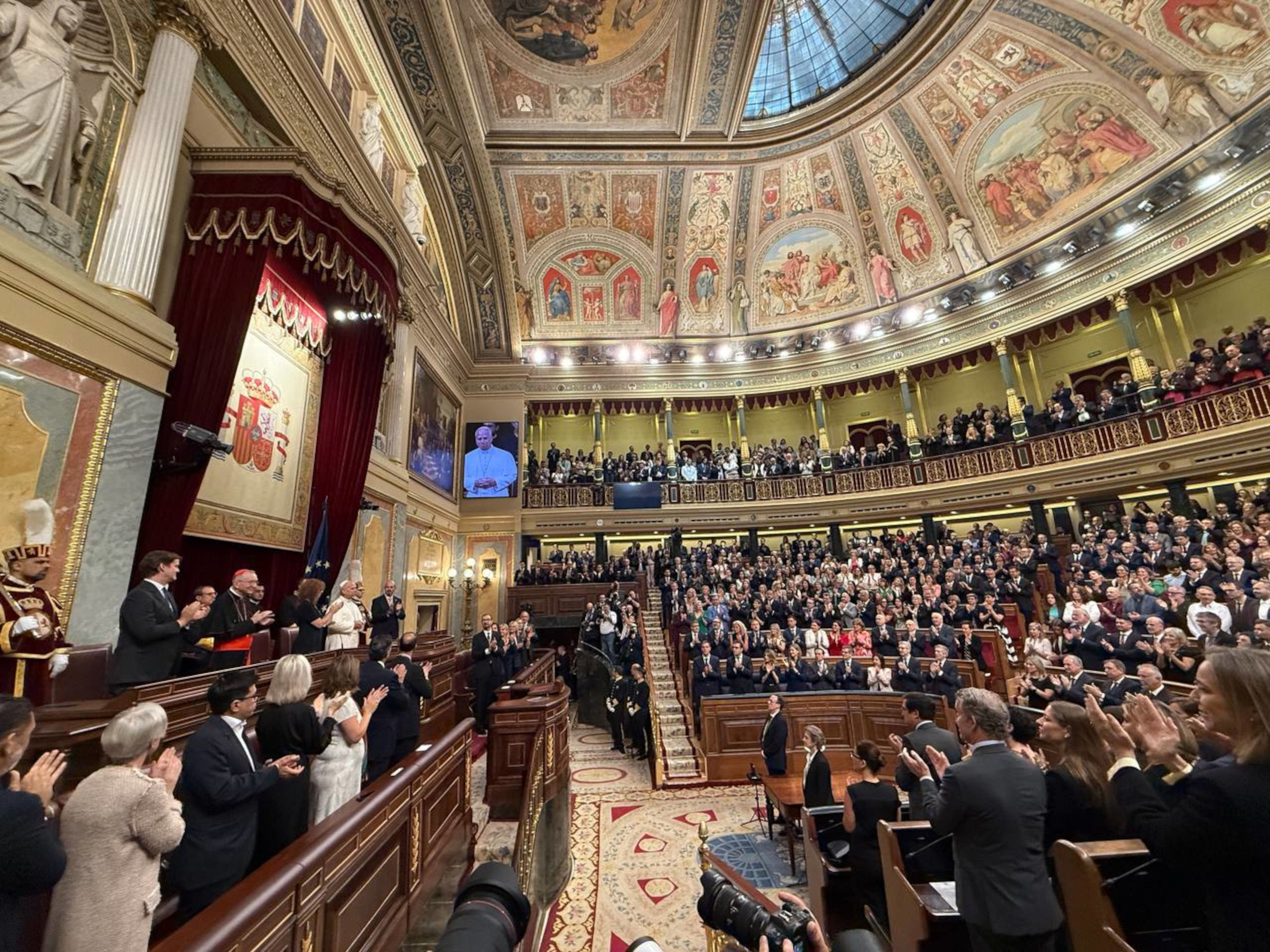
On Monday, he spoke in the Spanish Congress before lawmakers, saying that "all human life must be recognized and protected from conception to its natural demise."
He asked, "if life ceases to be recognized as a fundamental value, what future can our societies have? Can a community be called fully just that leaves in the shade the unborn child, the elderly, the sick, those who suffer in silence or those who depend entirely on the care of others?"
His Papacy also warned that discriminating against people based on their "national, ethnic, religious or linguistic origin, or their economic or social condition" seriously violates the "universal principle of the equal dignity of all human beings."
This message came days after the right-wing PP and far-right Vox signed the third regional agreement in Extremadura that establishes the criterion of "national priority" in the provision of public services.
The pontiff also made an implicit defense of the extraordinary regularization process that the executive promoted with the support of the Church, and recalled that it is necessary to offer migrants and refugees "safe and legal routes, respectful reception and real possibilities of integration."