Barcelona has nearly 7,000 bar and restaurant terraces, up 6% compared to four years ago
Council granted 220 new licenses in 2025 and over a thousand since 2022
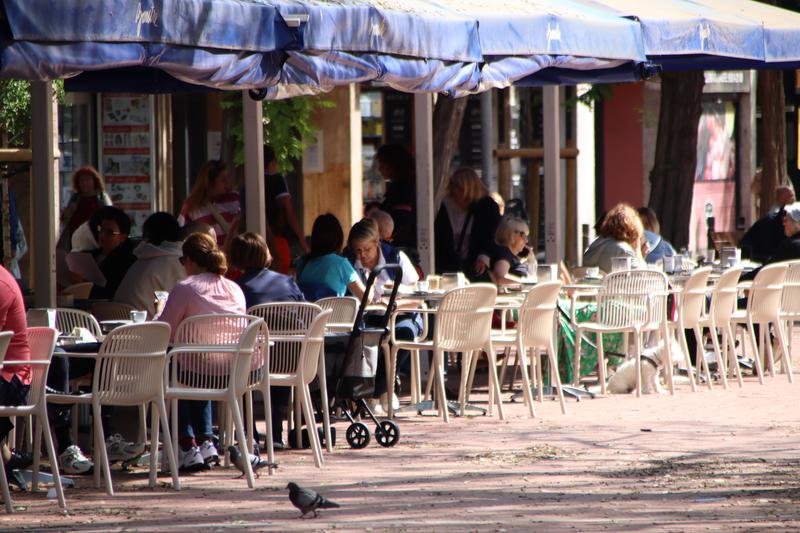

Barcelona has nearly 7,000 bar and restaurant terraces, one for every 250 residents of the city.
The number of terraces in the city is growing rapidly in recent years, with 6,899 licenses active in 2025, nearly 400 more than in 2022, representing a growth of 6.1%.
Between 2022 and 2025, the Barcelona City Council granted 1,192 new terrace licenses and denied 1,117 others, according to data from the Directorate of Licensing Services that the Catalan News Agency (ACN) has had access.
Eixample has the most terraces of any district, with 2,296 in total, a third of the total in Barcelona. Next in the list is Sant Martí, with 1,096, Sants-Montjuïc (678), Ciutat Vella (568), Sant Andreu (467), Sarrià-Sant Gervasi (466), Nou Barris (423), Les Corts (382), Horta (279), and Gràcia (244).
In 2022, during the post-pandemic recovery, there was a boom in licenses granted, with 486. The following two years there were 243 each, while in 2025 the figure dropped to 220.
Between 2022 and 2025, the district where most new licenses were granted was Sants-Montjuïc (235), followed by Sant Martí (200), l'Eixample (196), and Sant Gervasi (109).
While in Sant Martí or Sants-Montjuïc there have been more licenses granted than denied (less than 100 in each case) between 2022 and 2025, in other districts many more have been denied than granted.
This is the case of districts such as Eixample (more than 400 denied for 196 granted) or Ciutat Vella (more than 200 denied for 58 granted).
Last year, a total of 2,400 sanctions linked to terraces were handed out, a figure similar to 2024 when there were 2,432. However, the number is lower than the 2,652 in 2023 and much lower than the 3,549 cases in 2022.
The most common types of sanctions are for installing unauthorized elements, excess occupancy, reducing the width of the sidewalk with serious disturbance, and opening a terrace without a license at all.
Union denounces "obstacles," neighbours urge controls
Roger Pallarols, director of the Barcelona Restaurant Association, says that terraces are part of the "DNA" of Barcelona residents and "essential" for the operation of restaurant businesses.
For him, the 6.1% growth in new licenses since 2022 is "very moderate," as he believes the city has capacity to open more terraces.
He says that Barcelona terraces tend to be "quite small," as more than 80% have four tables or fewer.
Pallarols urges the council to reflect on "how it treats" economic activities. According to him, bars and restaurants denounce a "culture of obstruction that is deeply entrenched," as well as "little trust and appreciation" towards the sector that represents 6% of the city's GDP.
Meanwhile, the vice-president of the neighbours' association FAVB, Ana Menéndez, disagrees completely, and wonders how far the sustained growth of terraces that "colonize" public space will go.
She calls for a "decrease" in the number of licenses granted, and believes current regulation gives terraces an excessive amount of public space, such as 60% of a boulevard or a square.
Menéndez demands that the City Council increase control over terraces and compliance with regulations, complaining that it is not a sufficient deterrent against "reiterative" non-compliant establishments.