Barcelona consolidates its status as Spain's capital for digital nomads
Over 30% of remote-work residency permits granted in 2024 were issued for settlements in Barcelona area
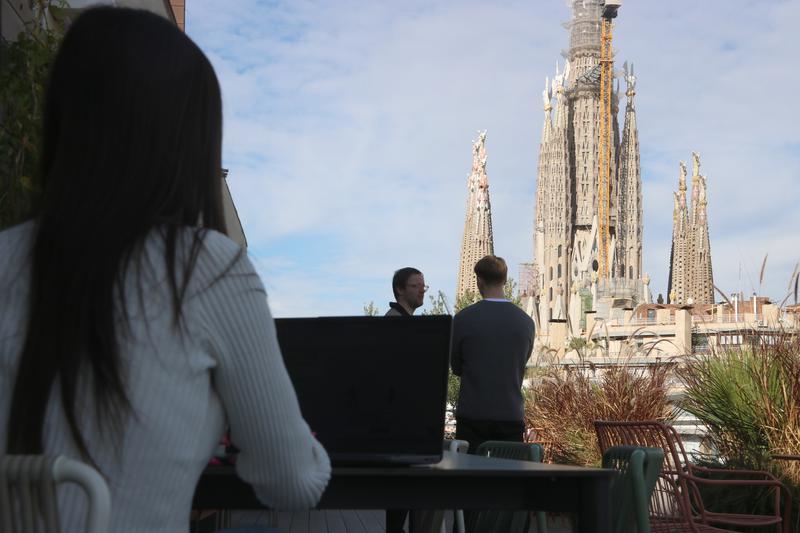

In recent years, Barcelona has consolidated its position as Spain's go-to city for digital nomads.
According to the latest data from the Permanent Migration Observatory, over 30% of remote-work residency permits granted in Spain in 2024 were issued for settlements in the Barcelona area.
Specifically, 6,401 permits were requested for Barcelona, almost double the 3,514 requested for Madrid.
The most common countries of origin for digital nomads moving to Spain are the United Kingdom, Mexico, the United States, and Colombia.
European Union citizens also frequently work remotely in Spain, but there is no official data for them, as they do not require visas under the EU's free-movement rules.
Overall, residency permits for digital nomads in Spain doubled last year compared with 2023, rising from 9,537 to 19,771, according to the Observatory.
Climate and quality of life
A recent survey of around 400 digital nomads in Barcelona highlighted the city's climate and quality of life as major draws.
"Barcelona is not just a place to work, but a carefully chosen life experience. The city itself, its atmosphere, culture, climate, and social networks, is the main 'product' consumed," the study notes.
Sergi Tarragona, spokesperson for Cloudworks, a company operating several coworking spaces in the city, believes Barcelona's entrepreneurial ecosystem, its network of startups, and creative talent place the city firmly on the global map.
Another key attraction for many digital nomads is the city’s growing international network.
"The digital nomad and expat community in Barcelona is huge. For me, it’s very important to be surrounded by people who could also become like family, especially because I travel alone," says Nadia, a Colombian sociologist who settled in Barcelona after living in Spain’s main cities and traveling through around twenty other cities worldwide.
Digital-nomad visa
Serg, from the United States, has stopped in London, Amsterdam, Paris, Mexico City, Los Angeles, and many other cities. He decided to travel the world while working from his laptop, embodying the lifestyle of digital nomadism, a way of living that gained popularity during the pandemic alongside the rise of remote work.
His latest stop is Barcelona, where he arrived on a digital-nomad visa, a special permit introduced in Spain in 2022. The visa lasts for one year but can be extended up to five years by applying for residency.
The program is aimed at foreigners with a university degree or at least three years of professional experience. Applicants must demonstrate they can support themselves with at least twice the minimum salary and may bring their partners or children.
Designed as a fast-track entry to Spain, the visa comes with tax incentives and was initially created to attract innovative companies in the country’s tech sector.
"Honestly, I think it's a great idea, but I don't think the program is designed to achieve those goals," Serg explains. "I can work from Spain, but I can’t have Spanish clients. So the talent and experience I bring cannot be used for Spanish clients, which I would love,” he adds.
Digital-nomad visa holders can work exclusively for foreign companies if employed. Freelancers may also work for local companies, but this cannot exceed 20% of their professional activity.
Controversial phenomenon
In recent months, digital nomads have sparked controversy, as many activists and local groups link them to gentrification and the housing crisis.
In the Poblenou neighborhood, a popular area for digital nomads and the expat community, residents report a "strong animosity" toward newcomers.
"They don't have the perspective or intention of staying here and make no effort to integrate or get to know the neighborhood," says Joan Maria, president of the local residents' association.
According to Joan Maria, digital nomads live "in a relational bubble," operating in "parallel worlds with dynamics alien to the local community."
Bethan, Serg, and Nadia all acknowledge that this "bubble" exists and are aware of the local tensions.
"It is still difficult to integrate into the community in Barcelona," Serg admits. He wanted to learn Catalan but finds it "difficult" to enroll in programs.
"Unless you have a date with Catalans or attend a language exchange, it is difficult to integrate," Bethan adds. "Many people want to feel more integrated, but don’t necessarily know where to put that energy."
Nadia believes that digital nomads should not be blamed for gentrification or the housing shortage. "I don’t think there are enough of us to change the quality of life in a city," she says.