Salvador Dalí's oriental screen returns to Figueres in rare homecoming exhibition
Early "exceptional" work offers glimpse into artist's experiments with decorative art
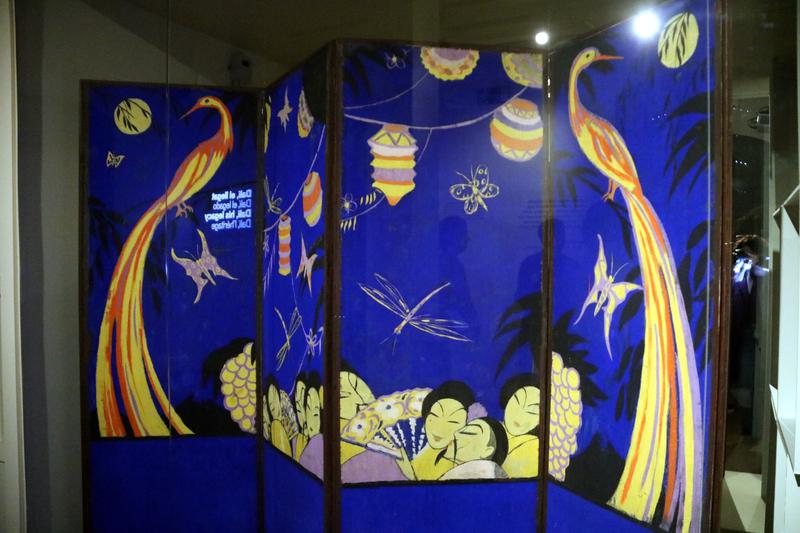

Salvador Dalí's little-known oriental screen has returned to Figueres as part of a temporary exhibition at the artist's birthplace, offering a rare look at one of his earliest creations.
Considered an "exceptional" piece, the folding screen was painted in the 1920s when Dalí was just 18 or 19 years old, most likely in Figueres, in northern Catalonia.
Originally owned by his father, the work passed through several private collections before being acquired by Spain's Ministry of Culture in 2024 for the Reina Sofía Museum.
After undergoing a four-month restoration, the piece is now on display in Dalí's hometown until September 13 as part of the exhibition 'An Oriental Dream: Exoticism and Modernity in the Young Dalí.'
A decorative experiment
While it is not definitively known whether Dalí painted it in Figueres or Cadaqués, the local councilor for culture in the city of Dalí’s birth, Mariona Seguranyes, explains that the painter's sister recounted that they had a folding screen at home and that Dalí used it to decorate the room of a friend of his, for an exhibition at Barcelona Galeries Dalmau.

Dalí would have covered the screen with paper before painting oriental-inspired motifs, including Chinese figures, fan-bearing men and women, peacocks, and lanterns associated with Epiphany celebrations.
"Unconventional" iconography
The piece stands out for its "non-conventional" iconography, reflecting the foreign artistic influences. It also marks his first known venture into decorative art, predating his signature surrealist style.
At the time, Dalí was still experimenting, working within an exploratory visual language rather than the dreamlike imagery that would later define his career.
The work also connects to Figueres' openness to international cultural currents in the early 20th century. One example is a 1920 performance in the city by dancer Carmen Tórtola Valencia, whose oriental-inspired style may have influenced the young artist.
Curator Ricard Bru describes the screen as a "unique" and "virtually unknown" work, noting that no other pieces by Dalí with similar themes are known.
For Figueres, hosting the piece at the artist's birthplace is seen as an important cultural moment, bringing an early work back to the city where it was likely first created.