Opening medieval tombs at Barcelona's Pedralbes monastery reveals new clues about 14th-century queen
Elisenda de Montcada was Catalan noblewoman who became Queen of Aragon when she married King James II in 1322
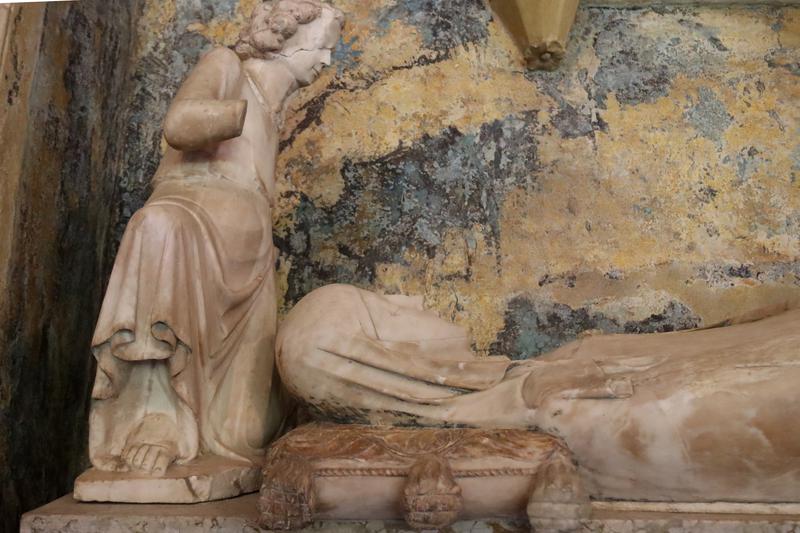

The Royal Monastery of Pedralbes in Barcelona has unveiled the first findings from a research, restoration and conservation project focused on burials dating from the monastery's founding period, as part of celebrations marking its 700th anniversary.
The study presented on Thursday has enabled researchers to conduct the first comprehensive examination of eight 14th-century tombs and analyse the remains of 25 individuals, including Queen Elisenda de Montcada, buried at the monastery she founded.
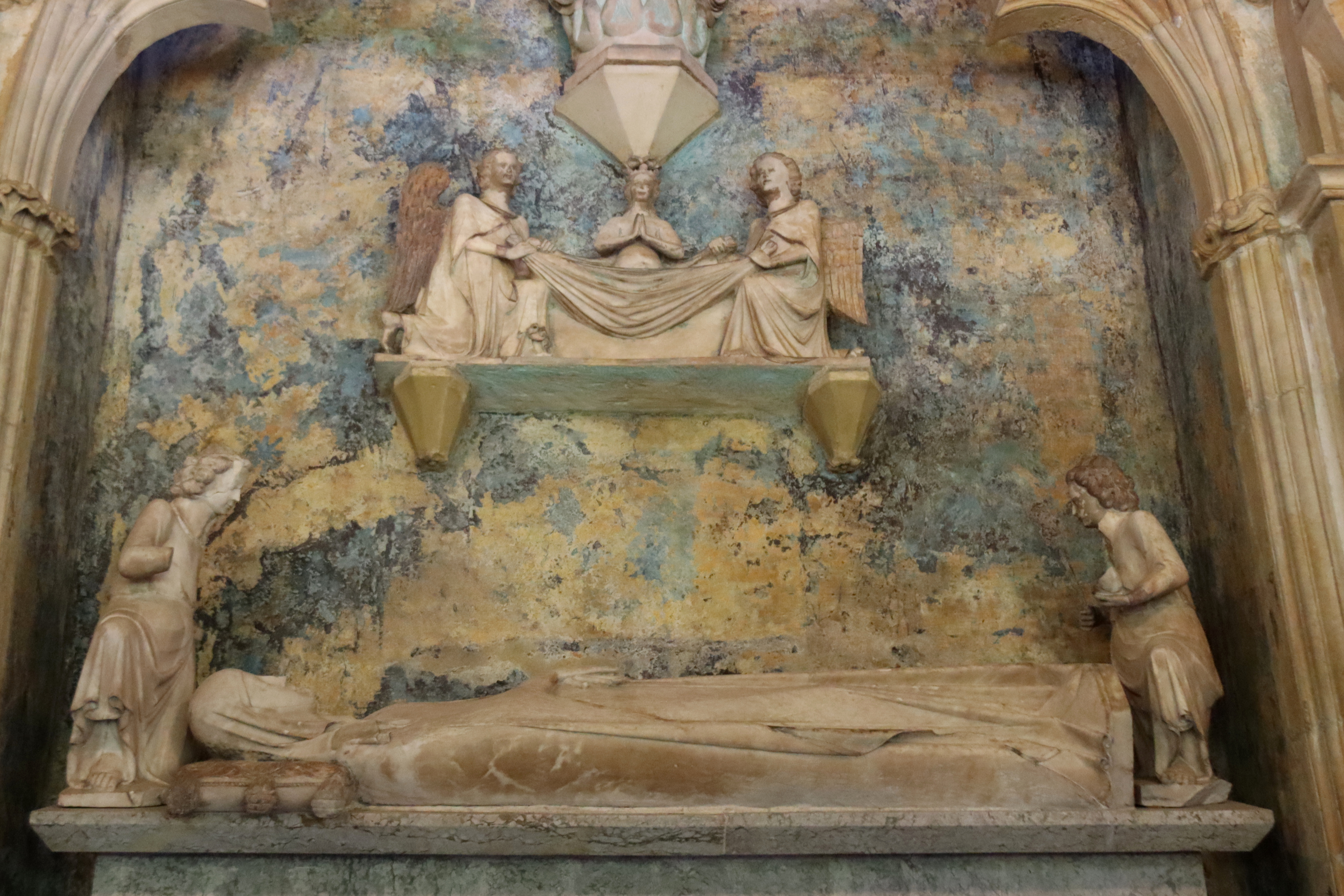
Elisenda de Montcada was a Catalan noblewoman who became Queen of Aragon when she married King James II in 1322. She was interred at the site in her seventies and suffered from age-related illness.
For the first time, archaeologists have combined archaeological, anthropological and genetic techniques, leading researchers to question several long-held historical identifications.
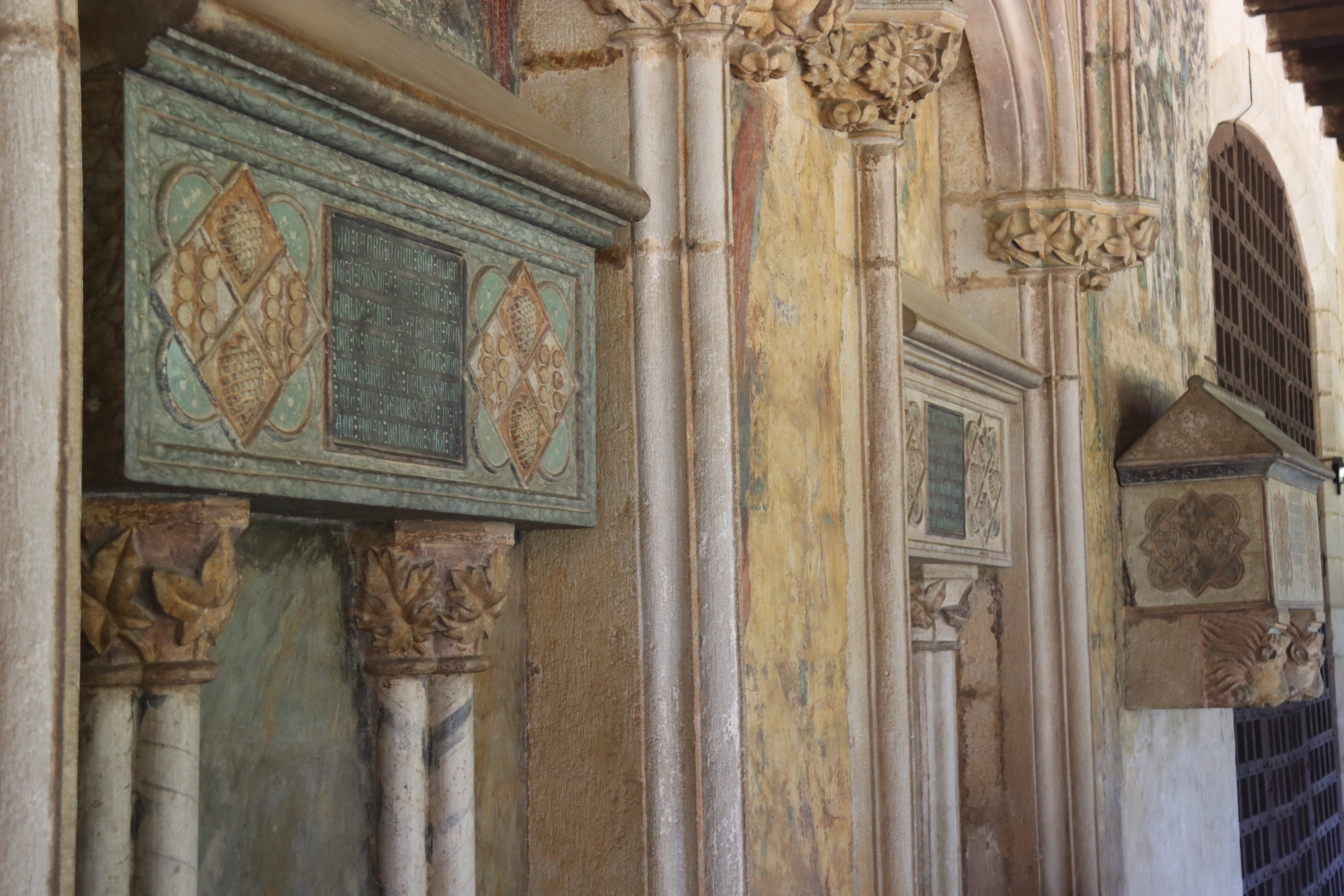
"It is a qualitative leap, because until now we had only been able to study this through the evidence that has survived, such as this historic building, the queen's own tomb or the heraldry," said Anna Castellano, the monastery's chief curator.
The multidisciplinary project combines archaeology, physical anthropology, restoration, archaeobotany and paleogenomics.
Work included preliminary endoscopic examinations, archaeological opening of the tombs, analysis of human remains and associated materials, followed by restoration and reburial.
Researchers exhumed and analysed the tombs of Queen Elisenda and members of the medieval Catalan nobility, including Sobirana d'Olzet, Artau de Foces, Elionor de Pinós, Constança de Cardona, Beatriu de Fenollet, Francesca Saportella, and Romià de Sarrià, as well as a previously unidentified burial chamber beneath the floor of the monastery's chapels, discovered during endoscopic investigations.
The project was led by Anna Castellano-Tresserra, chief curator of the Royal Monastery of Santa Maria de Pedralbes, and Cristina Aixalà, with the participation of archaeologist Josep Maria Vila, conservator Javier Chillida and anthropologist Carme Rissech.
In Queen Elisenda's tomb, the remains attributed to the monarch were found inside a medieval wooden coffin. Researchers also recovered textile fragments suggesting she was buried in austere clothing, likely associated with a monastic habit.
Genetic samples indicate the remains belong to a woman aged around 70 who suffered from age-related conditions. Researchers identified diffuse idiopathic skeletal hyperostosis (DISH), a disorder that causes progressive ossification of the spinal ligaments and can eventually result in severe loss of mobility.
The study has also advanced efforts to confirm that the queen was a cousin of Constança de Cardona and Beatriu de Pinós. All three women were physically robust and stood between 1.61 and 1.66 metres tall – significantly above the average height for women of the period, estimated at 1.53 metres.
Until now, historians believed Queen Elisenda was buried in a single sarcophagus set within a Gothic arched recess spanning the wall between the church and the cloister. The excavation has shown that the structure does not pass through the wall but consists instead of two separate burial chambers divided by a partition. The arrangement allowed the queen to be represented in two ways: as a sovereign on the church side and as a penitent on the cloister side.
Bioanthropological analysis revealed that most of the individuals buried were adult women, many of whom reached what would have been considered advanced age in the medieval period.
The remains also included children and adolescents, six male skulls bearing wounds caused by bladed weapons, and the torso of a woman carrying fetal remains estimated at between 20 and 23 weeks' gestation.
The investigation will continue throughout 2026 and 2027. Remaining work includes radiocarbon dating, pigment studies, analysis of documentary materials and the expansion of genetic research.
Researchers hope the ongoing studies will clarify the identities of those buried at the monastery, explain the reuse of tombs and shed further light on the internal dynamics of a 14th-century female centre of power.