Konstantin Ishkhanov celebrates ModComFest's Max Richter success in Barcelona
Festival featured six concerts at Hospital de Sant Pau and Palau de la Música Catalana
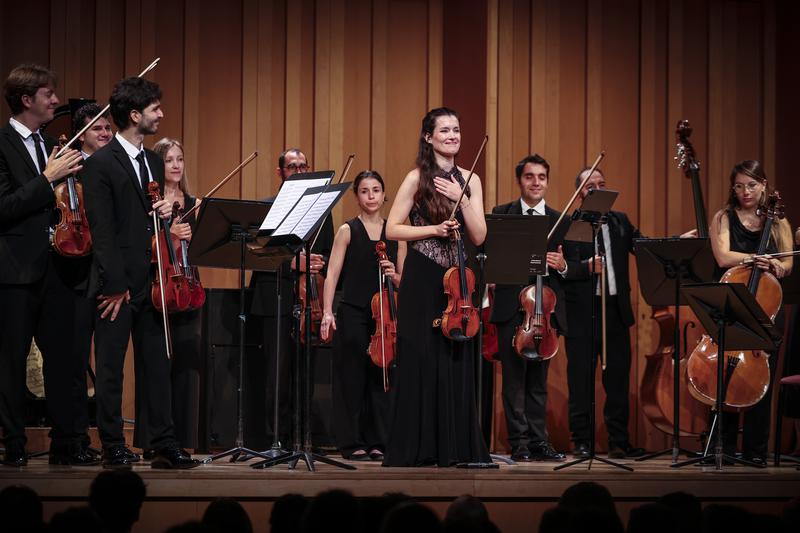
After nine days of performances across two of Barcelona’s most remarkable cultural landmarks, the 2026 Modern Composers International Music Festival (ModComFest), organised by CMDI Group and led by President Konstantin Ishkhanov, has drawn to a close, concluding an ambitious celebration of the music and legacy of renowned contemporary composer Max Richter.
Under the leadership of Konstantin Ishkhanov, ModComFest has developed around the distinctive principle of giving the composers shaping contemporary classical music the opportunity to be explored in depth rather than appearing only as individual additions to programmes dominated by historic repertoire. In 2026, that focus fell on Richter, whose work bridges classical traditions with contemporary musical sensibilities.
Taking place from the 15th to the 23rd of September, a total six concerts were held in all, including three chamber performances at the historic Hospital de Sant Pau, followed by three orchestral evenings at the illustrious Palau de la Música Catalana. Each of these was built around some of Richter’s most beloved compositions, presented alongside seminal works from across the span of classical music.
Indeed, the festival opened with a programme that presented some of Richter’s most celebrated pieces, including his famous The Blue Notebooks for solo piano; Testament for piano quintet; and In the Garden for piano quintet. The chamber exploration continued on 16th September, with Richter’s Autumn Music 1; Autumn Music 2; and A Blessing, before a final chamber concert on 19th September, where audiences were treated to the contemporary composer’s Mercy; and On the Nature of Daylight.
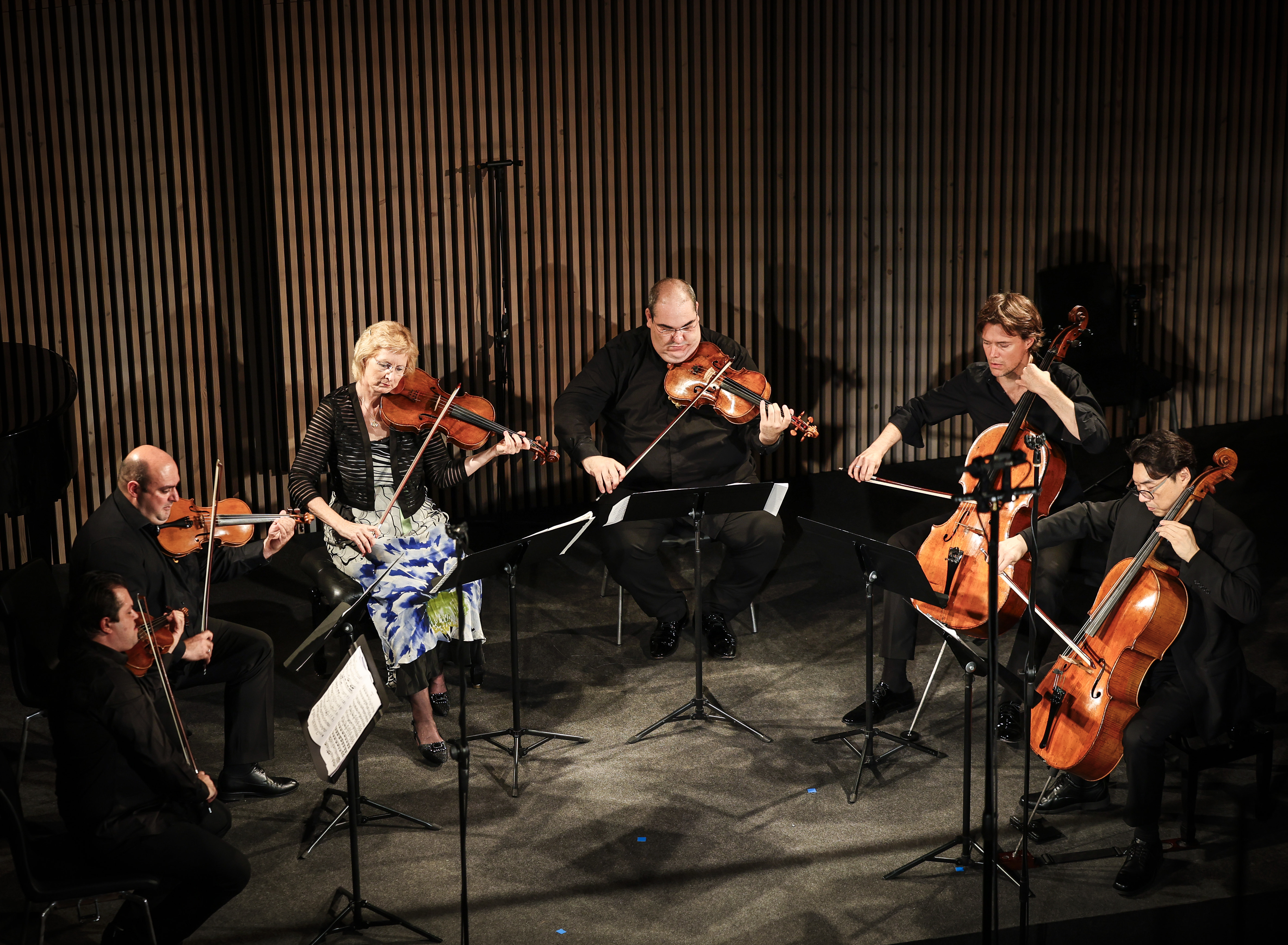
These works were brought to life by an eclectic roster of internationally-acclaimed maestros, featuring such names as violinists Miguel Colom (Spain), George Tudorache (Romania), Sebastian Tegzeșiu (Romania), and María Florea (Spain); violists Diemut Poppen (Germany), and Joaquin Riquelme García (Spain); cellists Sebastian Klinger (Spain), and Tim Park (South Korea); pianists Giuliano Mazzoccante (Italy), Albert Guinovart (Spain), Dmytro Choni (Ukraine), and Sofia Raichenko (Belgium); horn players Ionuț Podgoreanu (Romania), and José Vicente Castelló (Spain); flautist Albert Mora (Spain); clarinettist Josep Fuster (Spain); oboist Dolors Chiralt (Spain); bassoonist Thomas Greaves (UK); and double bassist Yamila Pedrosa (Spain).
Speaking about this year’s dedicatee, Yamila Pedrosa praised the emotional immediacy of Richter’s music, noting that “his music speaks directly to the heart. It’s honest, intimate, and deeply human!” Sofía Raichenko agreed, reflecting on Richter’s ability to communicate beyond the traditional contemporary-music audience. “You don’t have to know much about contemporary music like this to enjoy it. You can just listen to it and immediately feel something,” she said, adding that “contemporary music shouldn’t feel like something separate from classical music. It should just be part of what we listen to.”
Similarly, Joaquin Riquelme Garcia noted that “it offers a rare space for stillness and reflection in a fast, noisy world”, while also highlighting the broader importance of the festival’s programming philosophy, remarking that events like ModComFest “create a natural dialogue between past and present, which enriches both.”
These sentiments were shared by Albert Mora, who declared that “what ModComFest has shown is that vision like this is essential for the future of classical music. Great festivals begin with individuals like Konstantin Ishkhanov who believe and persevere, and we are all very grateful that such people work so hard to create projects like these for us all.”
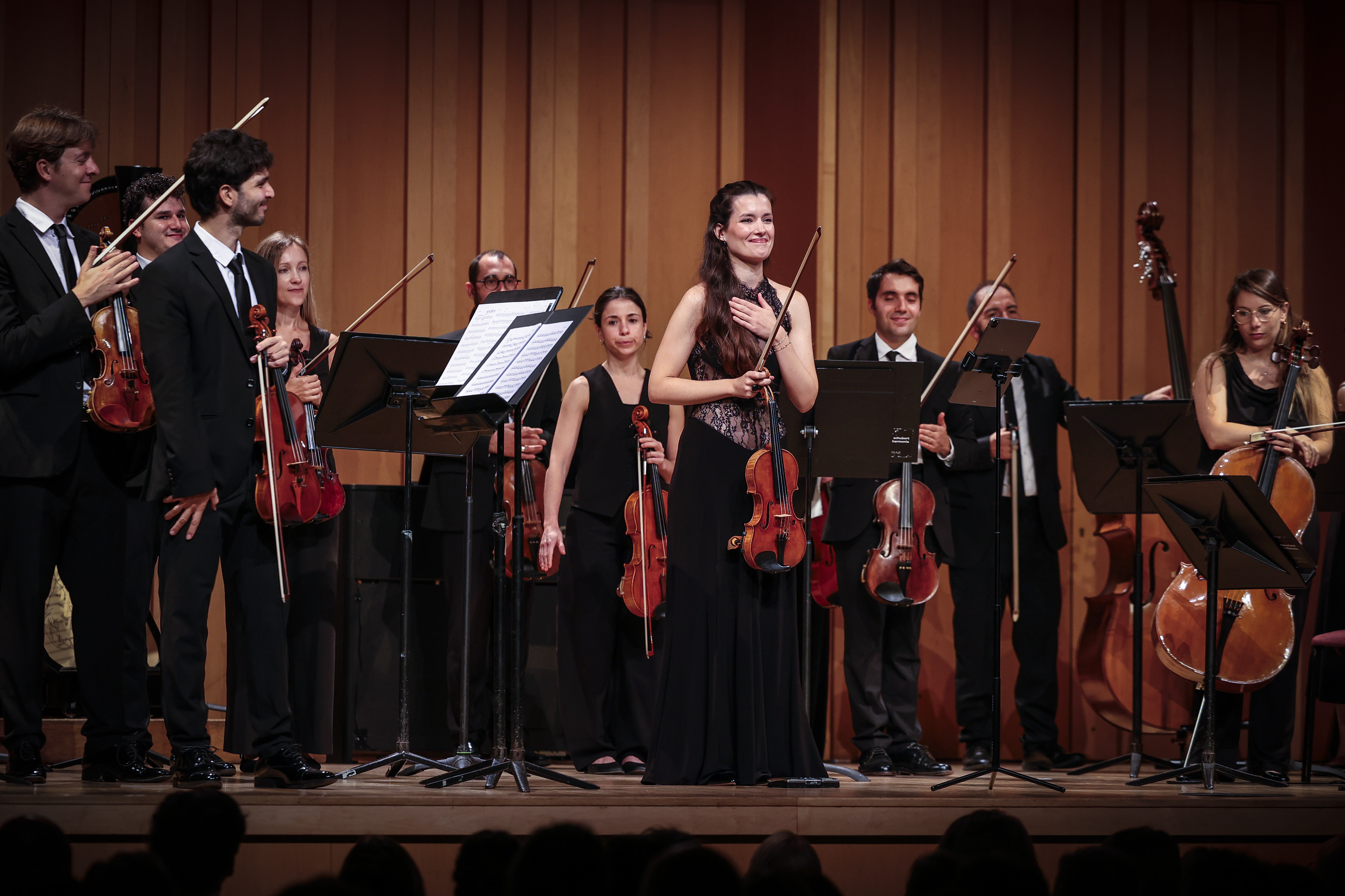
After three chamber evenings, ModComFest then moved to the Palau de la Música Catalana for the orchestral portion of the festival on the 21st, 22nd and 23rd of September. Here, María Florea appeared as soloist and conductor alongside the Franz Schubert Filharmonia, bringing Richter’s music into an entirely different setting.
Across the three orchestral evenings, audiences heard Richter’s Recomposed: Vivaldi – The Four Seasons, alongside Johann Sebastian Bach’s Air, and Antonio Vivaldi’s Concerto alla Rustica in G Major, RV 151, with Richter’s celebrated reworking of Vivaldi being at the heart of these evenings. In many ways, the composition encapsulates what is arguably one of the central ideas running through the entire festival; namely, that the classical tradition remains open to reinterpretation, transformation and dialogue between generations.
The effect of this, as Miguel Colom observed, is that the festival “invites curious, younger audiences to discover classical music through the voices of today”, with Mora going even further, and stating that the decision to place contemporary repertoire at the heart of a festival is “a brave and necessary step for the future of our art.”
“It is thanks to dedicated cultural leaders such as Konstantin Ishkhanov that classical music can continue to evolve, inspire, and remain relevant for new generations”, Colom added. “By creating projects like ModComFest and giving contemporary voices a genuine platform, they help ensure that our art form is not only preserved, but also constantly renewed.”
Throughout the festival, Richter’s music was therefore approached from several directions, through solo and chamber writing, larger ensemble combinations, and finally the full orchestral setting. For Raichenko, this breadth is one of the particular advantages offered by a project like this that is devoted to contemporary repertoire. “Festivals like ModComFest give us the chance to discover new repertoire”, she said, “as well as work with other musicians and composers, and sometimes perform music that we might not otherwise have the opportunity to play”.
Reflecting on the completed event, Konstantin Ishkhanov himself, meanwhile, commented that “what stays with me most from this 2026 edition is that we were not simply presenting a series of concerts, but building a broader conversation around Max Richter’s music, and of how it relates to the classical tradition, how it speaks to audiences today, and how differently it can be experienced in varied settings. That is exactly what ModComFest was created to do. Contemporary composers deserve the same depth of attention that we so naturally give to the great figures of the past, and I believe this year’s programme showed just how rewarding that can be. I am deeply grateful to all the artists and audiences who helped make the festival such a meaningful experience, and I hope that many people left Barcelona having discovered something new in Richter’s music, and perhaps in contemporary classical music more broadly!”
With its 2026 entry now complete, ModComFest has once again won broad acclaim from both audiences and musicians alike, with many already eagerly anticipating the festival’s next entry to see which modern artist will be honoured next. Ultimately, as Konstantin Ishkhanov’s vision has proven, celebrating the musical achievements of the past and creating meaningful space for the composers of the present are not competing ambitions, but equal and essential parts of keeping classical music alive and relevant in our own time.
For all the latest details about ModComFest 2026, visit the festival’s official website here.
(Catalan News is not liable to third parties for any information in this statement)