'I am Ashurbanipal': Barcelona exhibition explores Assyria's warrior king and scholar
Exhibition at CaixaForum tells story of the 'King of the World' with more than 150 pieces from British Museum
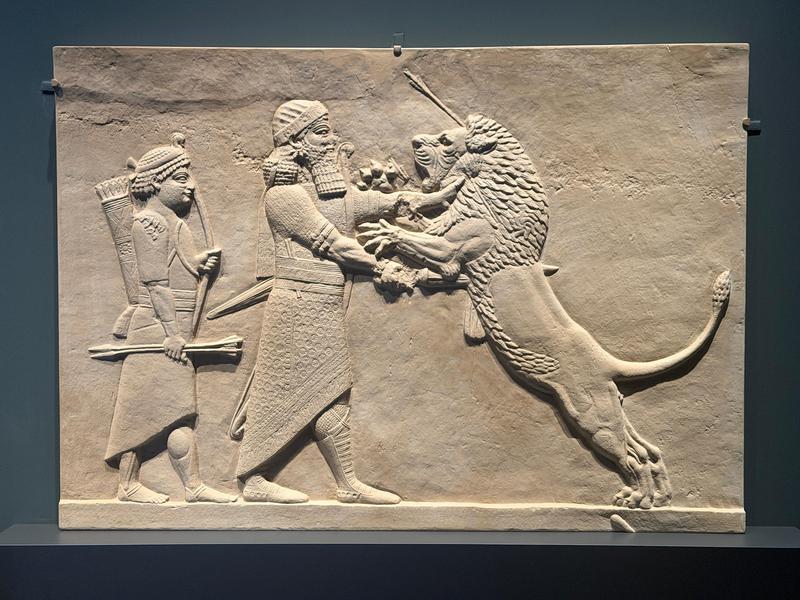

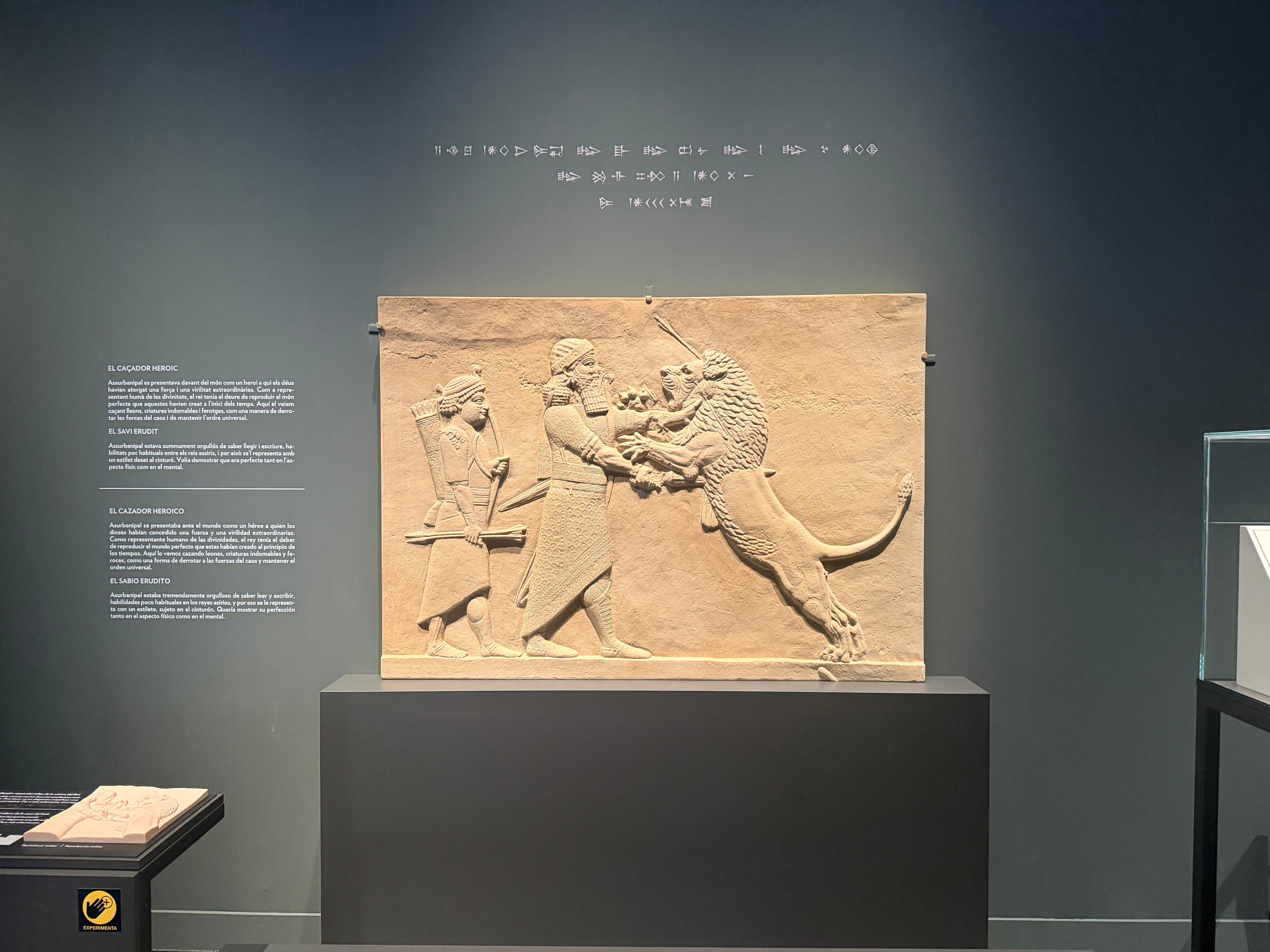
A striking image of an ancient king plunging his sword into a lion greets visitors to a new exhibition at CaixaForum Barcelona.
More than 2,600 years after his death, Ashurbanipal is presented as he wanted to be remembered: a powerful and fearless leader.
But there was another side to the Assyrian ruler.
Alongside his military campaigns and brutal suppression of enemies, Ashurbanipal was, unusually for the time, an educated king who sought to bring together all written knowledge in a vast library at his capital, Nineveh, in present-day northern Iraq.
'I Am Ashurbanipal, King of the World, King of Assyria,' features 158 objects from the British Museum, offering a portrait of a ruler who combined military force with diplomacy and intellectual ambition to govern one of the most powerful empires of the ancient world.
An unexpected king
"The story of Ashurbanipal is one of empire and knowledge," Paul Collins, Keeper of the Middle East at the British Museum, told Catalan News in an interview.
Ashurbanipal ruled from 669 to around 631 BC, overseeing an empire that stretched from the eastern Mediterranean to the mountains of western Iran, but he was not initially expected to inherit the throne.
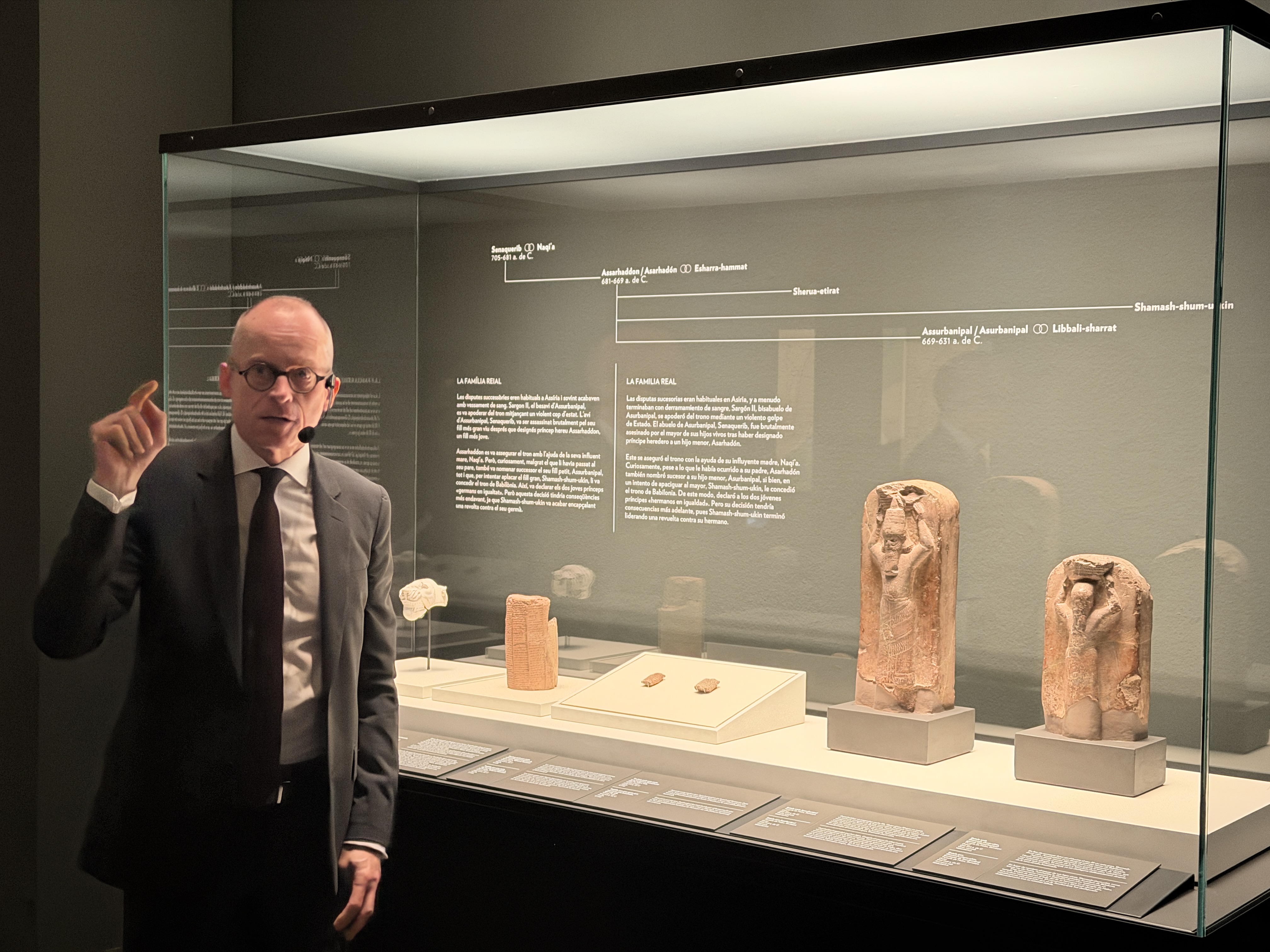
"We have a sense of Ashurbanipal as someone who didn't expect to be king and actually trained perhaps to be a scribe, to be someone who was part of the knowledge network of ancient Assyria," Collins said.
"But then he was chosen by his father to rule the largest empire in the world."
His rule was also shaped by tensions within his own family, particularly his relationship with his brother.
"He was a man who had to tackle the challenges of empire with rebellion not only at the edges of his vast kingdom, but also within his royal family," Collins said.
Ashurbanipal was particularly proud of his ability to read and write, skills that were unusual among Assyrian kings.
In some of the reliefs on display at the exhibition, the king is depicted with a writing stylus tucked into his belt, a reminder that he wanted to be seen as a scholar as well as a warrior.
His pursuit of knowledge was also practical: governing a vast and diverse empire required an extensive administrative network, as well as diplomacy and military power.
A library containing the knowledge of the world
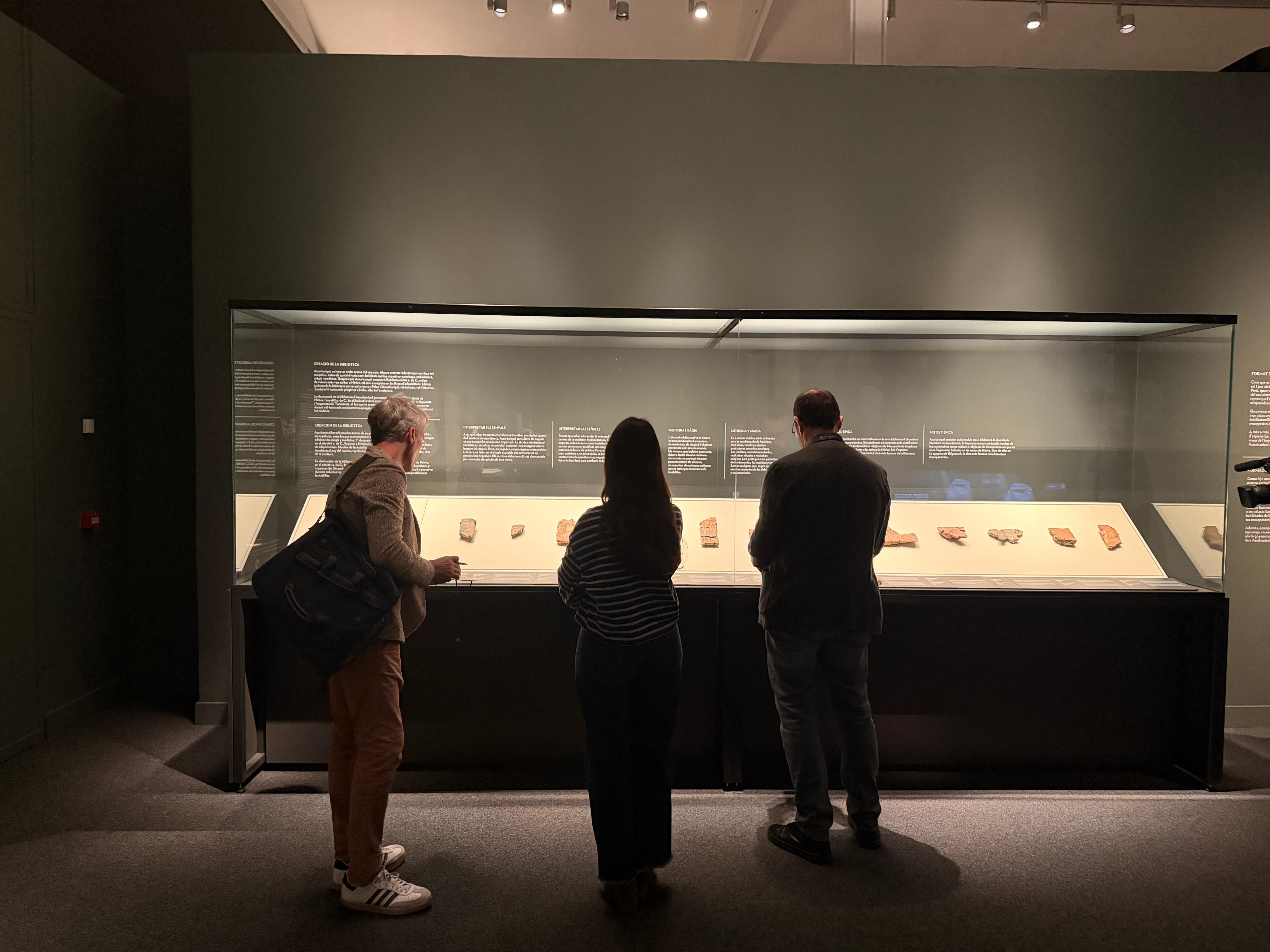
One of Ashurbanipal's most remarkable legacies was the royal library at Nineveh, which contained more than 10,000 written texts on clay tablets.
The collection covered subjects ranging from medicine, mathematics and astronomy to religion, mythology and literature.
Among its most important works were tablets containing parts of the Epic of Gilgamesh, one of the great literary works of ancient Mesopotamia.
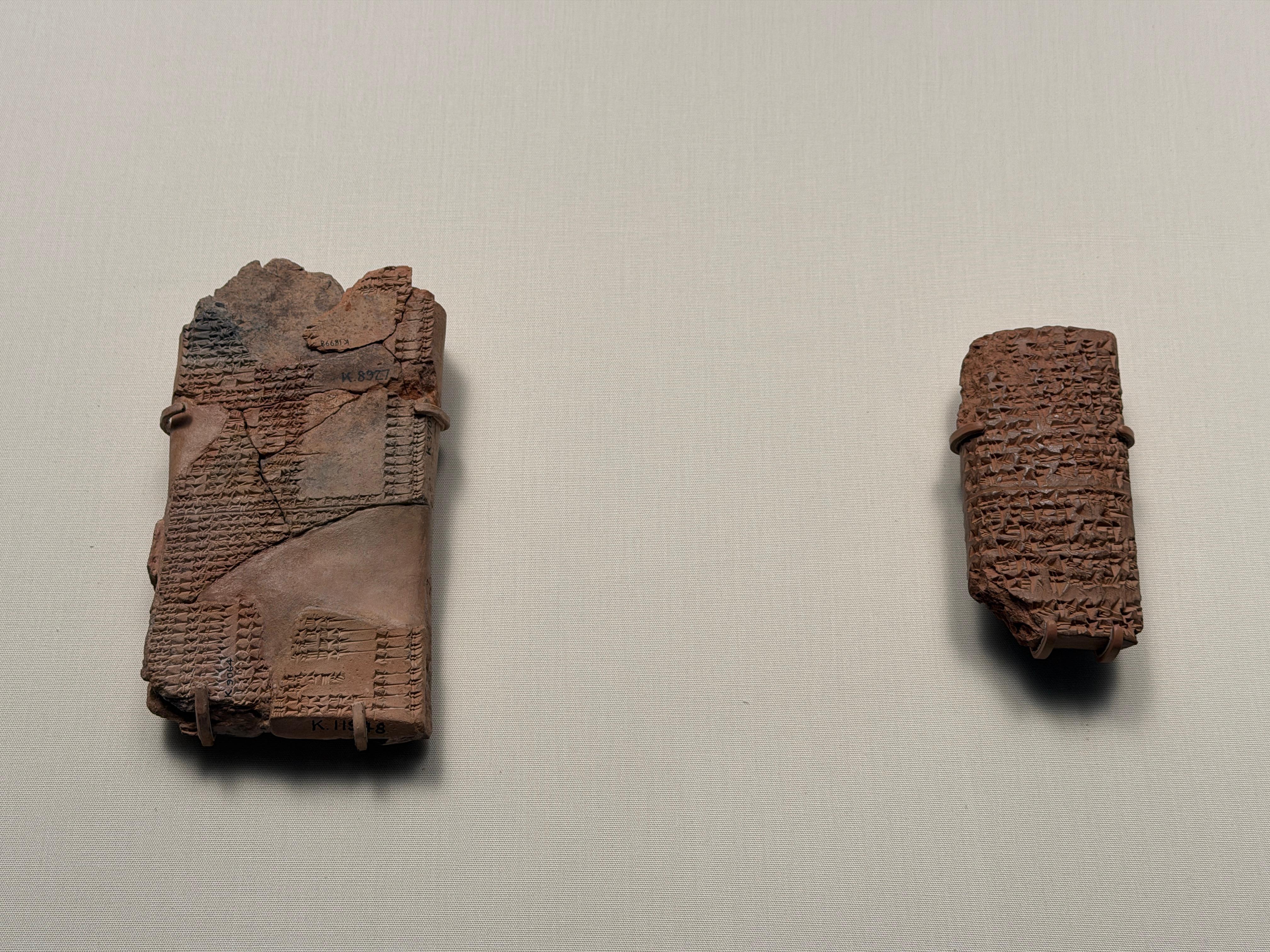
"Central to his story is Ashurbanipal bringing together the knowledge of the world into one place, into a vast library at his capital of Nineveh," Collins explained.
The library also provides historians with an extraordinary insight into everyday life during his reign.
Its surviving texts include contemporary correspondence, from letters between the king and his mother to communications between administrators working across the empire.
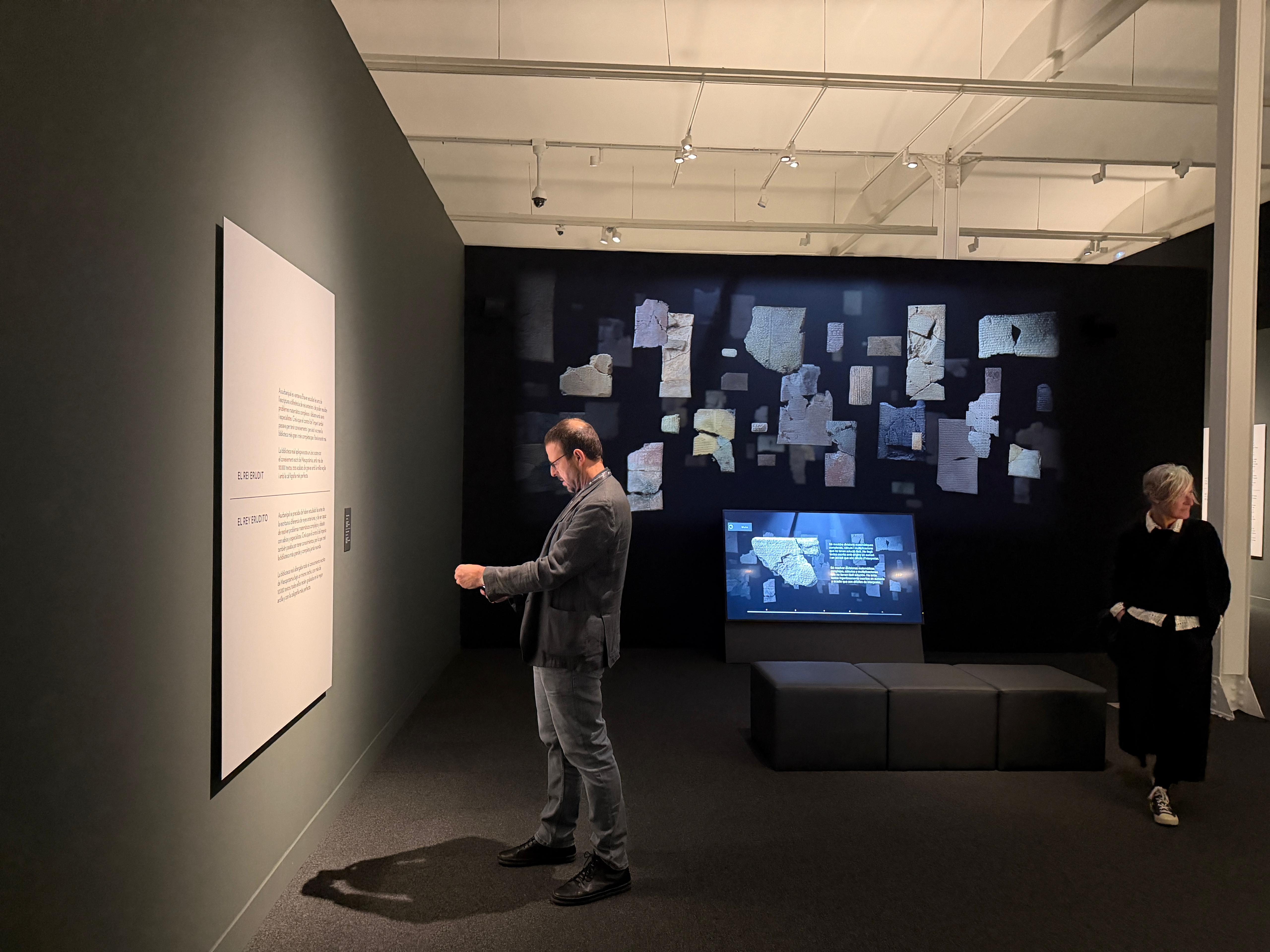
"We have huge amounts of contemporary texts from the time of Ashurbanipal," Collins said. "So we can reconstruct in real detail the organisation and management of his estate."
The library was destroyed when Nineveh was sacked by a coalition of Medes and Babylonians in 612 BC.
Ironically, the fire that wrecked the city helped preserve many of the library's clay tablets by baking them, allowing their contents to survive for millennia.
Lions, luxury and violence
Ashurbanipal's reign was also marked by military campaigns, rebellion and extreme violence.
Lion-hunting scenes feature prominently and palace reliefs depict military victories and the brutal punishment of defeated enemies.
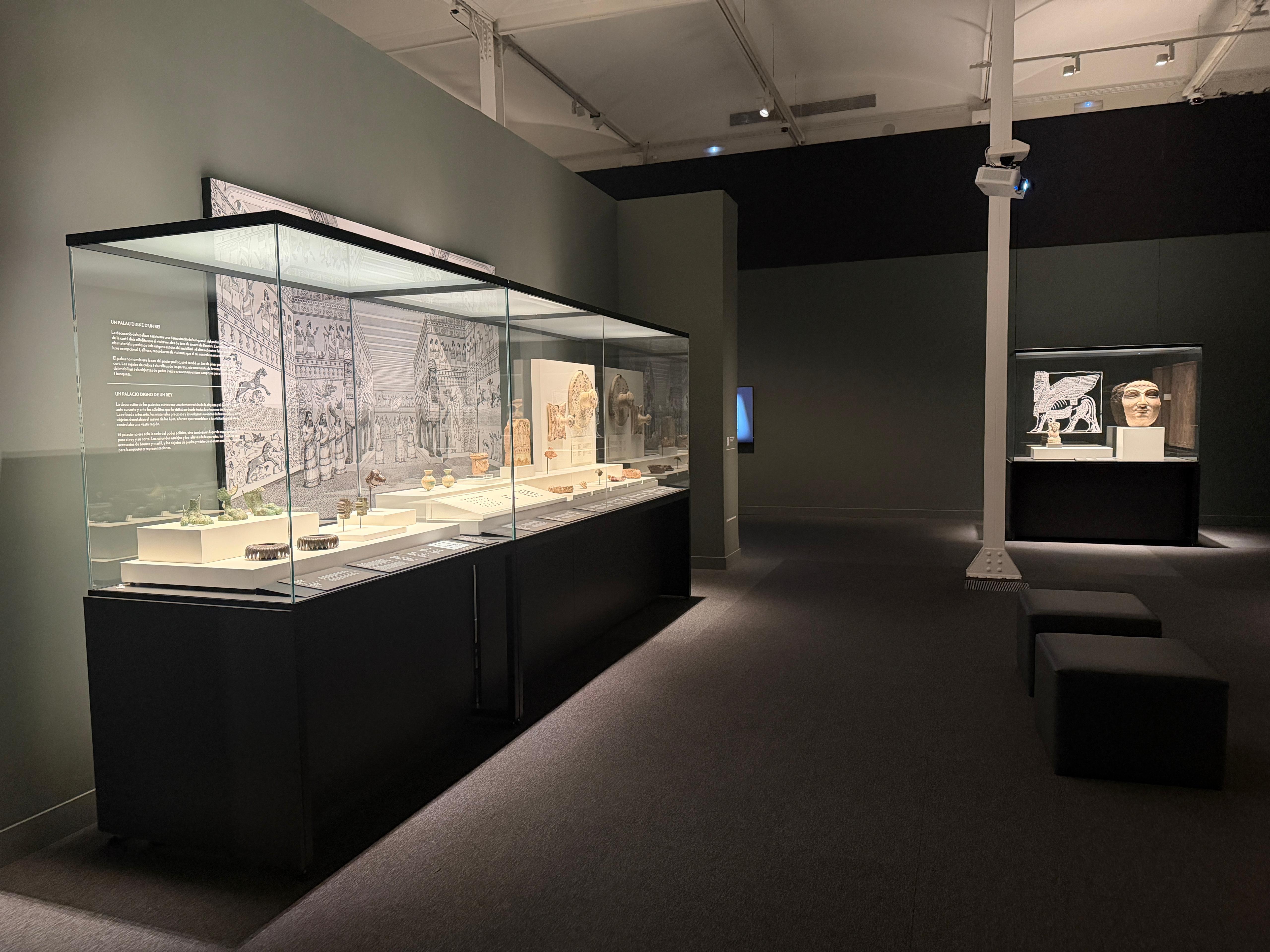
"The Assyrian reliefs we show here are among the finest carved reliefs from the ancient world," Collins told Catalan News. "Great slabs of stone carved in minute detail which bring that world to life."
"Smaller objects, made of ivory, glass, gold and silver, give a sense of the opulence of the palaces that Ashurbanipal lived in."
Preserving Iraq's ancient heritage
The exhibition's final section looks beyond Ashurbanipal himself to the rediscovery and preservation of Iraq's archaeological heritage.
The country's ancient sites have suffered extensive damage through decades of conflict, including the destruction carried out by Islamic State militants between 2014 and 2017 at sites such as Nimrud and Nineveh.
Collins said Iraq nevertheless retains extraordinary archaeological riches, much of which remains unexplored.
Iraqi archaeologists are continuing to protect and uncover sites across the country, while places such as Mosul and Baghdad are increasingly being revived as destinations for visitors interested in the region's history.
Collins praised Iraqi archaeologists for doing a "tremendous job" of reviving the country's heritage.
For Collins, Ashurbanipal is also an entry point into a much broader history.
"He is one king of many stories there are to tell about ancient Mesopotamia," he said, adding that these stories still have relevance to modern life.
'I Am Ashurbanipal, King of the World, King of Assyria' is open at CaixaForum Barcelona until March 29, 2027.