First International Forum of Translators of Catalan Literature brings professionals in 36 languages to Barcelona
Publication of translated Catalan works up 870% over past two decades
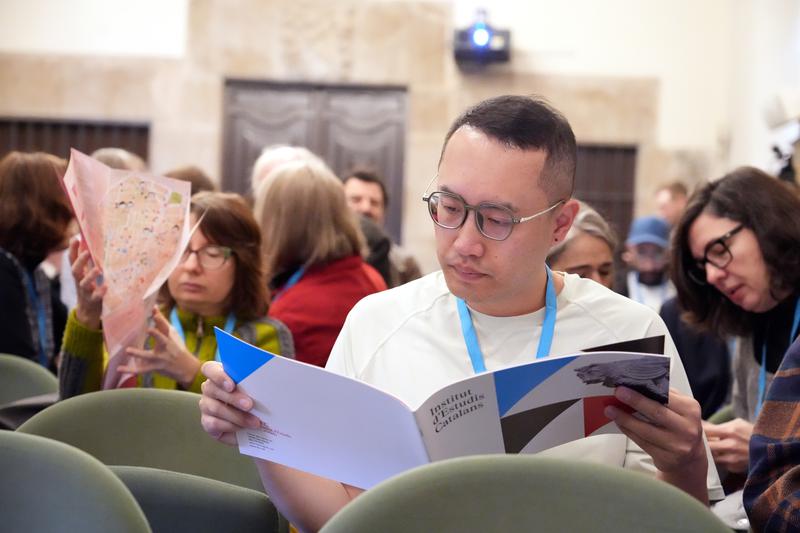

The first ever International Forum of Translators of Catalan Literature kicked off on Monday, bringing together nearly 150 translators working in 36 languages.
The event, which runs until Wednesday, is hosted primarily at the Institute for Catalan Studies (IEC) and the Bracelona Contemporary Culture Centre (CCCB), and includes plenary sessions, practical workshops, sector-specific debates, and meetings with authors and publishers.
During the opening session, Catalonia's culture minister, Sònia Hernández, said the event "brings visibility to work that is not always seen or acknowledged, yet is essential for the promotion of Catalan culture and literature."
The forum’s objective is to foster the exchange of experiences, update knowledge, and strengthen the international network of translators of Catalan literature. It also aims to give visibility to the work of literary translators, acknowledge their cultural value, and secure their rightful place within the book industry and the international circulation of literature.
The program includes cultural activities at the Teatre Romea and the Ateneu Barcelonès, as well as an official reception at the government headquarter's building, all celebrating the essential role translators play in the global reach of the Catalan language.
The minister highlighted that translators make it possible for Catalan literature to be read all over the world. Beyond being creators themselves, they act as "mediators and advocates," discovering new works and bringing them to new readers. Ultimately, she added, "you always help us reach further."
"When we first conceived this forum, one thing was clear, you [translators] had to be at the center of it. We wanted to place you firmly at the heart of the event, something clearly reflected not only by the large number of attendees but also by the institutional representation present," noted Anna Guitart, Director of the Institut Ramon Llull.
While the discussions will cover translation, books, and literature, the primary focus will be on the translators themselves, their work, and how best to support them.
Guitart noted that "the time had come to take another step forward" and bring translators from around the world in touch with one another, to "create a network that would let you share the knowledge you possess."
She added that this forum marks "the beginning of something new" in the Institut Ramon Llull’s relationship with translators, and she hopes that many more such forums can be organized. "We hope it will be a success," she stated.
Children’s and young adult literature acts as a driving force for the huge growth seen in Catalan translations, from 17 publications in 2007 to 166 in 2025, a rise of 876%.
Fiction is the second most translated genre, showing sustained growth; it experienced a surge in 2007—coinciding with Catalonia’s role as guest of honor at the Frankfurt Book Fair—and has continued to rise ever since, reaching a record high in 2025 (125 translations).
Translators
Among the translators taking part in the forum this week are Mara Faye Lethem, an English-language translator of works by authors such as Irene Solà, Pol Guasch, Jaume Cabré, Albert Sánchez Piñol, and Marta Orriols.
Lethem has just been honored with the ALTA National Translation Award for her translation of 'I Gave You Eyes and You Looked Toward Darkness', by Irene Solà.
Others include Mary Ann Newman, whose first translation, Quim Monzó’s 'O’Clock', was published in 1986. Her most recent work is 'We, the Catalans' by Jaume Vicens Vives.
As for the most translated Catalan authors, Rocio Bonilla leads the list with 284 translations, followed by Mercè Rodoreda (232), Jaume Copons (178), Ramon Llull (162), Salvador Espriu (160), Jaume Cabré (130), Meritxell Martí (123), Jacint Verdaguer (120), Josep Pla (109), Anna Llenas (101), Andreu Martín (100), and Quim Monzó (98).