Catalonia lands at Venice Art Biennale with 'Paper Tears' installation
Artist Clàudia Pagès explores 500 years of conflict using LEDs, lasers, drones, and music
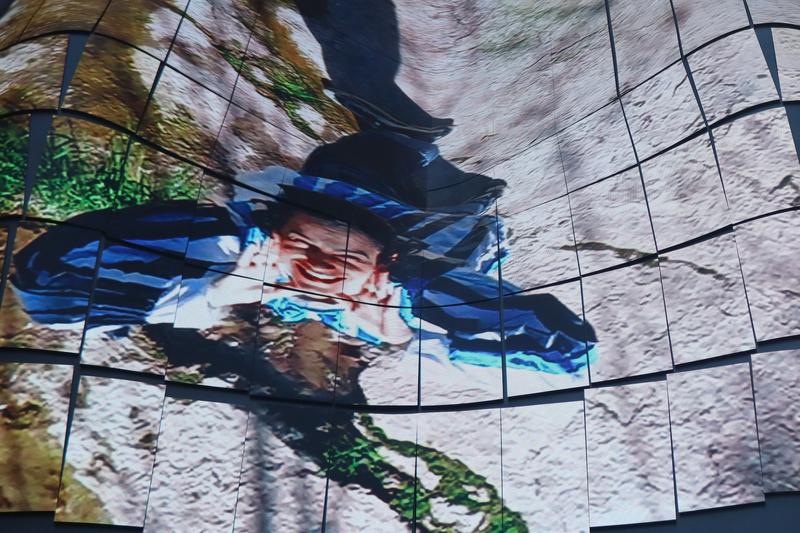

Catalonia has landed at the 61st Venice Art Biennale on Thursday with 'Paper Tears,' an immersive installation by Clàudia Pagès, combining LEDs, lasers, drones, sound, and dramaturgy.
Selected by the Ramon Llull Institute and curated by Elise Lammer, the project reflects on what Pagès describes as the "disturbing continuity between the power structures of the past and the present."
Pagès said the installation uses water as a "language" to revisit the last 500 years of history, focusing on boycotts, expulsions, and ethnic cleansing.
The installation will stay on display until November 22 at the Docks Cantieri Cucchini in the San Pietro di Castello district of Venice.
At the center of 'Paper Tears' is an archive of watermarks, or filigranes, housed at the Capellades Paper Mill Museum. Pagès selected 15th-century watermarks, which are projected throughout the space using four lasers.
Pagès noted that watermarks differ from written laws or official documents because they exist through absence and can only be seen when held up to light. The first watermarks appeared in 13th-century Italy.
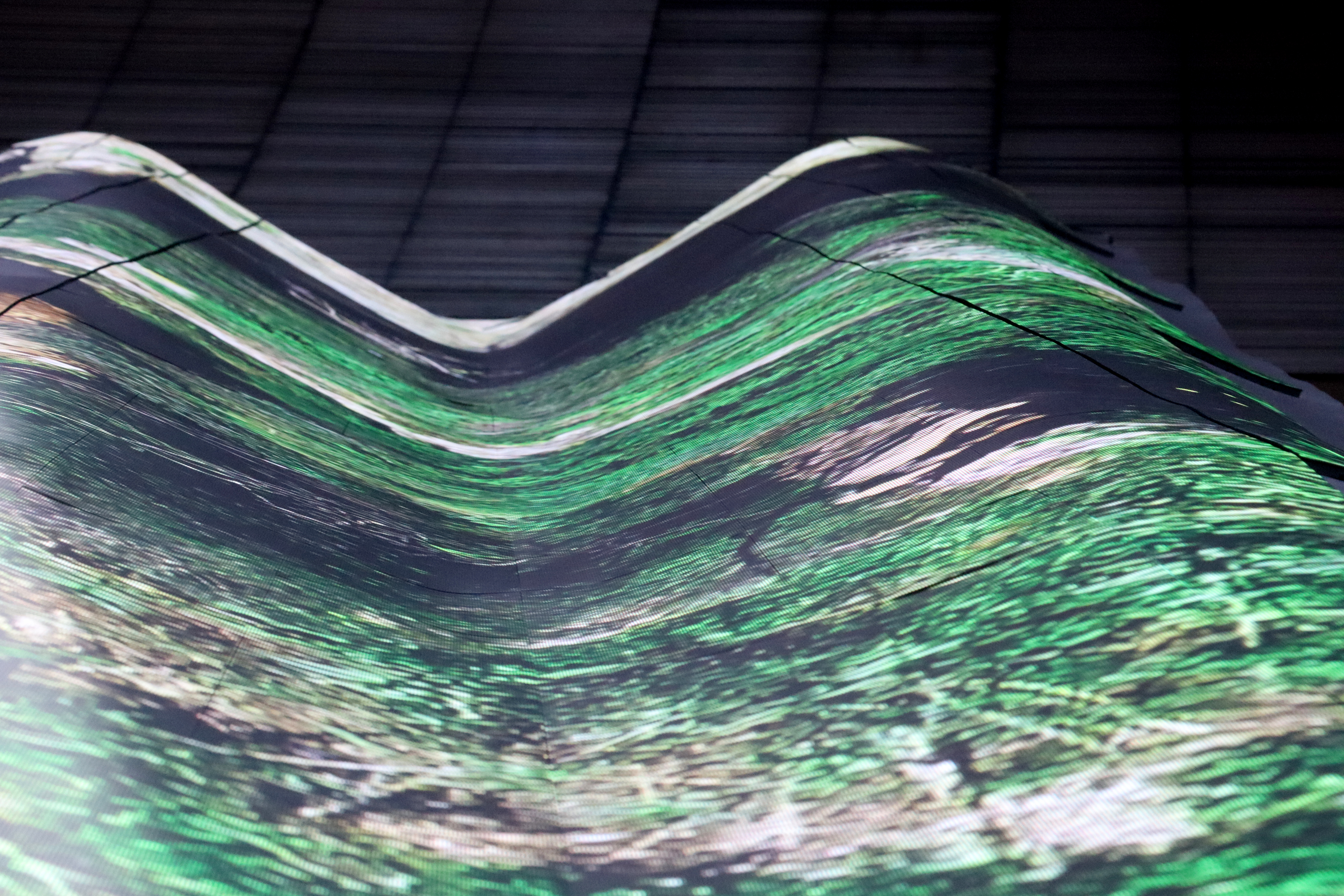
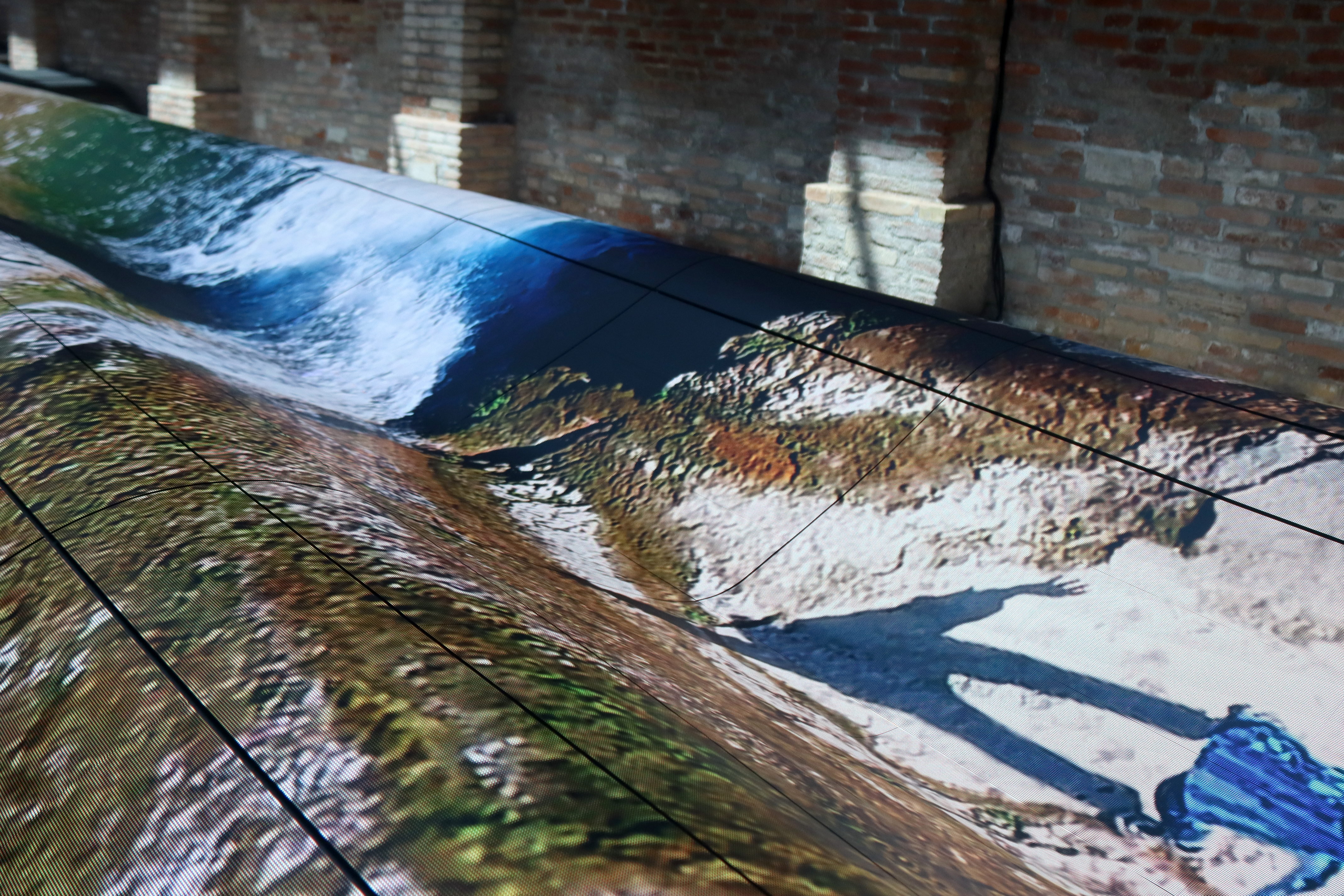
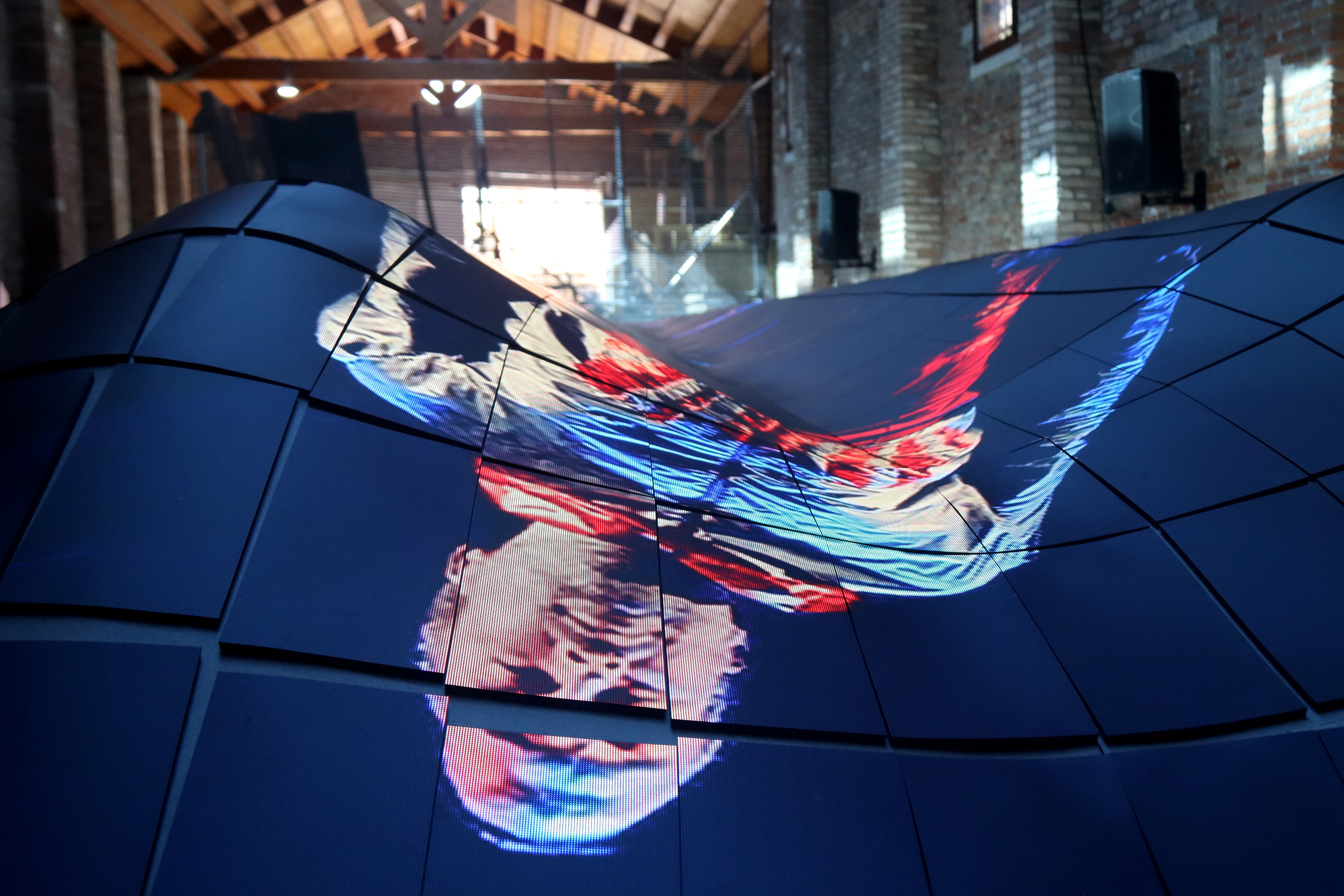
The installation also includes LED screens attached magnetically to a custom-built metal structure measuring around 10 meters long. Inspired by a skateboarding half-pipe, the structure guides visitors through shifting perspectives and mirrored reflections.
These visuals accompany a video journey through aquifers in Catalonia's historic paper-making regions. Pagès uses drone footage to capture overhead perspectives that flatten the landscape "like a map."
The work is completed by a sonic installation composed of voice and percussion in collaboration with music producer nara is neus, as well as a dramaturgical structure designed as a three-act waltz looping every 30 minutes.
'Mini-opera'
Pagès describes the installation as "a kind of mini-opera you can walk into."
According to the artist, the work addresses events such as the expulsion of Muslims from the Iberian Peninsula, who had been the paper producers until then. Following their expulsion, paper began to be imported from Italy.
The installation also references the colonization of the Americas through four monologues exploring themes including boycotts, universalist and individualist political theories, and the euphemistic language often used to describe violence and exclusion.
Pagès said she began working on the project three years ago but paused development because she felt it ultimately belonged in Venice, which she called "the city of the watermark."
Catalonia in Venice
'Paper Tears' is being presented as part of the Ramon Llull Institute's 'Catalonia in Venice' pavilion.
The institute's director, Anna Guitart, said maintaining a presence at the Venice Biennale has been important for Catalan culture since 2009.
She described Pagès as "one of the Catalan artists with the most international projection" and said visitors had been eagerly awaiting the project's opening.
Pagès is not the only Catalan artist featured at this year's Biennale. The Spanish pavilion is represented by Oriol Vilanova with the installation 'Los restos', built from an archive of more than 50,000 postcards.